 Our Collection
Bennett Brook Railway preserves and operates a large collection of ex- West Australian government and privately-owned railway and tramway equipment and structures. This section is presently under construction, and will be expanded frequently.
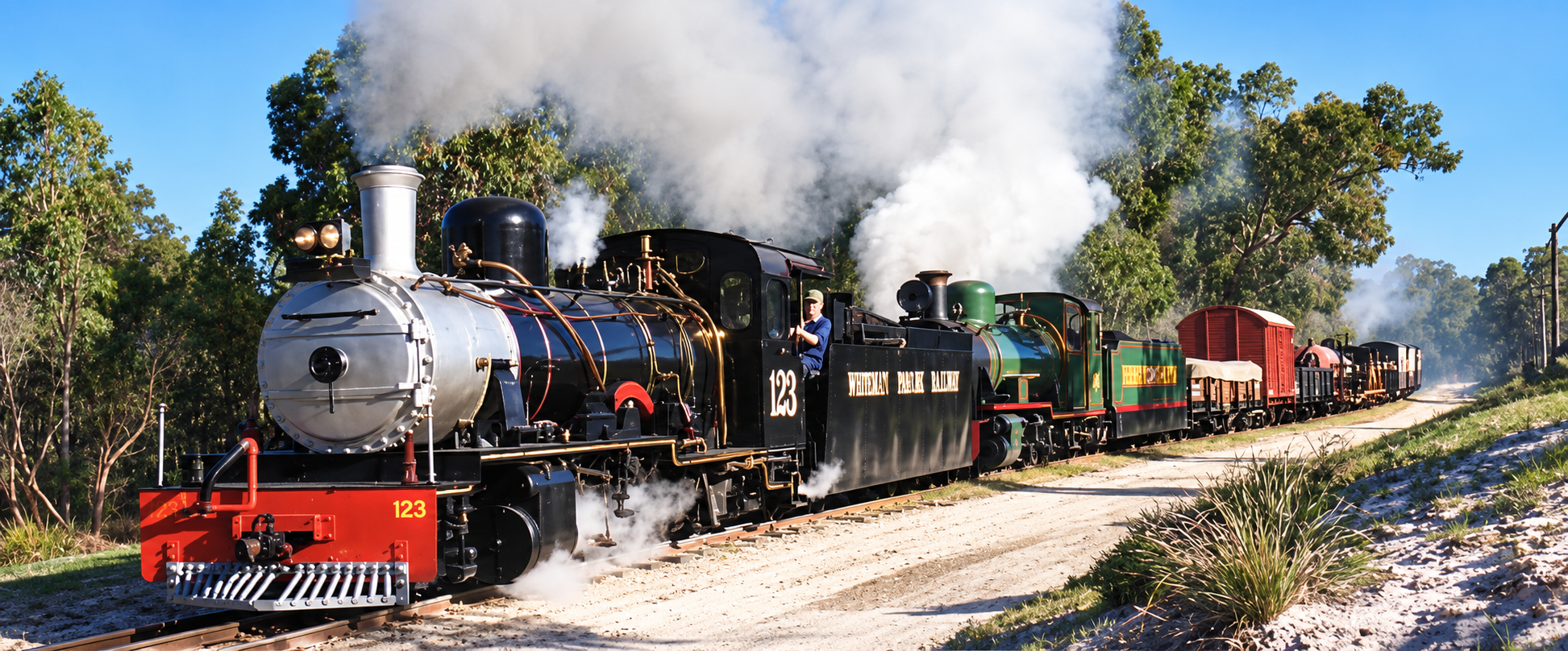
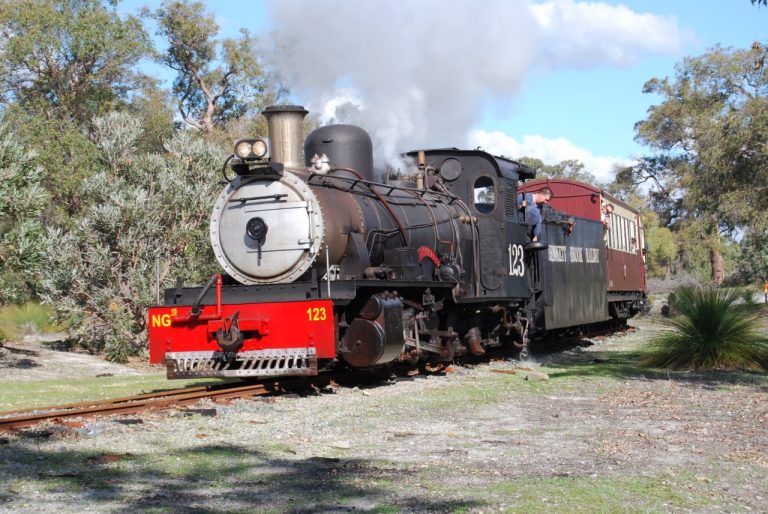
The NG15 class of locomotives were originally built for use on 2ft lines in South-West Africa (now Namibia) in 1931. 21 locomotives were ordered in batches from Henschel in 1931, 1938 and 1957, and from Franco-Belge in 1949 and 1952. NG 118 is part of the 1938 batch of 3 engines from Henschel, while NG123 was part of the first order from Franco-Belge in 1949.
When the railways in Namibia were converted to 3’6″ gauge in 1960, the entire class was relocated to Port Elizabeth in South Africa, where they ran on the Avontuur line until the 1990s. NG118 was placed out of service following an accident in July 1982, and NG123 was out of service by February 1983
A large number of the class still exist in preservation worldwide, including NG118 and NG123 with the BBR. These locomotives were purchased from the South African Railways in 1984, and arrived in WA in 1985. Both NG118 and NG123 have been charismatic and powerful performers for the BBR over the last 30 years, and are a well-established part of the steam preservation scene in West Australia.
The NG15 is considered to be the largest and most powerful type of non-articulated 2ft gauge steam locomotive in the world.
Technical details for the NG15s can be found HERE.
More information and pictures of NG15s in service in South Africa can be found in Soul of a Railway by Les Pivnic and Charlie Lewis.
NG 118 is stored out of service, pending overhaul. NG 123 has been re-tubed converted to a saturated boiler and returned to service in 2025.
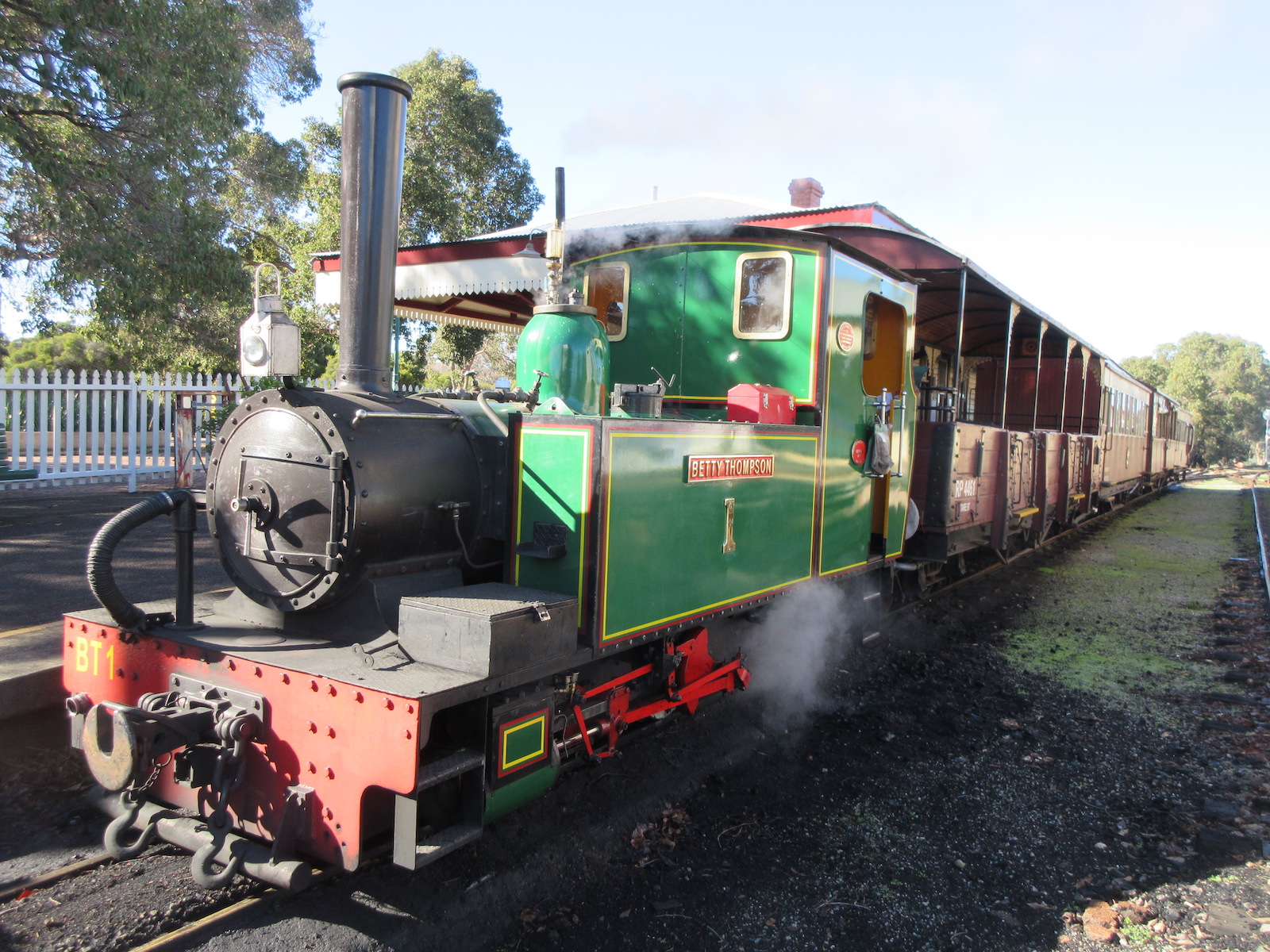
This small locomotive was built by Perry Engineering in South Australia in 1939. It was purchased by the Inkerman Mill in Home Hill, Queensland. It worked as a mill shunter, replacing an older Hunslet locomotive of similar size and power (This locomotive, ‘Torpedo,’ has been preserved in Junee, NSW).
After being retired in 1966, it was used as a childrens’ playgound item in Queensland. BBR member Malcolm Thompson purchased the locomotive in 1990, brought it to WA and restored it for use on the BBR. Restoration was completed in 1996, and Malcolm was able to drive his locomotive before his death in 1997.
Originally named ‘Adelaide’ while in mill service, Malcolm renamed the locomotive after his wife. It has been known as ‘Betty Thompson’ ever since.
This locomotive is presently out of service after 30 years faithful service, awaiting evaluation.
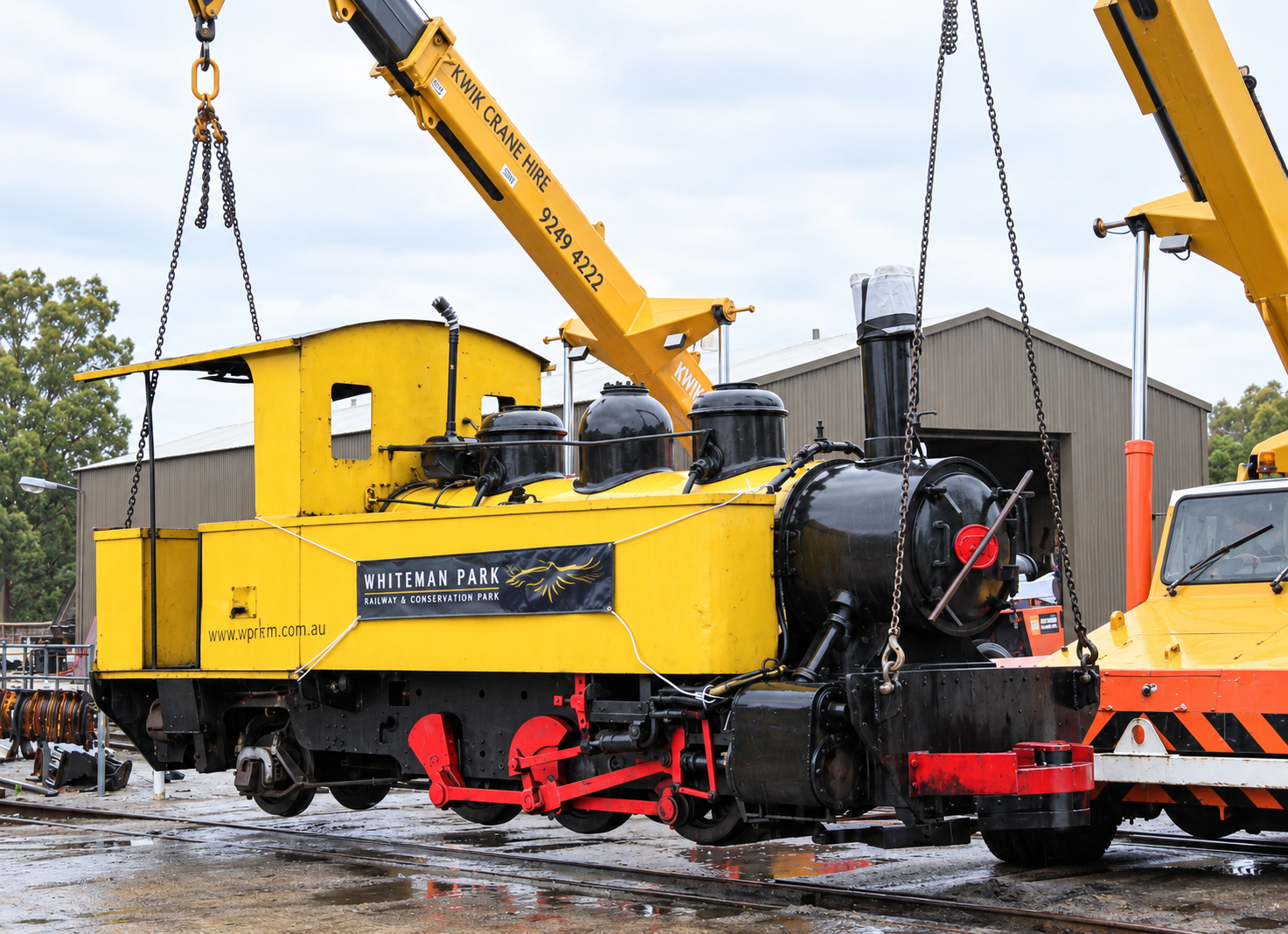
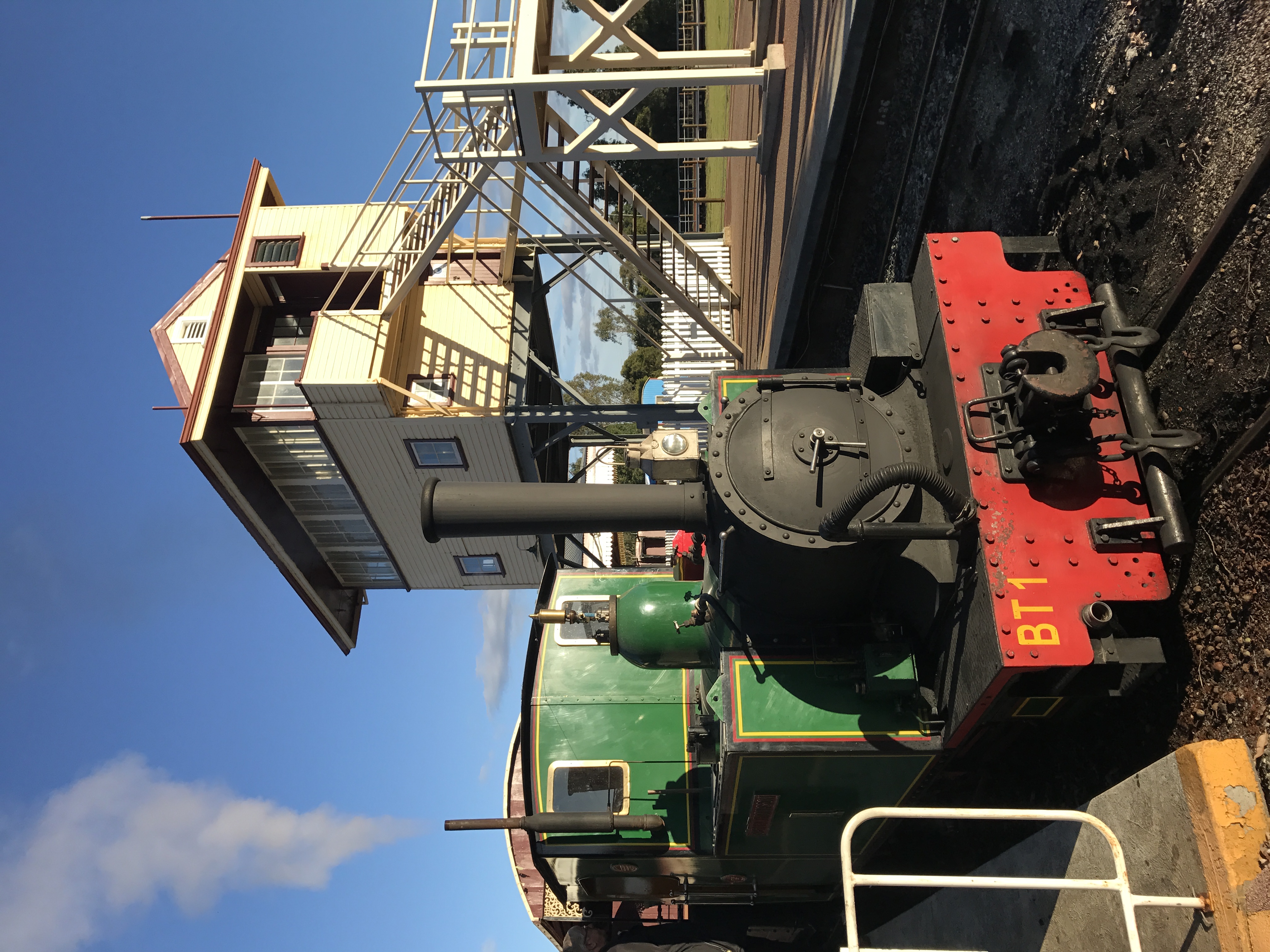
This locomotive was built for service at the sugar mill in Marian, Queensland. It was retired from service in the late 1970s or early 1980s, and by the early 1990s was running at Melaleuca Station, a tourist location in Chinderah, NSW. The locomotive was purchased by BBR in 2009 and transported to Whiteman Park. It was purchased as a running locomotive, but on closer examination it was found that more detailed restoration was required.
This locomotive is larger and more powerful than BT1, and its contemporaries are considered to be free-steaming and reliable locomotives. It will be an appreciated addition to the BBR’s motive power roster.
This locomotive is under restoration.
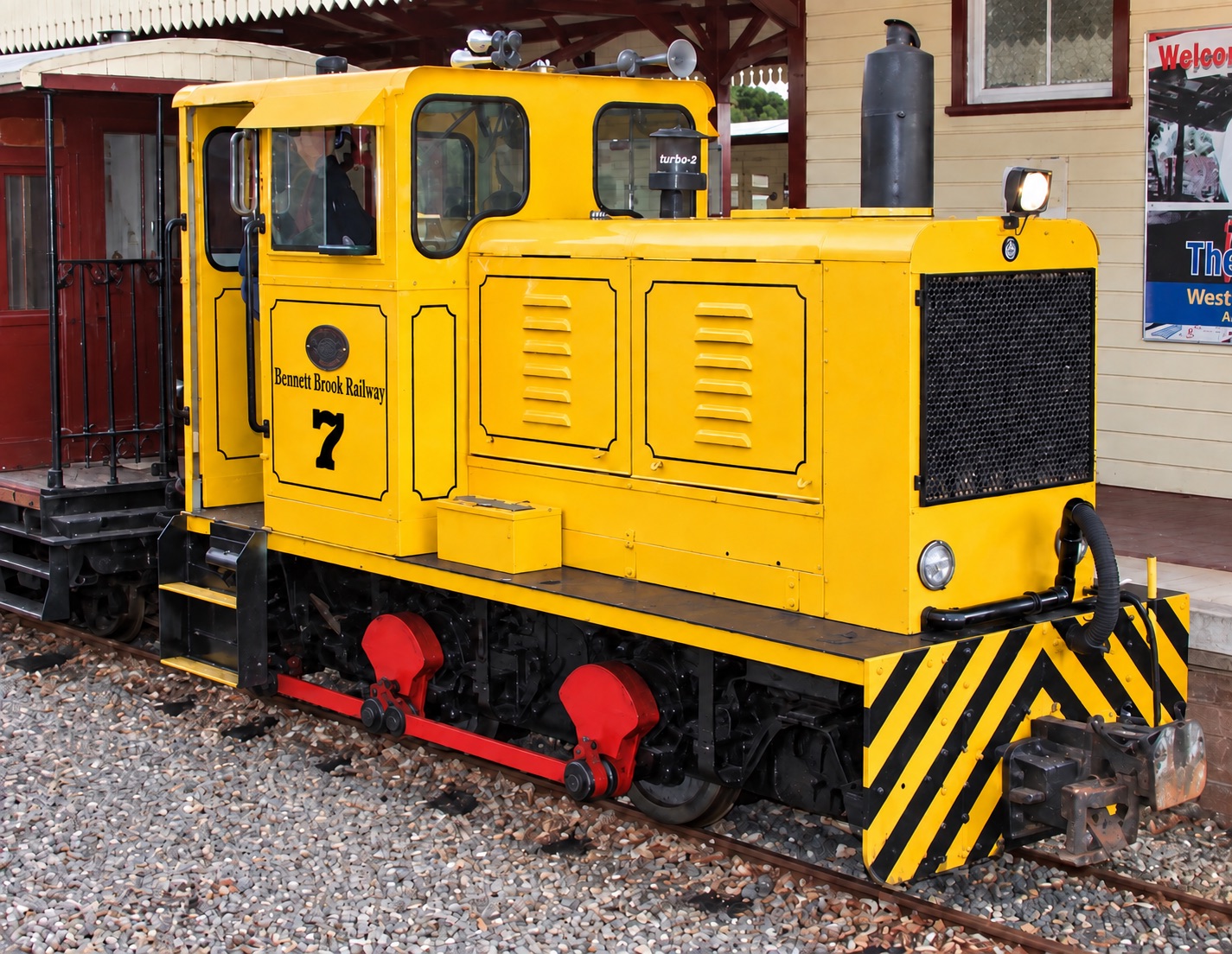
Built in 1938 by F.C. Hibberd for Lake View & Star Gold Mines in Kalgoorlie. This was the second of 2 such ‘Planet’ locomotives made for the LV&S, and was F.C. Hibberd’s first rod-driven design. The locomotive hauled loads of rock from mine head to crushing plant until the mine was closed down in 1975. The Planet and some of its hoppers formed the first ever purchase by the West Australian Light Railway Preservation Association, and it has been a mainstay of BBR operations to the present day.
In 1991, the original Atlantic motor in the locomotive was completely worn out. The locomotive was rebuilt with an ex-WAGR Track Machine 3-cylinder GM 53-series motor and fluid drive. Cab height was increased by 12 inches to improve ergonomics for the driver. The locomotive received new wheels in 2014.
This locomotive is currently in service, pulling weekend train services.
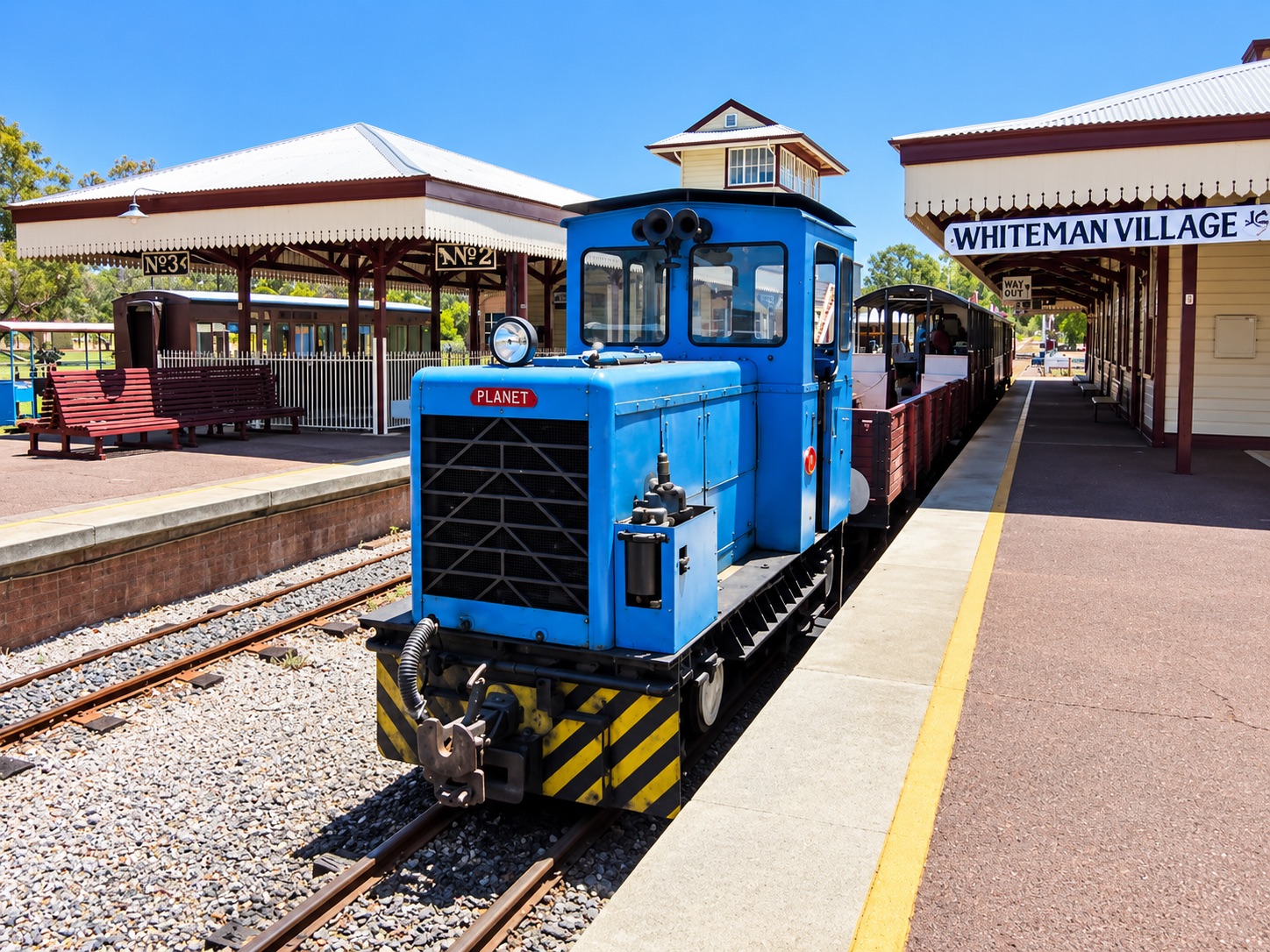
This locomotive was purchased by the Great Boulder Mining Company in 1962 for its tramway operations. It replaced the O&K Mallet, which is also preserved by BBR.
This locomotive is fitted with a 6 cylinder Dorman motor, and is significantly larger than its ex-Lake View and Star predecessor. Interestingly, Great Boulder was bought out by LV&S in the early 1970s, meaning that the locomotives were worked by the same company for a time.
Originally preserved by the Boulder Loopline railway in Kalgoorlie, the locomotive was privately purchased by 2 BBR members, and delivered to Whiteman Park in 1998.
This locomotive is currently out of service, pending overhaul.
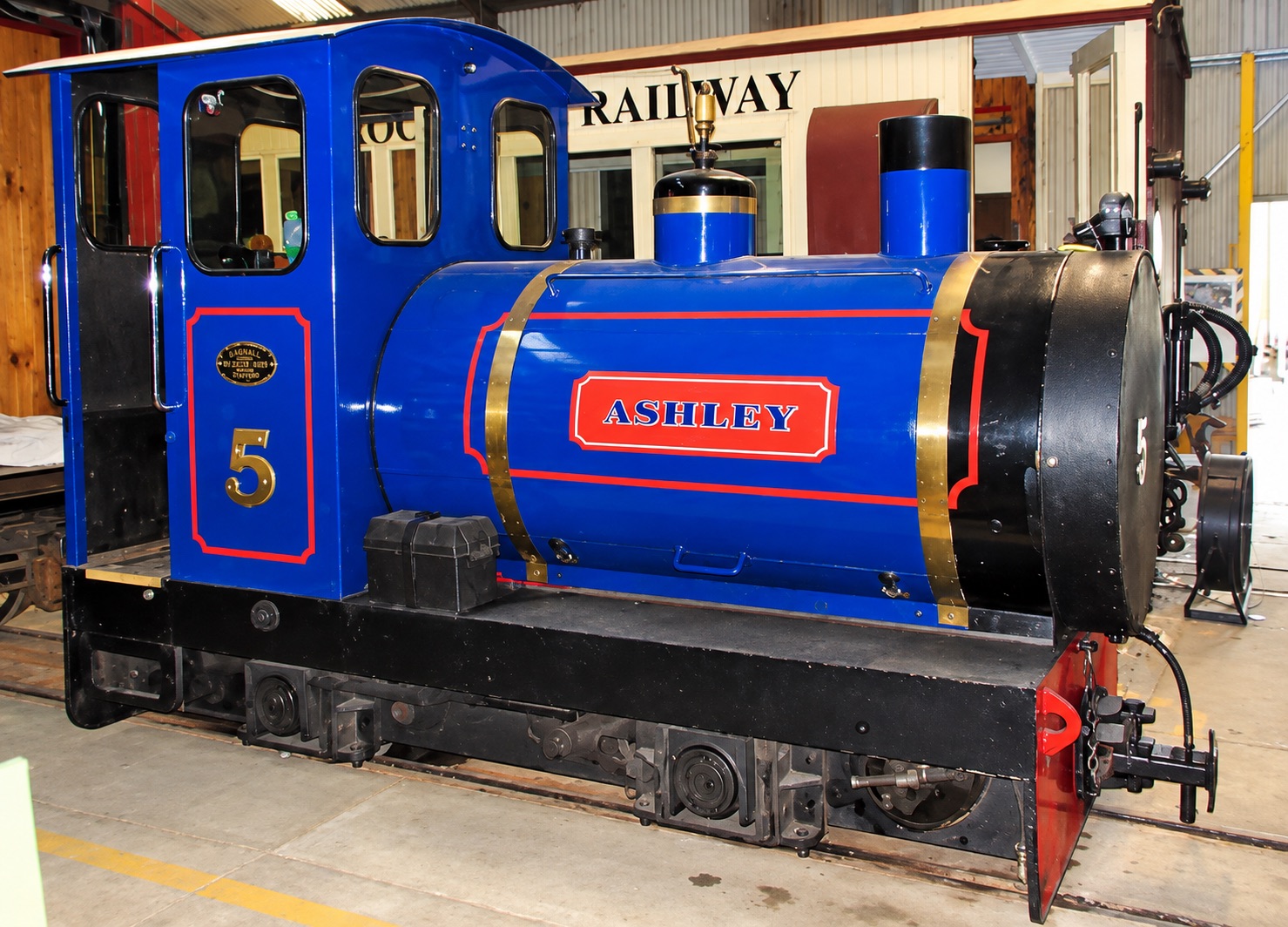
This locomotive was built by Kless Engineering of Maribyrnong, NSW in 1985 for the Big Orange theme park in Harvey, WA. On its closure in 1994, the locomotive and its carriages were purchased by the Brajkovich family for their Dizzy Lamb theme park. This in turn closed down in 2000.
The locomotive and its stock were offered to the BBR in 2004, and a long-term loan arrangement was made in 2005. By 2006, both locomotive (now dubbed ‘Ashley’) and its rolling stock were located on the railway and running passenger services.
The BBR progressively paid out the Brajkovich family for their stock, making its final payment in October 2019.
Ashley has become the centrepoint of the BBR’s ‘Friends of Ashley’ events, and is an ergonomic and powerful locomotive for its size.
This locomotive is currently in service, hauling mid-week and special event train services.
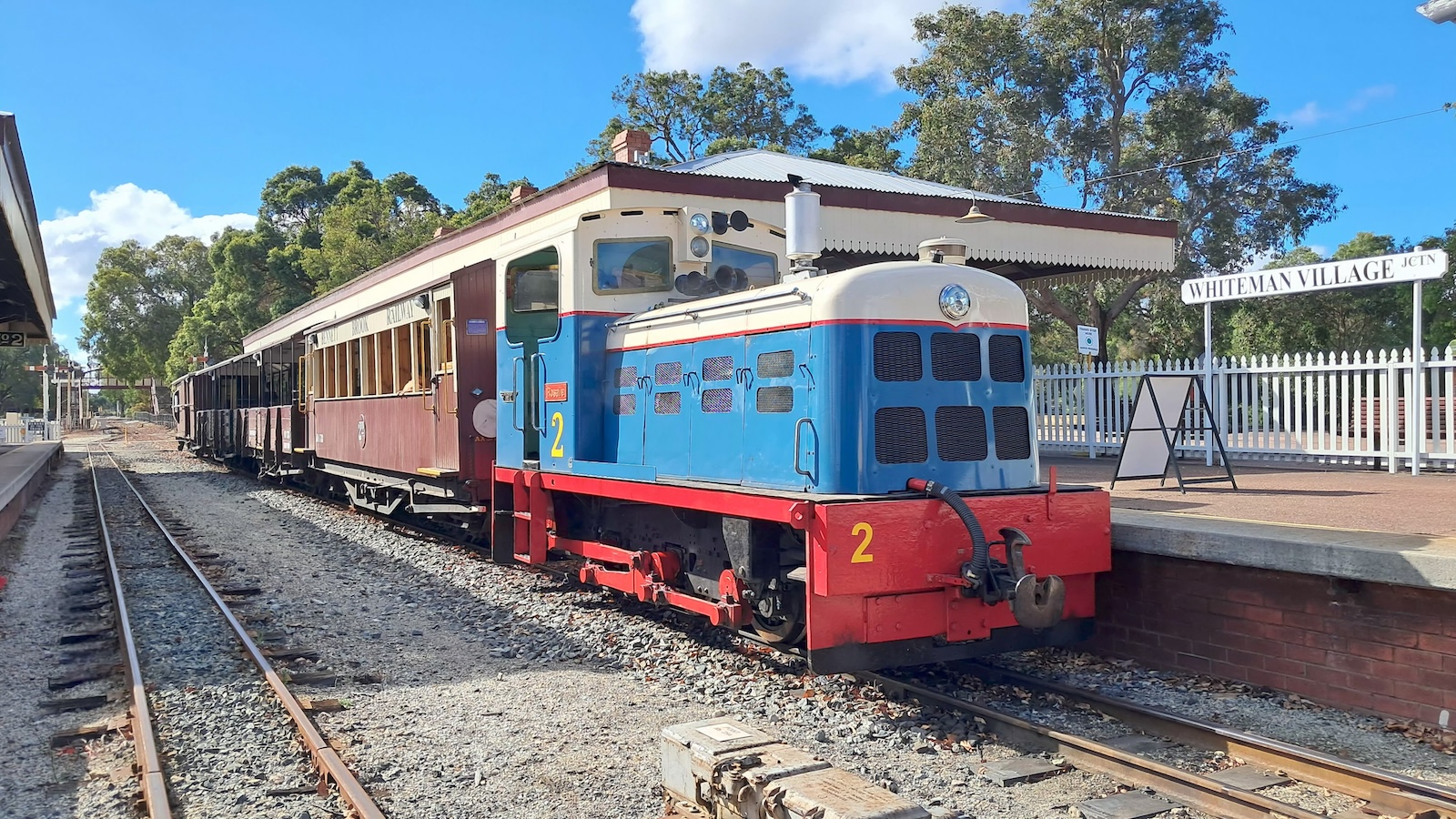
This locomotive was built by Fowler of Leeds, UK in 1950 for the Isis Central sugar mill in Queensland. By 1954, its original Mclaren motor was completely worn out, and it was remotored with a GM 6 cylinder motor by Bundaberg Foundry. It was retired from service in 1991, and purchased by BBR and delivered to WA in 1992.
The locomotive was named ‘Rosalie’ in honour of Roaslie (Lee) Heaney, a Park Ranger who was killed that year by a rockslide while holidaying in the USA. Rosalie was a well-respected Park staff member, and had been heavily involved in organising many of the Park’s special events.
After a series of mechanical issues in 2017 and 2018, the locomotive was taken out of service. It was identified that replacing the motor, transmission and wheels were necessary. A retired garbage truck donated its Cummins 6 cylinder motor and transmission in late 2019. This overhaul is ongoing.
This locomotive is currently undergoing trial runs and sees limited service on weekends.
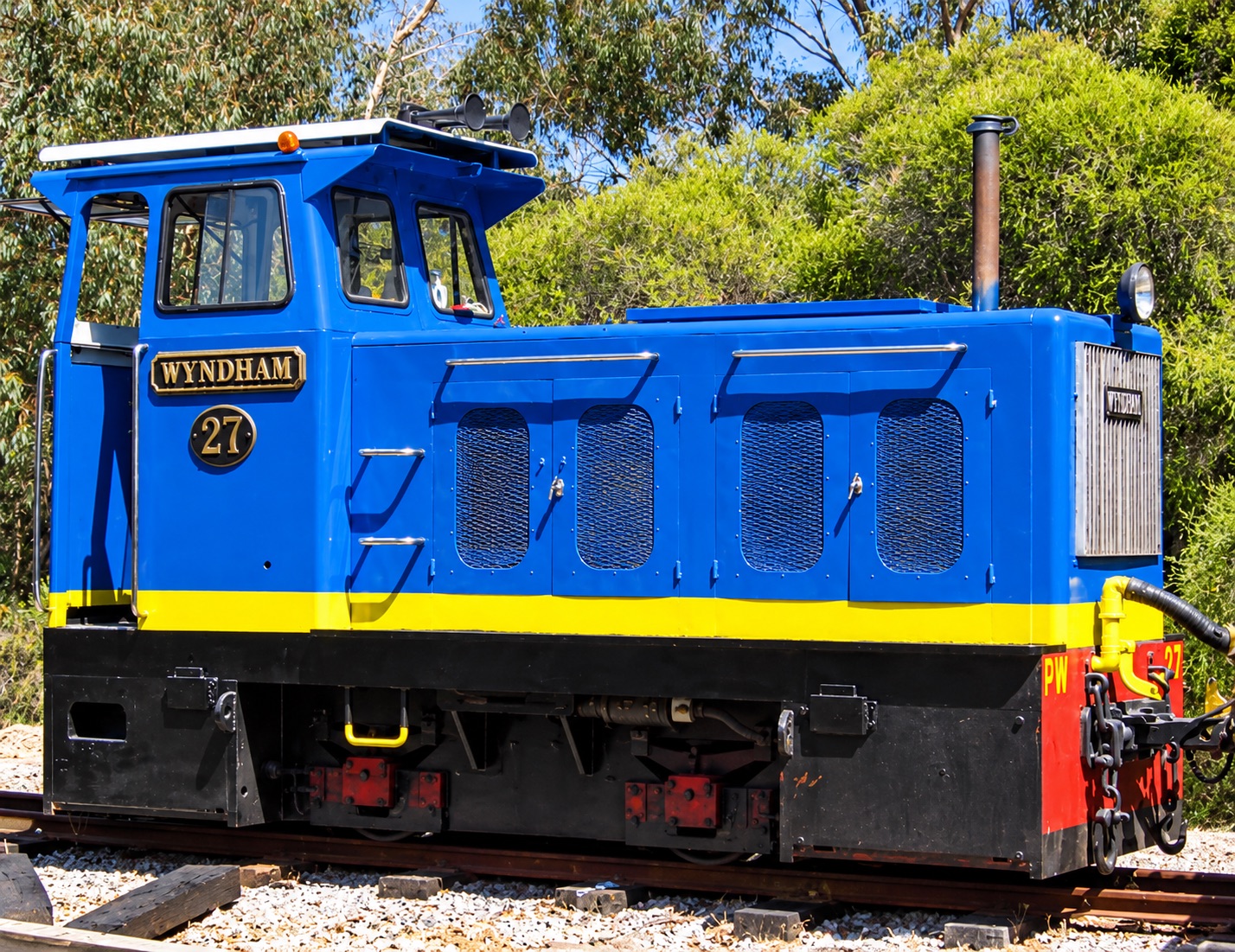
Built to 3’6″ gauge for the WA Public Works Department (PWD) in 1964. Originally allocated to Derby as NW17 , the locomotive was renumbered PW27 and transferred to work the jetty and meatworks at Wyndham. It served in this role until the early 1980s.
The PWD and Shire of Wyndham donated the locomotive to BBR in 1984, where it was regauged to 2ft and commissioned into service in 1986. The locomotive has served BBR until around 2013, when a major transmission failure rendered it unserviceable.
This locomotive is currently out of service, under overhaul.
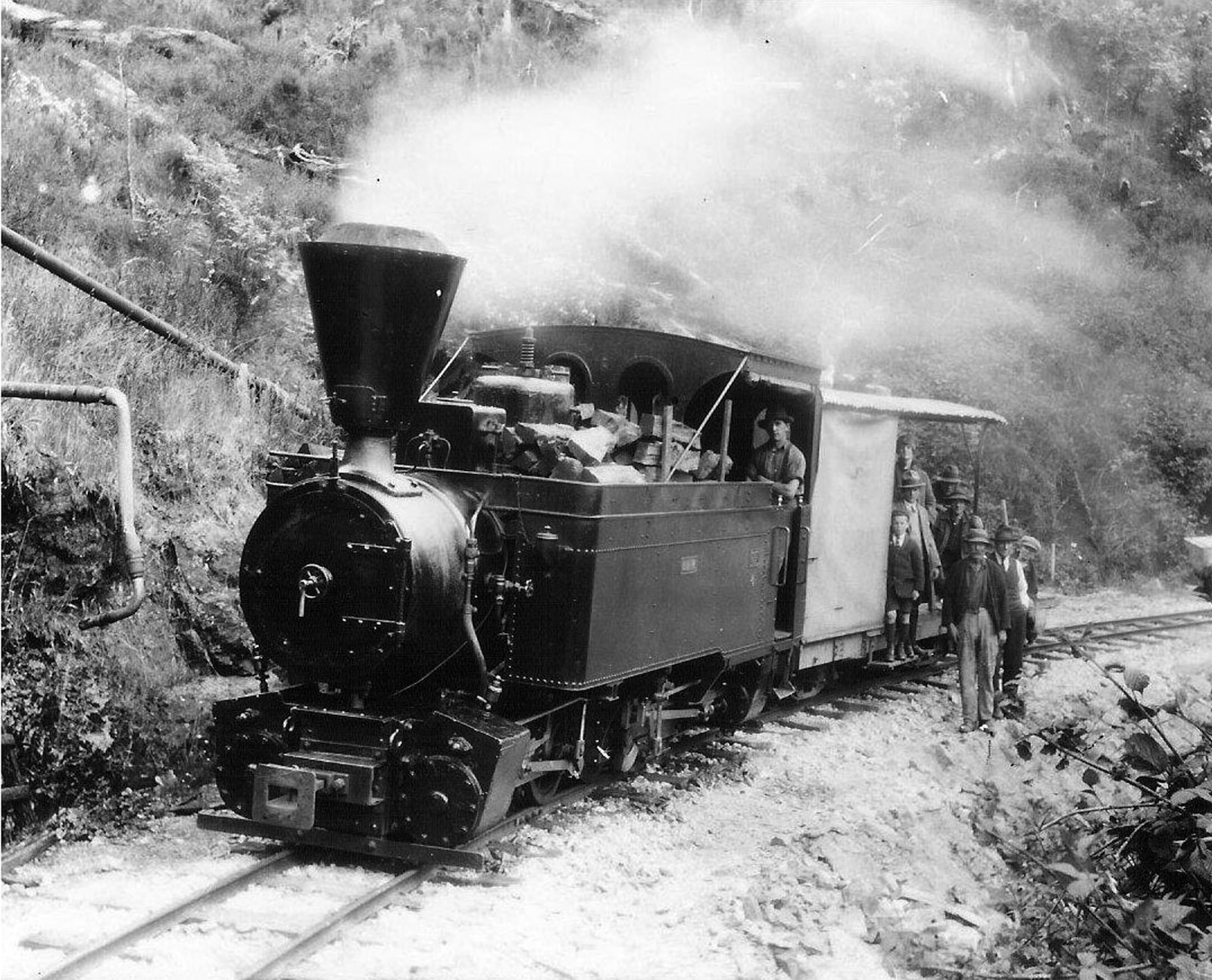
Built in 1901 and first used the Magnet Silver Mining Co in Tasmania. It operated at The Galena mine, approximate four miules south west of Mt Bischoff.
The Mallet for much of its life has been stored in an adjoining shed to the BBR Loco Shed with minimal restoration occurring due to other priorities. The BBR Committee is seeking funding for further restoration through Lotteries and Heritage grants.
Much has been done on the Mallet with the chassis currently in a complete overhauled running condition and able to be operated on Air.
The Boiler has had work on firebox plates, wrappers etc as well as general cleaning, preservation and is ready for tubing. A main issue yet to be solved with the boiler is the lack of two sight glasses which are now required under the current boiler codes.
The Mallet is classified by the National Trust of Australia (WA)
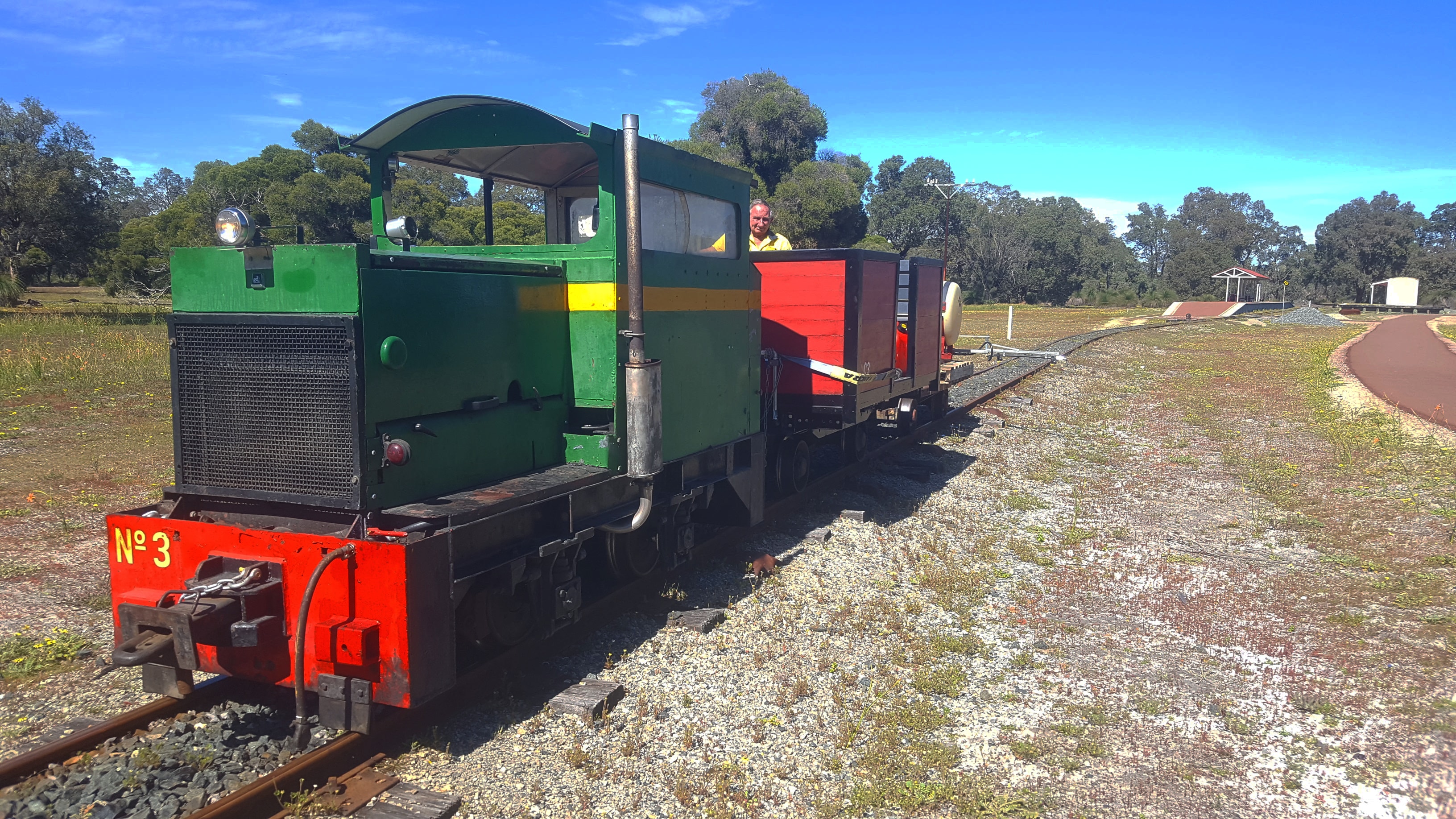
Was built by the Maylands Brickworks in the 1960’s to replace the ageing Ford 10 powered Planet locomotives. It has a 6 cyl Holden motor driving to an automatic transmission which propelled the locomotive with a chain drive to one axle. In 1980 we received a generous donation of 1 locomotive and 3 hopper wagons. This was significant as Maylands became the first operational locomotive and played an important role in the opening of weekend public services.
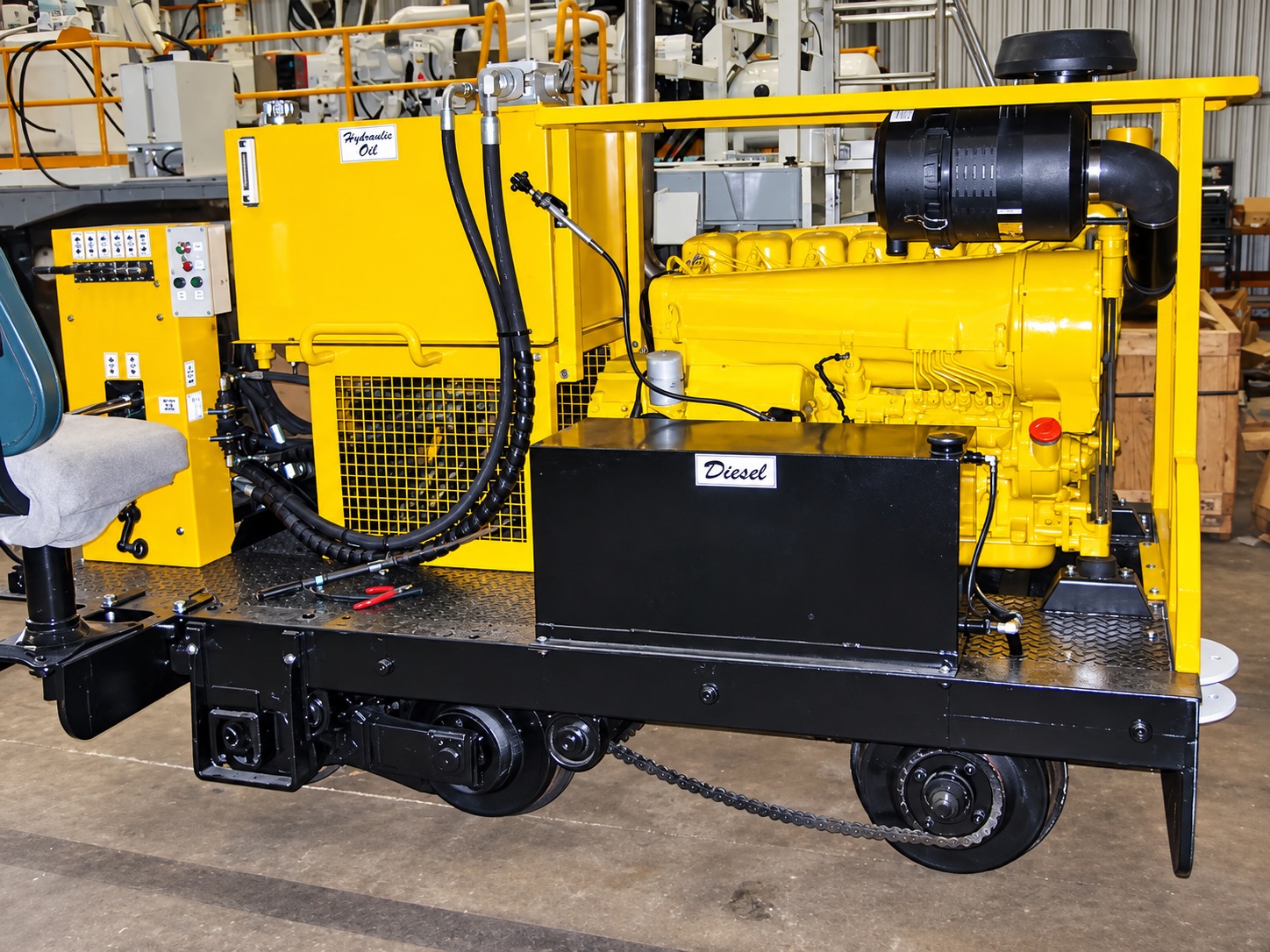
Ridley no. 2 was built for Lew Whiteman’s brickworks circa 1969 as a replacement for their two ageing Planet locomotives (both now owned by BBR) The locomotive was delivered to the Railway on the 11th of March 1983. Restoration commenced a year later when a new Vanguard motor was obtained. It entered service on the 13th of May 1984. Although somewhat unusual to drive due to the strange wheel alignment, it provided many years of service and was pivotal in the early years of the railway being one of the two locomotives that hauled the opening train on December 8th1984. This loco later was deemed surplus and was refitted as our first track tamper machine.
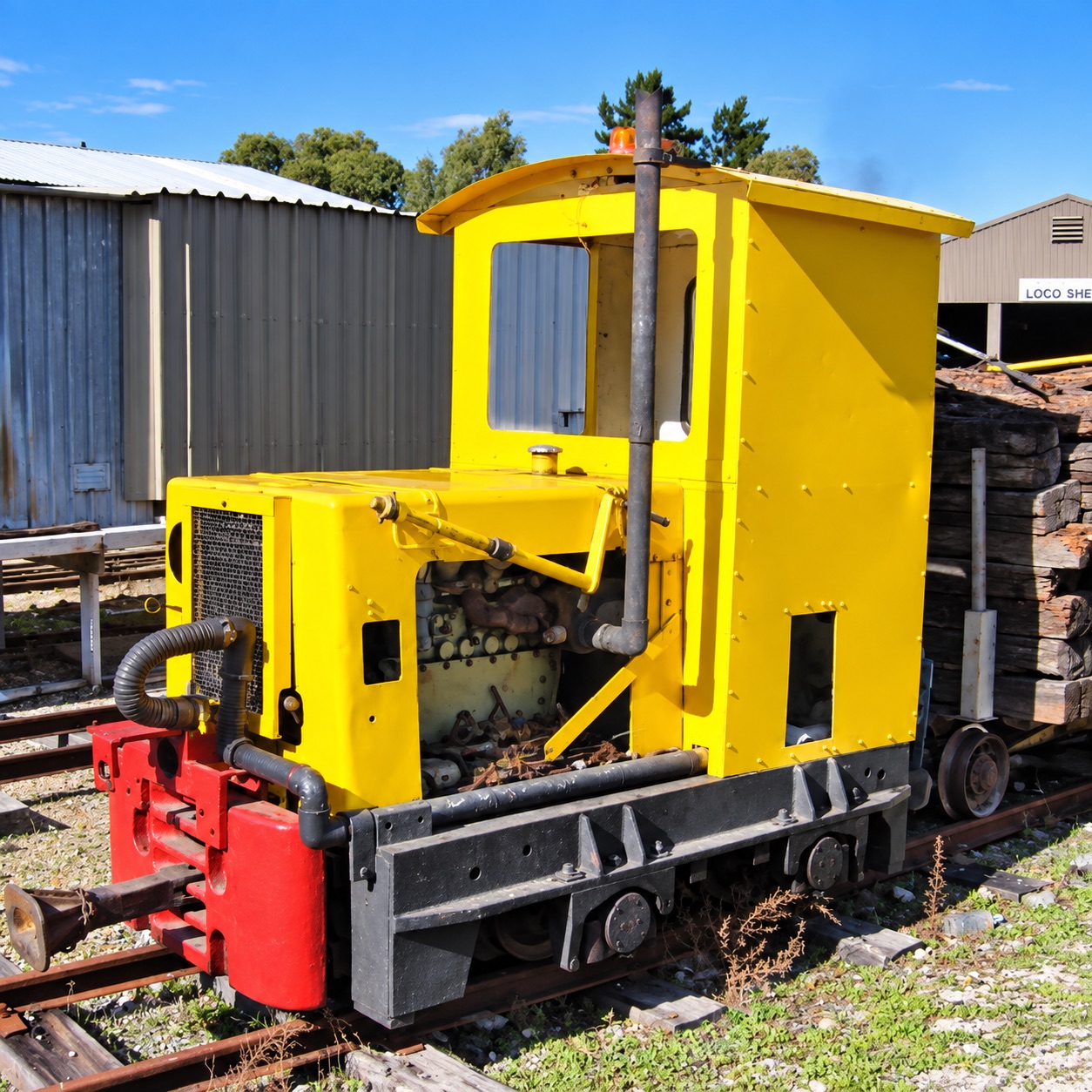
Ruston and Hornsby model LBT 3cy 29 hp diesel locomotive, it has a hand crank start. Built in 1957 it was sold to Christiani and Nielsen (where it is believed to have worked on the Narrows Bridge project) and later to Bunnings Bros. in 1961. It was kindly donated to W.A.L.R.P.A by Bunnings Bros. from their Manjimup Mill in 1984. Since then it has been regauged to 2’ gauge from its original 3ft 6” and now hauls the railway’s maintenance trains.
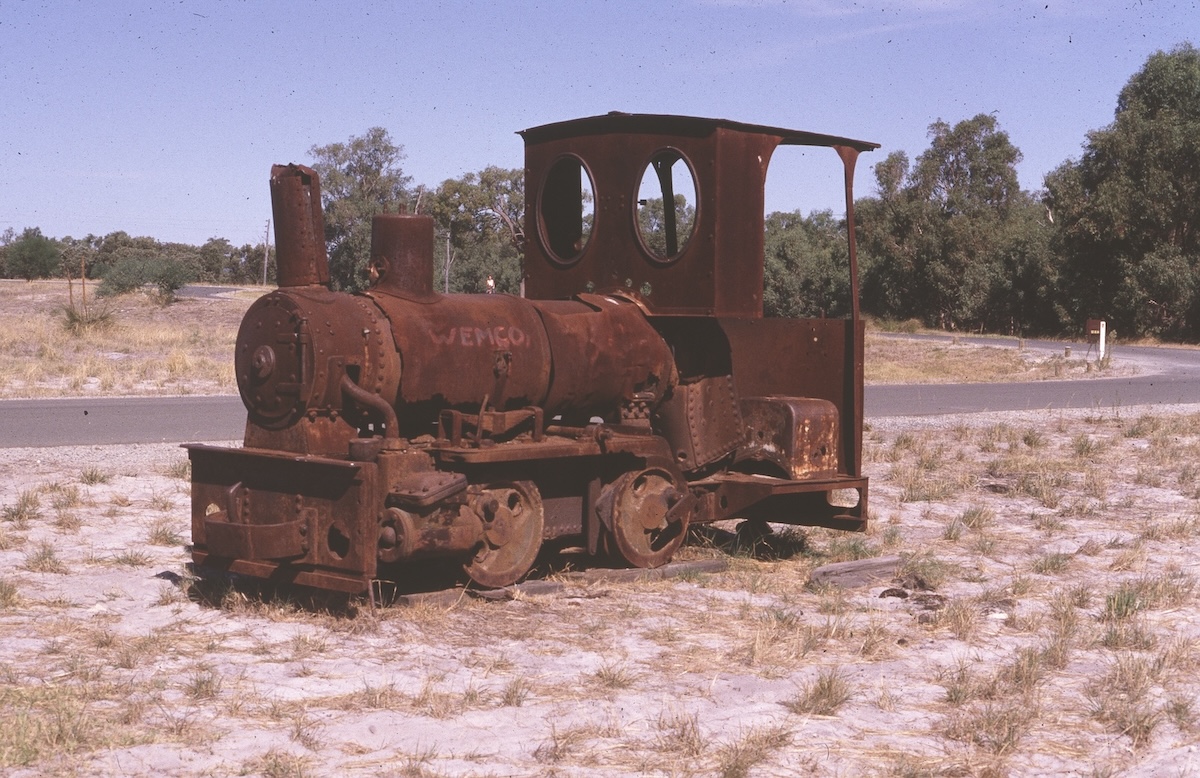
Only 3 locomotives from the German builder Lokomotivfabrik Krauss & Co. were recorded to have come to Western Australia. It was imported into Australia by contractor John Robb in 1888. It saw service in Victoria and South Australia before being bought by East Murchison United Gold Mines and shipped to WA in the early 1900’s. It was later sold to Western Machinery Co. of Kalgoorlie. In 1963 it was purchased by Lew Whiteman; it was eventually put on display alongside O & K Mallet no.3 on his Caversham property at Mussel Pool, now part of Whiteman Park. In 1984 Lew Whiteman donated both the Krauss and Mallet to W.A.L.R.P.A.
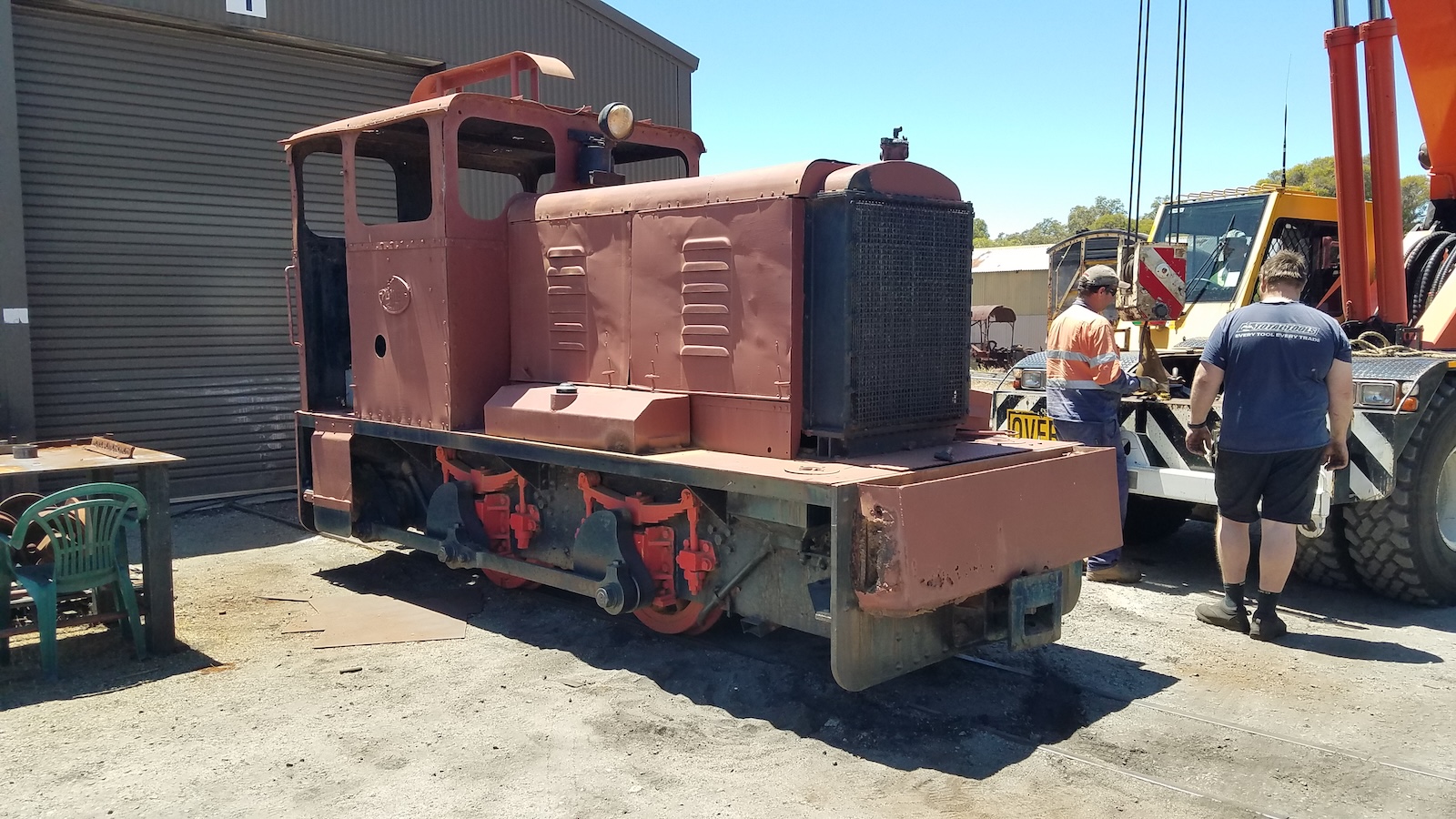
W.A.L.R.P.A acquired the 1937 Planet from Kalgoorlie in 2025. It is an exact sister engine to our Planet no. 7, but without all the modifications and is an important piece to show how both Planet locomotives would have looked when new in the late 1930’s.
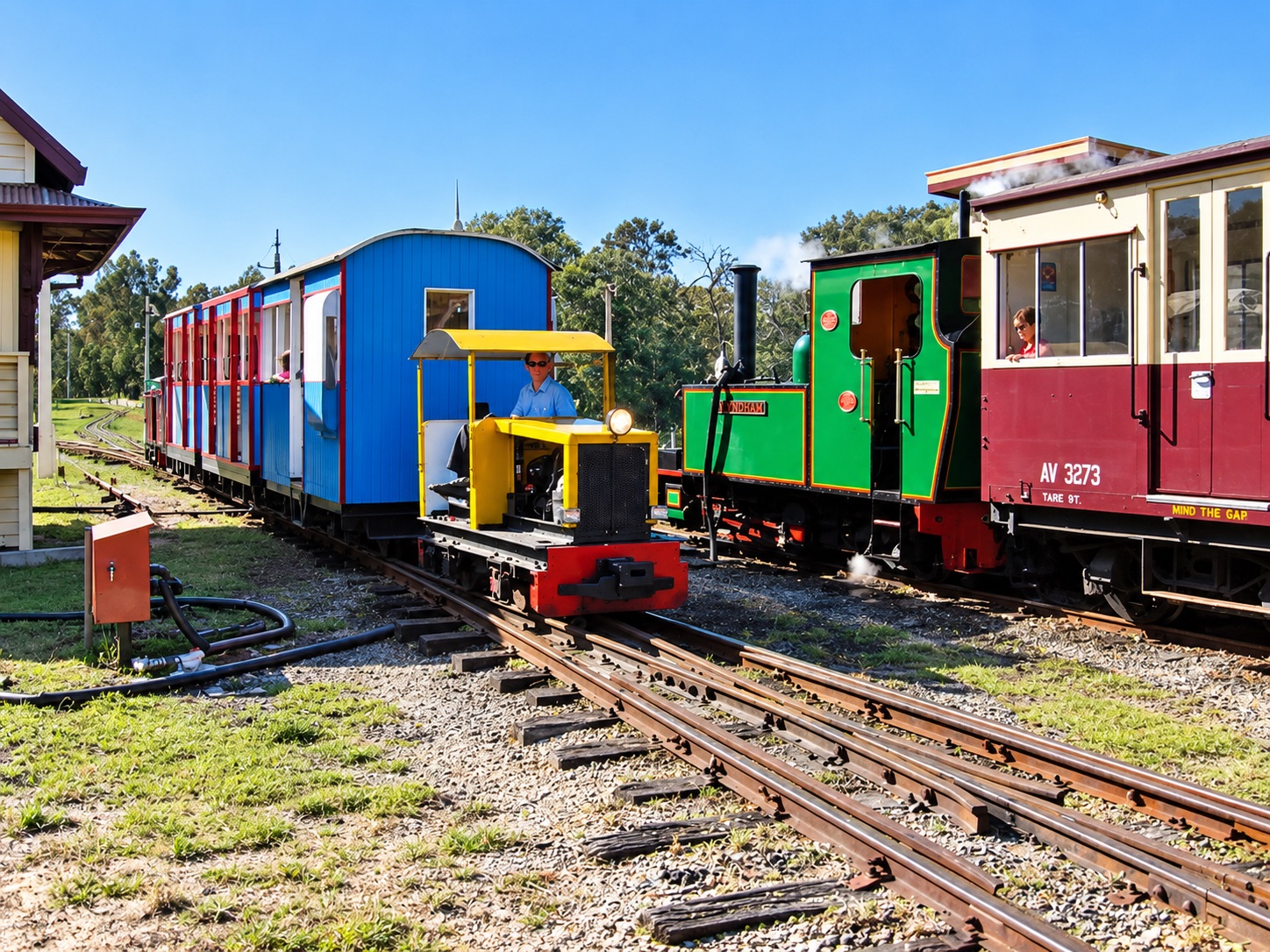
Built in 1937 by FC Hibbard Planet Co for Whiteman brickworks in Midland, WA. The Yellow Rose would work at Whiteman brick alongside another small Planet petrol locomotive built in 1949 (now also at BBR) until both were replaced in the 1960’ by two homebuilt ‘Ridley’ locomotives with Yellow Rose kept running as the spare locomotive. Whiteman brickworks would cease operations in the late 1970’s, Yellow Rose and Ridley 2 were kindly donated to WALPRA. Yellow Rose was the first locomotive to arrive at WALPRA’s new home at Whiteman park, and upon its arrival it was discovered that someone had written “Yellow Rose” inside the engine’s cab which is how the locomotive gained its name. The locomotive would return to service in 1985 with a new Morris major engine and became a regular passenger engine for the next ten years. The locomotive was involved in a collision with the tamping machine circa 1995 and was withdrawn from service and placed in the workshop compound out of the way. In 2003 the Yellow Rose was rebuilt from the ground up by two young WALPRA members and returned to service. In 2022 Yellow Rose received a new engine and gearbox, a Holden red motor (Very similar to the Maylands locomotive) and later in 2026 a new radiator and bonnet, styled after the much larger 1962 Planet ‘Dorman’.
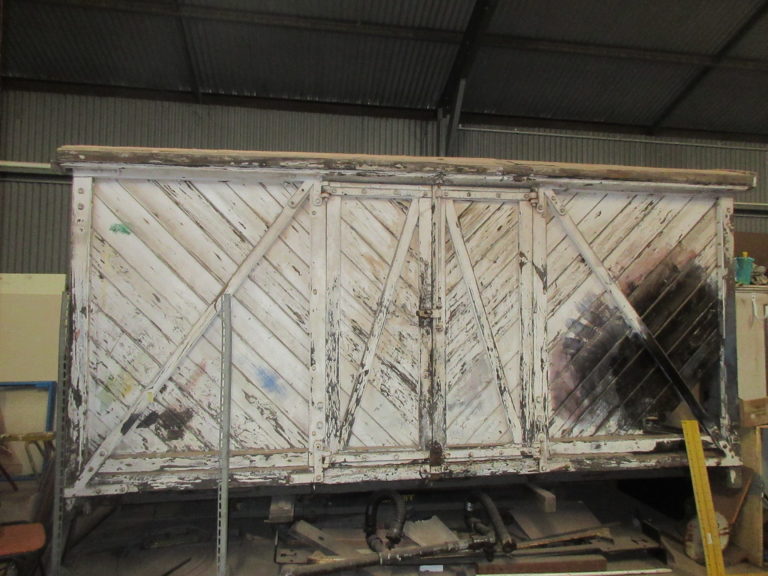
General purpose covered freight wagon. Built in 1891 for the Midland Railway of Western Australia (M.R.W.A.) by the Lancaster Wagon Company, UK. It was written off in 1965, having never been taken into WAGR stock after its 1964 takeover of the MRWA. The grounded body was purchased by BBR members in the 1980s. Restoration is ongoing.
This wagon is a unique survivor of the longest-lived privately owned common carrier railway in WA.
Further information on the class can be found HERE.
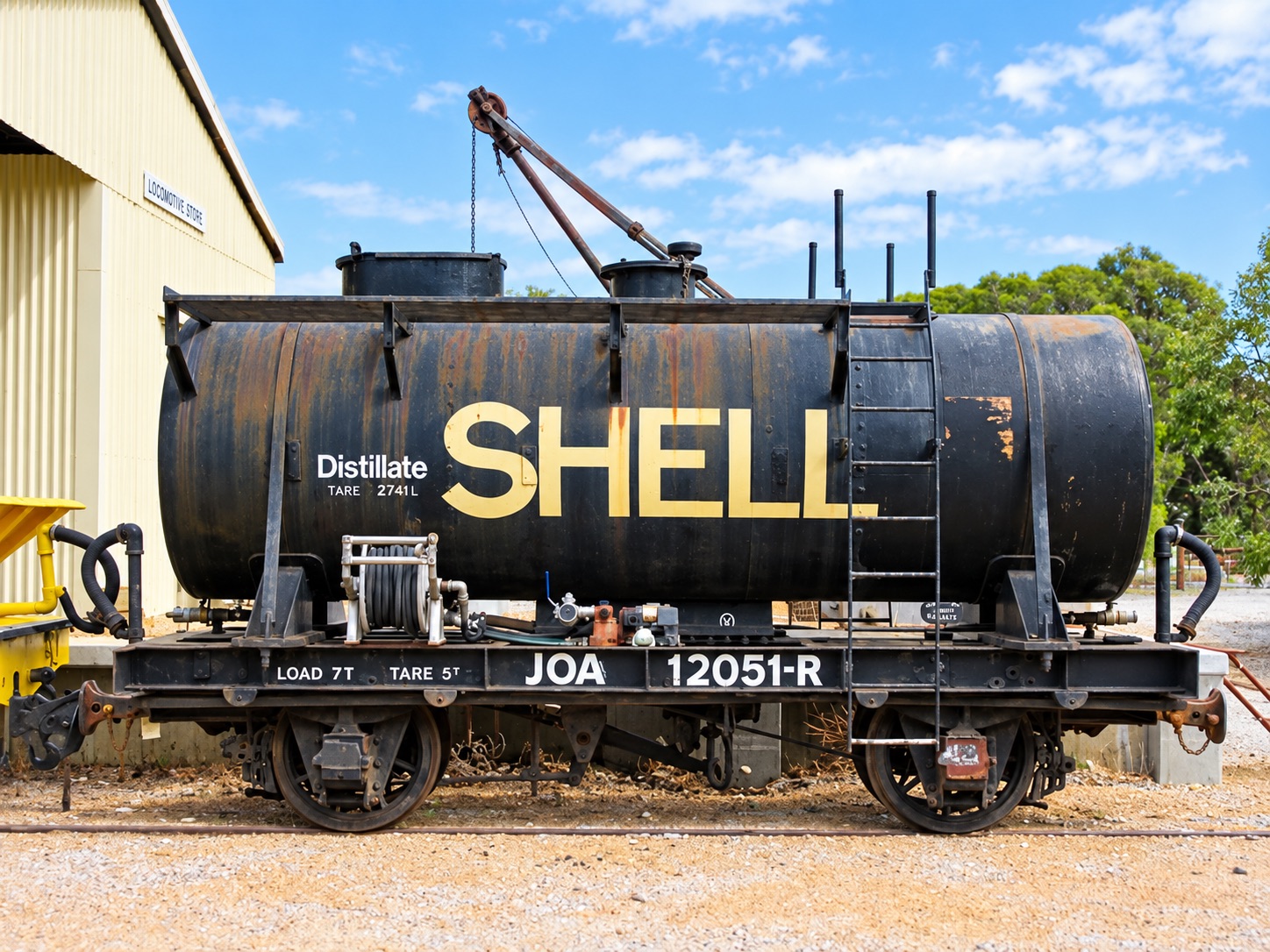
Fuel Oil tank wagon converted in 1967, using steel frames from CXA sheep wagon (12051) and oil tank from a scrapped wooden-framed JOA tanker (number unknown). This wagon was written off in 1988, and subsequently purchased by BBR. Regauging to 2ft and restoration was completed in 1990.
This tank wagon is currently used to carry water, and can act as a supplemental water tender for steam locomotives. It also has a pump and hose unit for fire suppression purposes.
More information on the class can be found HERE.
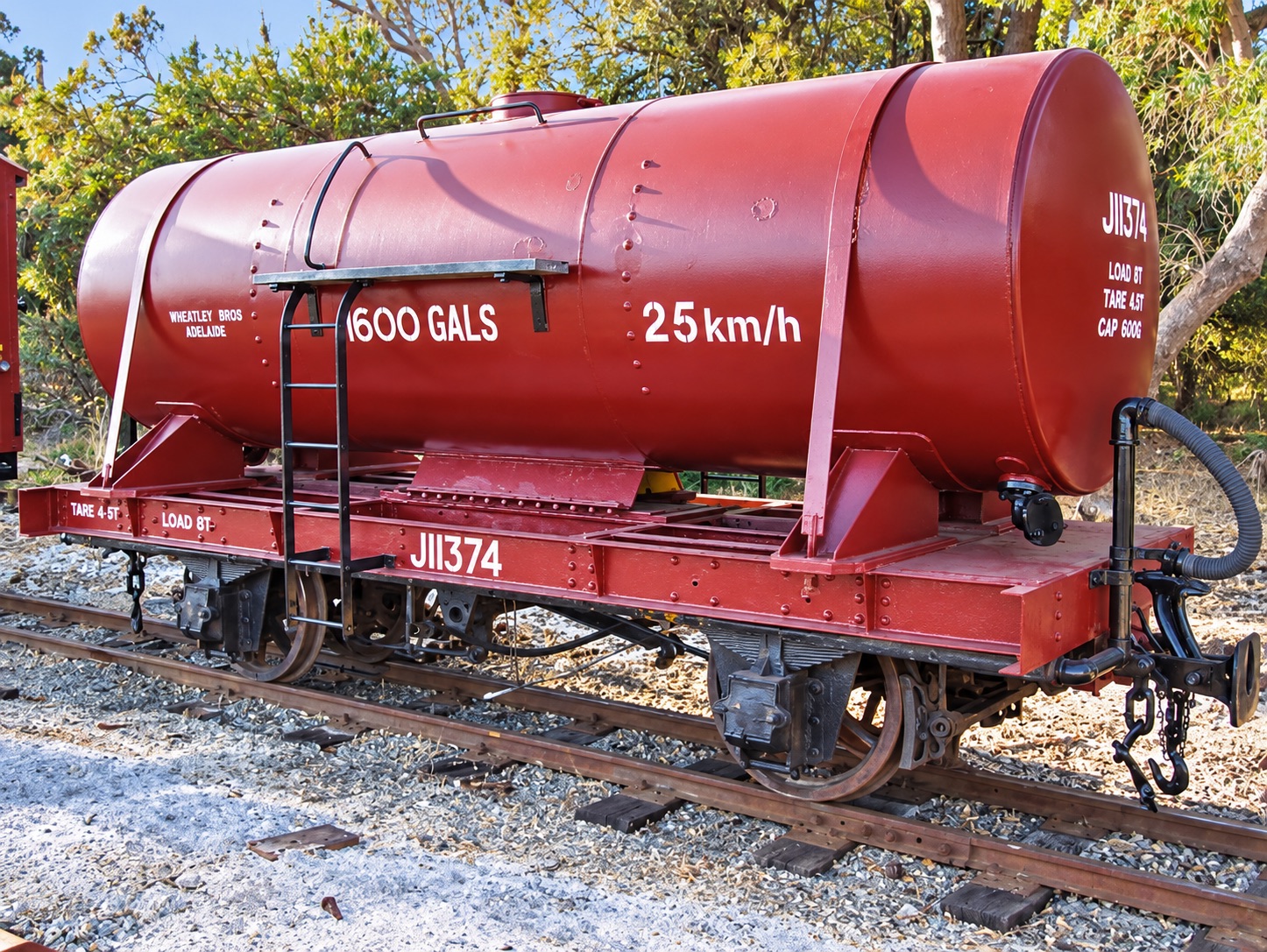
Chromate Water tank wagon converted in 1970, using steel frames from CXA sheep wagon (11374) and water tank from an older, scrapped J tanker (number unknown). This wagon was written off in 1988, and subsequently purchased and restored by the BBR in 1992.
This tank wagon is currently used to carry water, and can act as a supplemental water tender for steam locomotives. It also has a pump and hose unit for fire suppression purposes.
More information on the class can be found HERE.
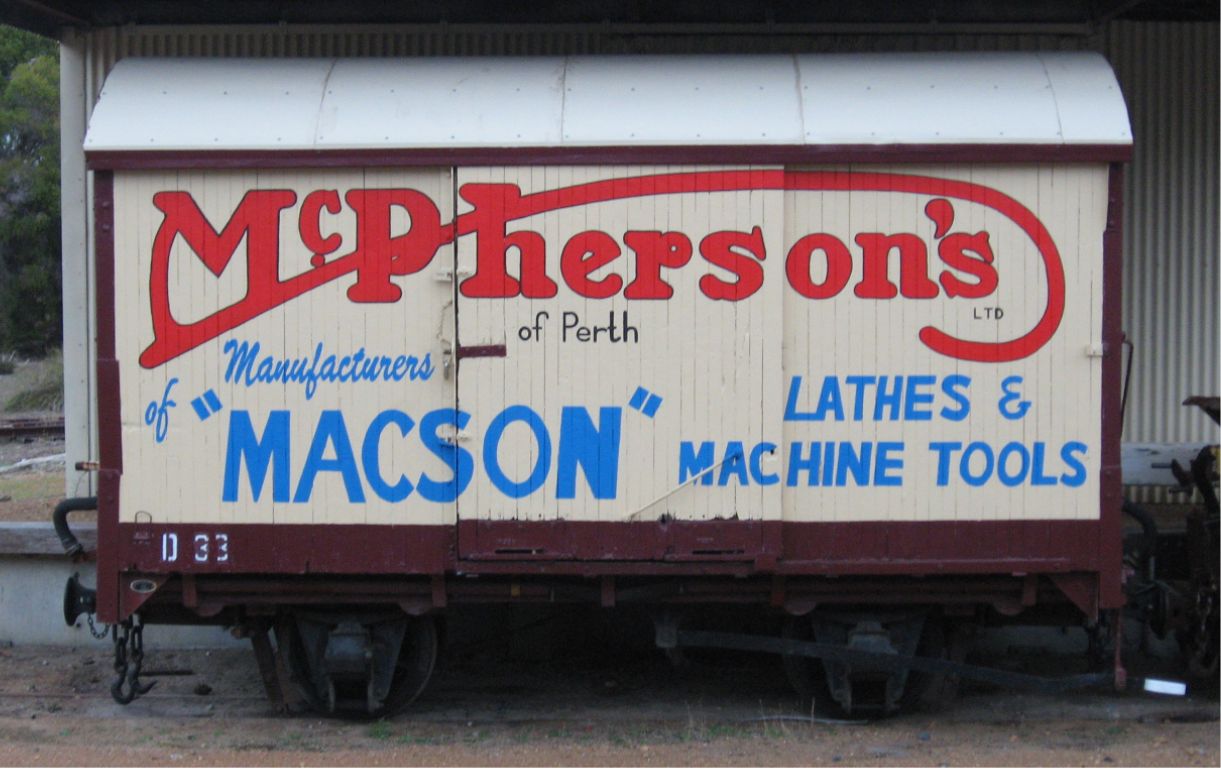
General-purpose covered freight wagon. Built by in 1907 with a 15’0″ underframe. Rebuilt by the WAGR’s Midland Workshops in 1953 with a longer 16′ underframe. Written off by the late 1970s, with the wagon body subsequently being used as an explosives store at WAGR’s Midland workshops.
This wagon’s body was purchased by BBR members from salvage in 1994. Restoration using underframes from an LA class ballast wagon was completed in 1995. D33 is used for storing track gang equipment, and is finished in an eye-catching McPherson’s Tools advertising scheme that was originally worn by DA Van 10962 in 1958.
General-purpose covered freight wagon. Built by Gloucester Railway Car and Wagon Co to a New Zealand design in 1895 – Classified D and then later reclassified DW when it was transferred to Departmental use as a Workmens’ van. It was written off in the late 1960’s and was put to use as a grounded body on a property on Middle Swan Rd Caversham. The Main Roads Department of WA donated the wagon to the BBR in the mid-1980s. Restoration Pending.
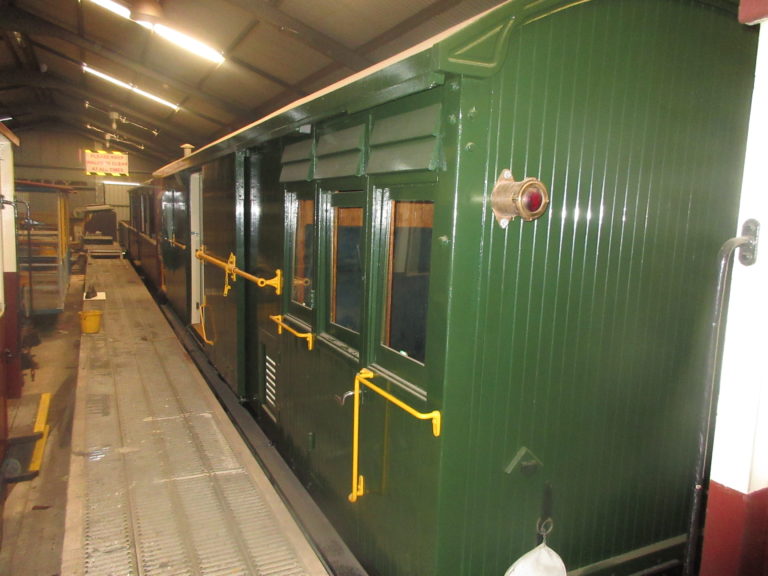
The Government of West Australia authorised major expansions of its country branchline network after the First World War. To improve the quality of transport offered to settlers in these newly-connected regions, the WAGR authorised the construction of ZB class Brake Vans between 1926 and 1933. ZB213 was built by the Metropolitan Carriage Works, Manchester UK, and entered service in 1927.
ZB Brake Vans were run as part of Mixed (Passenger and Freight) trains, to provide accommodation for travellers to and from remote country stations. The class was retired from passenger duties in the late 1950s as country rail services were contracted. ZB Brake Vans were steadily withdrawn between 1950 and 1985. ZB213 was withdrawn in 1977.
ZB213’s body was stored in Kewdale Yard until it was donated to BBR by Pacific National in the early 1990s. Detailed restoration of the wagon’s body and frame to operational condition was completed in 2019. Work on brakes and drawgear is underway.
Further information on the class can be found HERE.
ZB 213 is now complete this will provide visitors to the railway a taste of country passenger travel during the interwar years in WA.
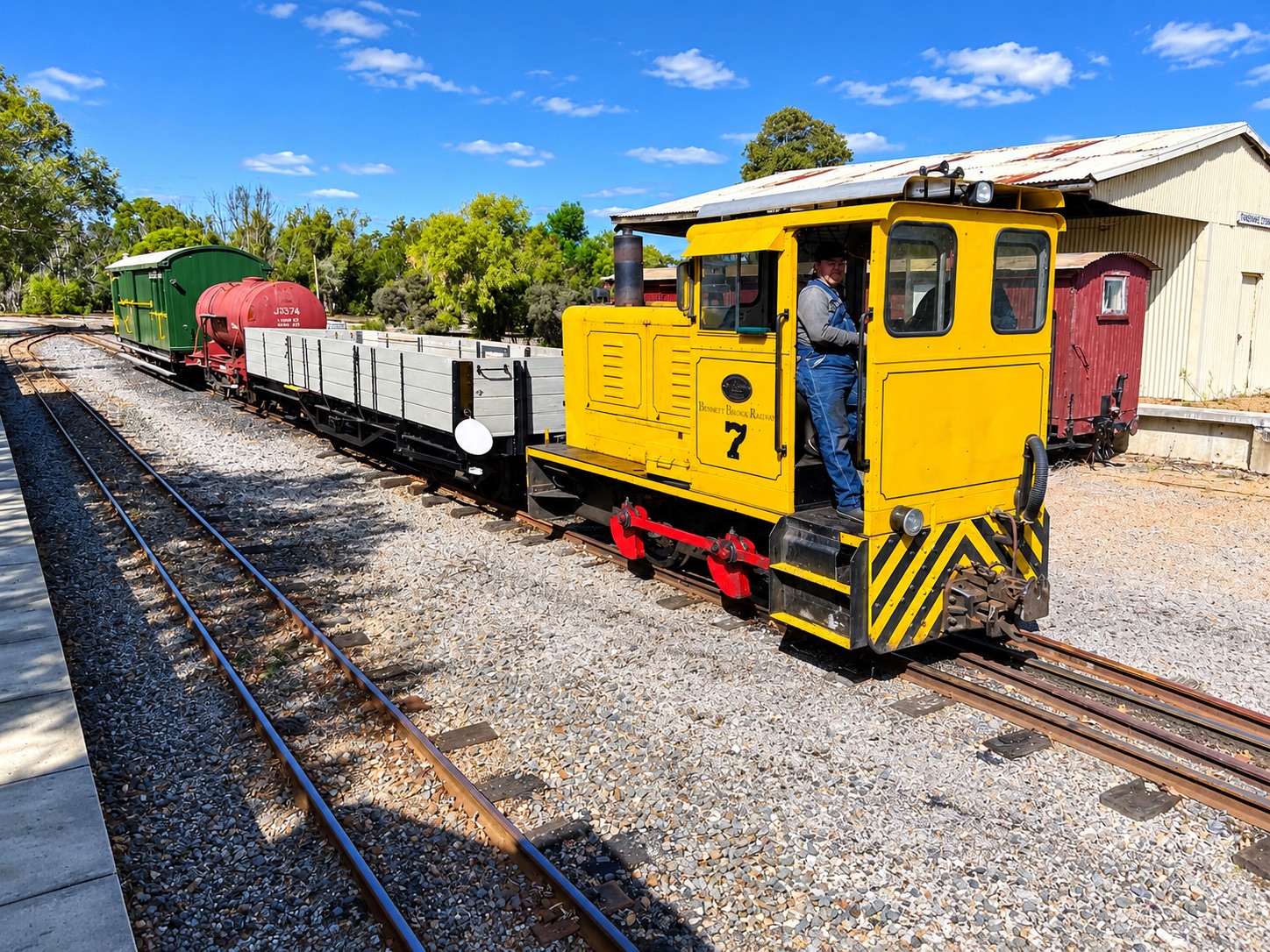
The R wagons were a general-purpose wagon that could carry freight. They had provision to have tarpaulins placed over them to protect the goods.
There were two versions a 4 door and 2 door. The doors were drop doors so when at a platform they acted as a ramp.
We have five R wagons all dating from around 1895 all built by either Stableford & Co., Coalville, Leicestershire, England or Oldbury Railway Carriage & Wagon co. Ltd., Oldbury, West Midlands, England.
- R 1638 now AR 1638 Total rebuild commonly known as the dance floor.
- R 1751 painted delivery grey
- R 1783 now RP 1783 The P in RP indicates R wagon with a roof.
- R 3644
- R 4461 now RP 4461 We believe this is the only 4 door R wagon remaining.
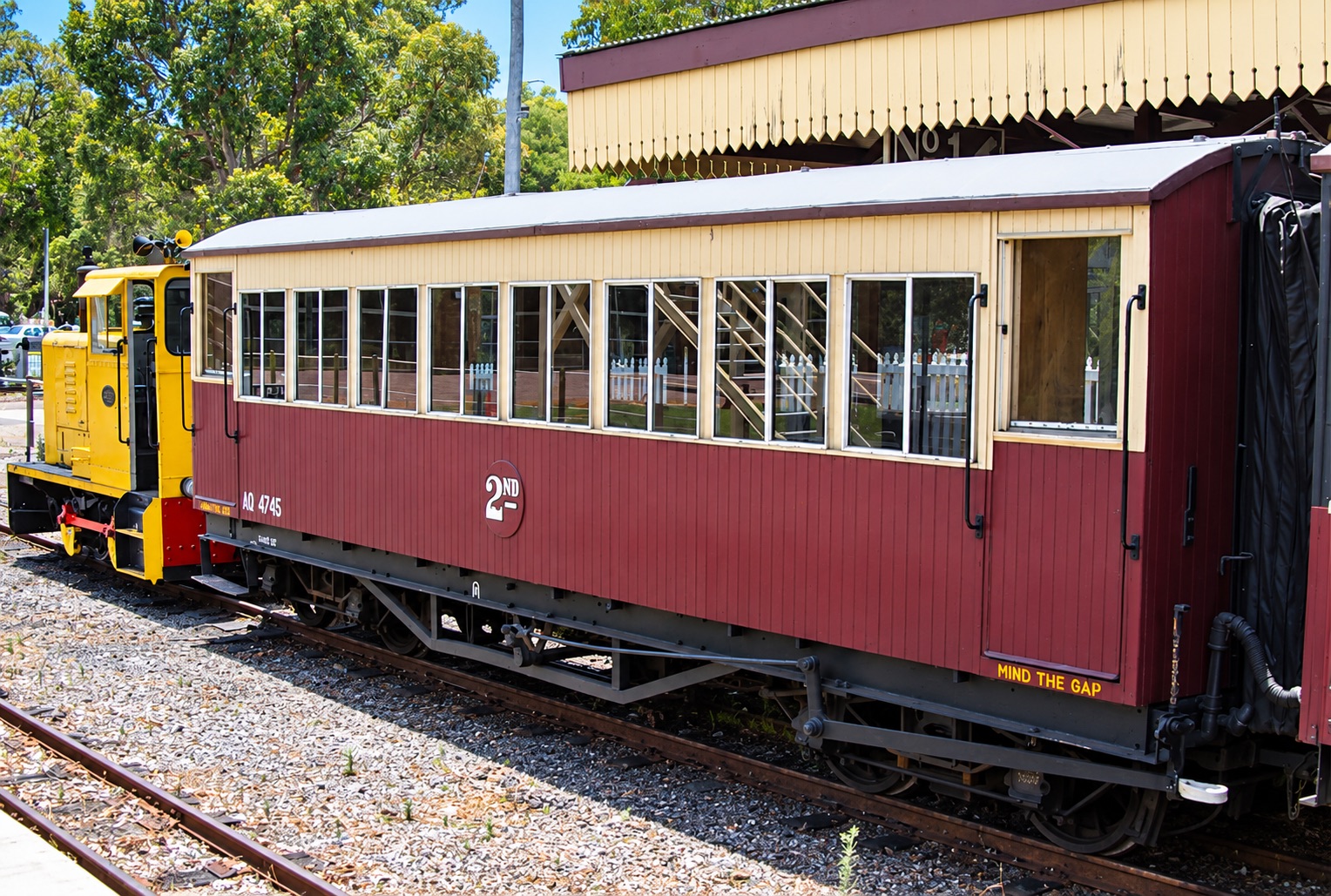
Built by Oldbury Railway Carriage & Wagon as an R wagon. Entered service July 1896. In July 1970 they were sent to Tomlinson to be rebuilt as QBB. They were written off in 1984 and purchased by Bennett Brook Railway and rebuilt in 1985 into an AQ.
- QBB 1788 rebuilt as AQ 1788
- QBB 4745 rebuilt as AQ 4745
- QBB 2970 rebuilt as AQB 2970 (B means internal guards’ brake)
Built by Stableford & Co. it entered service August 1897 as a V van. It was written off by W.A.G.R in 1968. Used as a lunchroom at Midland Workshops until it was purchased by us in the 1980’s. It was rebuilt into an AV and then fitted out as our Party Coach. It now sits on platform 3 and is available to hire for children’s birthday parties.
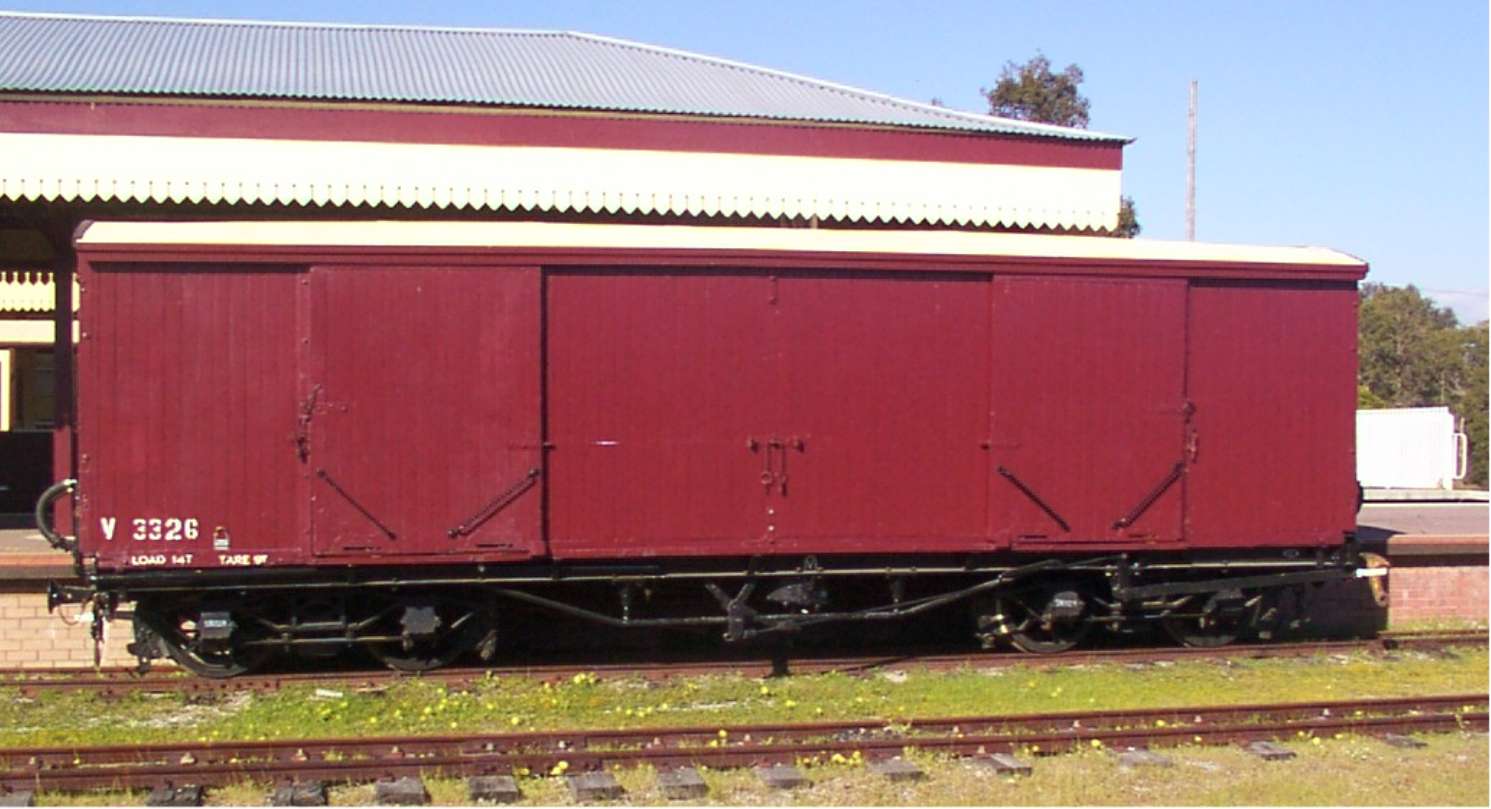
Built by Stableford & Co. Coalville England it entered service in 1898. This wagon was rebuilt by W.A.L.R.P.A in about 1994. V 3326 has been used as a mobile shed and is currently being used by our Signals Department. This wagon was the reason for our new colour scheme. Up to this point our passenger carriages were Chocolate Brown. It was decided to adopt the old W.A.G.R freight colour of Indian Red. Our membership liked it and it was decided to change our passenger carriages to Indian Red and Cream.
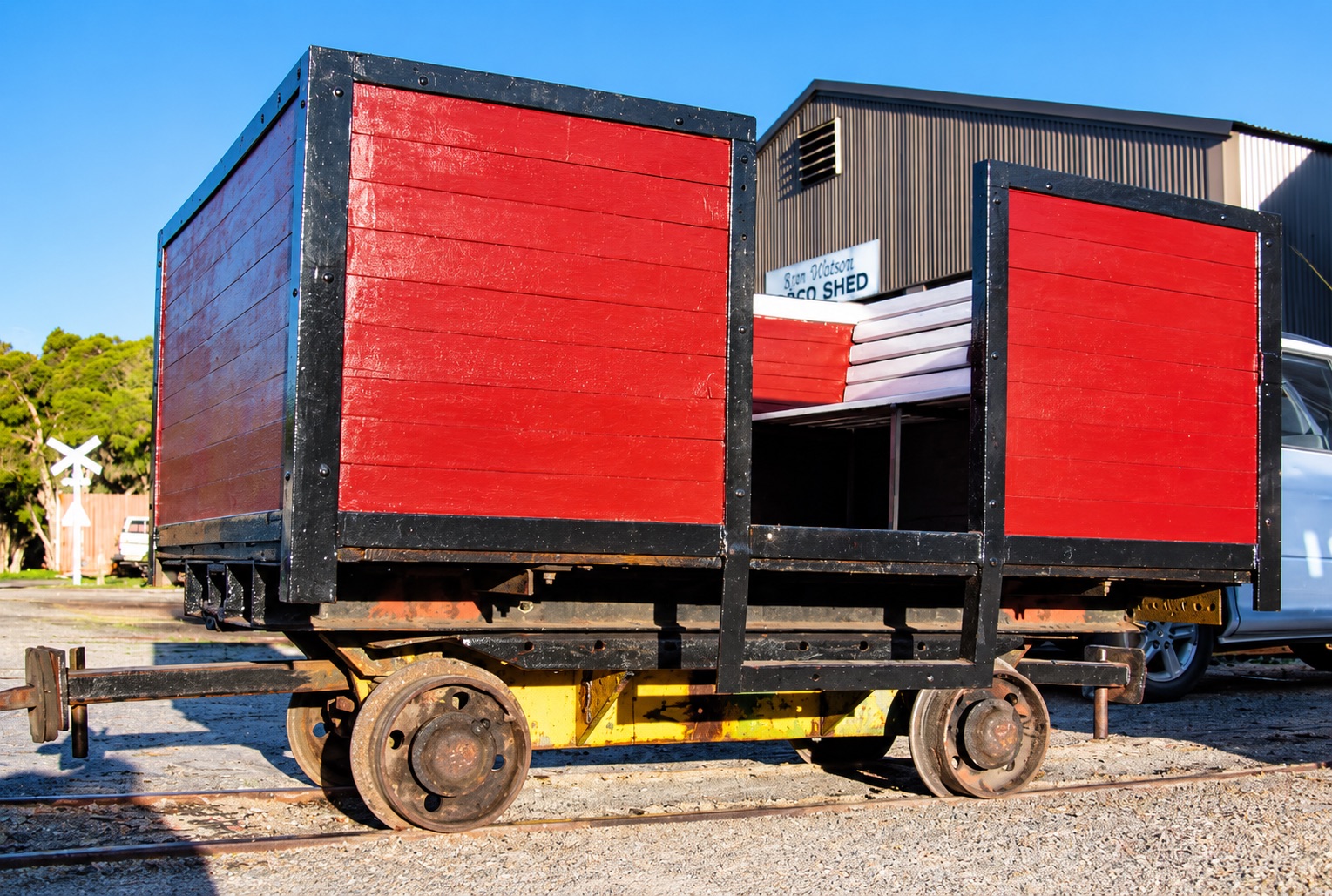
3 C Wagons were built at the Watson residence in Hazlemere and were the first used in operations when we commenced operations at Whiteman Park. The railway was told by Whiteman Park and the Commission that we would only have small loadings. This proved very quickly not to be the case.
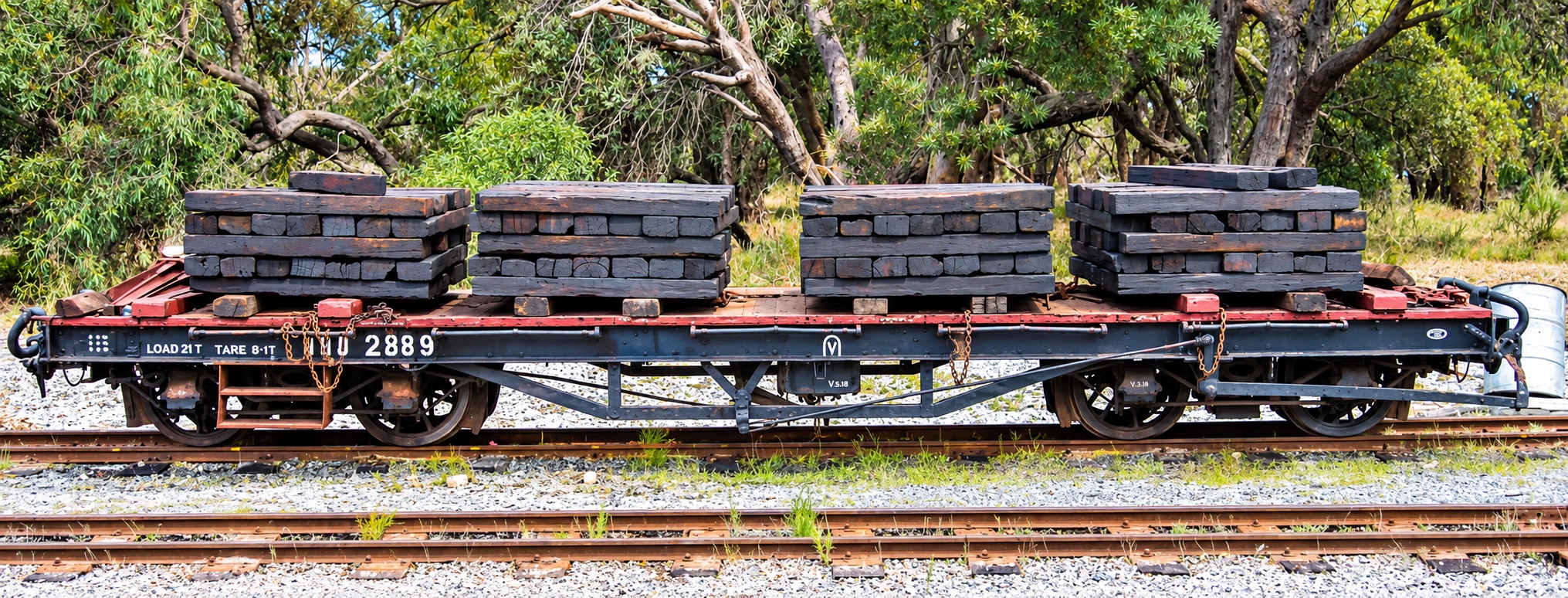
Are flat bed wagons often used to carry rail or other items to site.
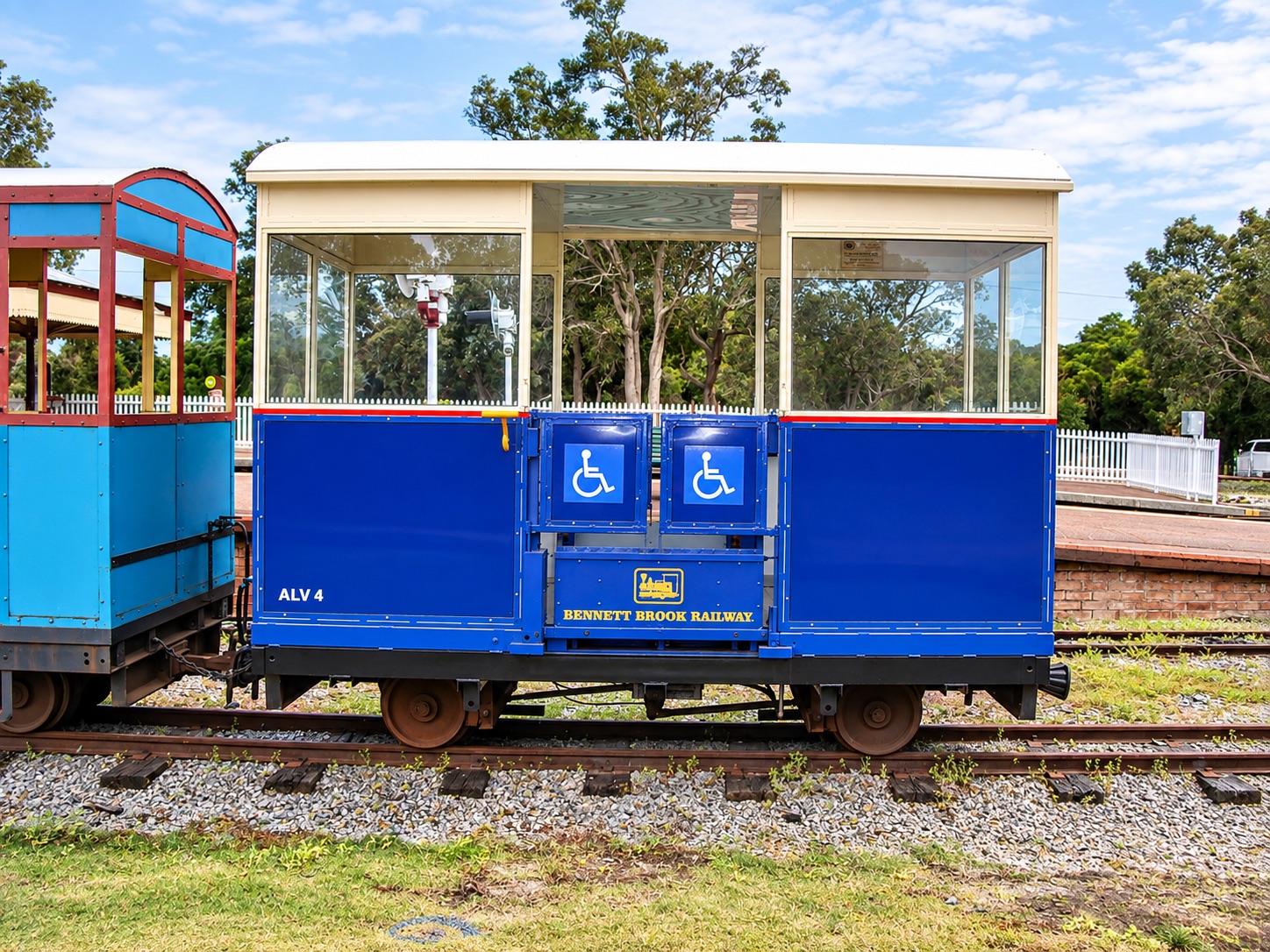
At about the time the upgrade on the Ashley set took place, the mid-week crew saw the need for a dedicated wheelchair wagon capable of taking the larger heavier wheelchairs. Geoff Smith headed the project to design and build it. A Lake View and Star hopper chassis was used as the base for the wagon. The wagon has an air brake system with a brake to each wheel.
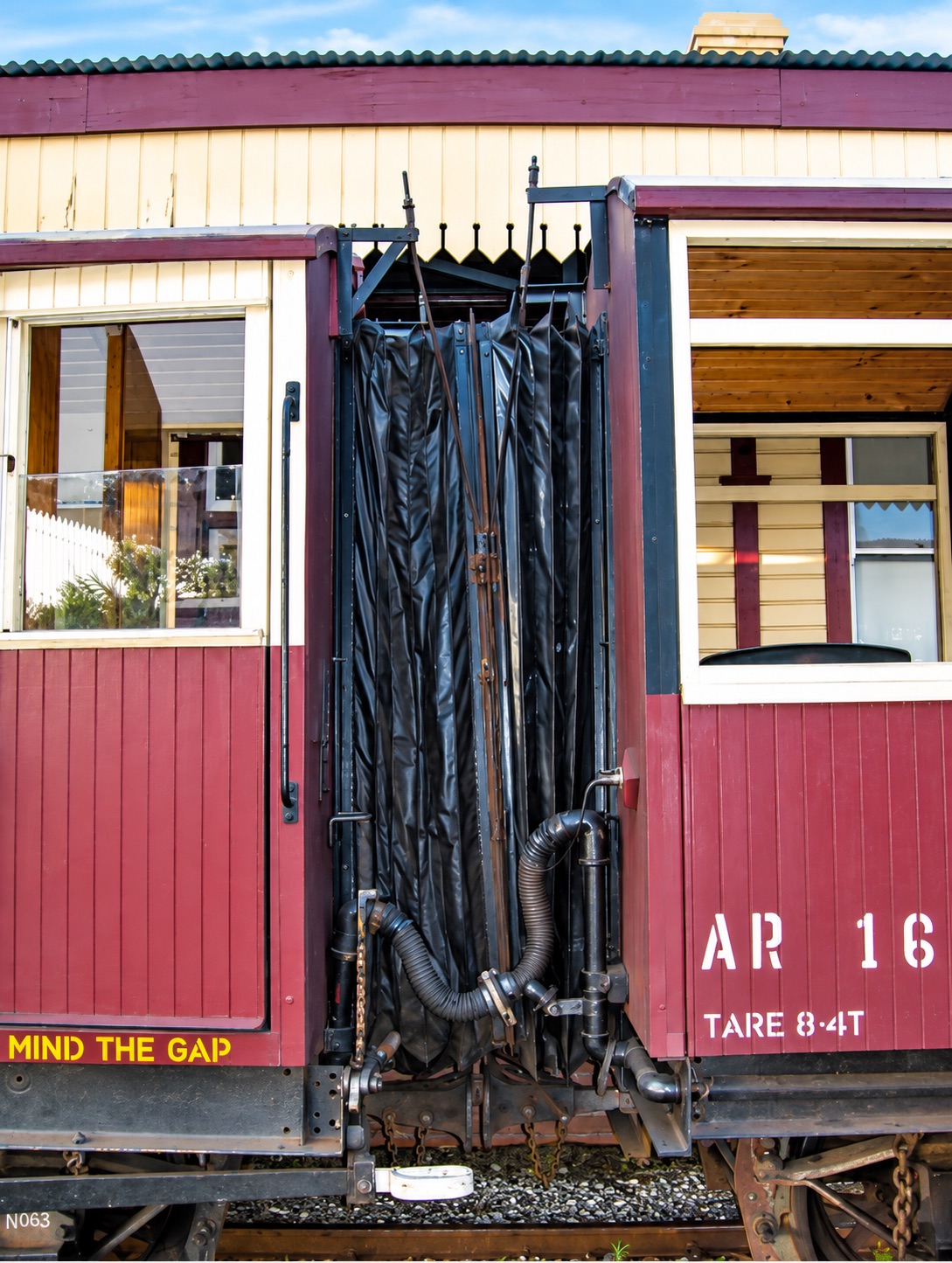
The need for our guards to be able to access all the carriages for safety reasons was the catalyst for the concertinas. Ken Watson who apprenticed at WAGR knew how to make and repair concertinas. Our carpenters cut door frames in on the end of each carriage. The concertina has two matching frames joined by three convolutions sewn from PVC truck side material. The middle frame floats, being suspended by an overhead hanging frame with all thread rod with compression springs top and bottom. The other end is fixed to the carriage end. We replaced the Jones coupler with a more secure ‘coach link.’ The walking plate floats between each carriage held in place by locating pins to steel plates fixed to each carriage inside the concertina envelope.
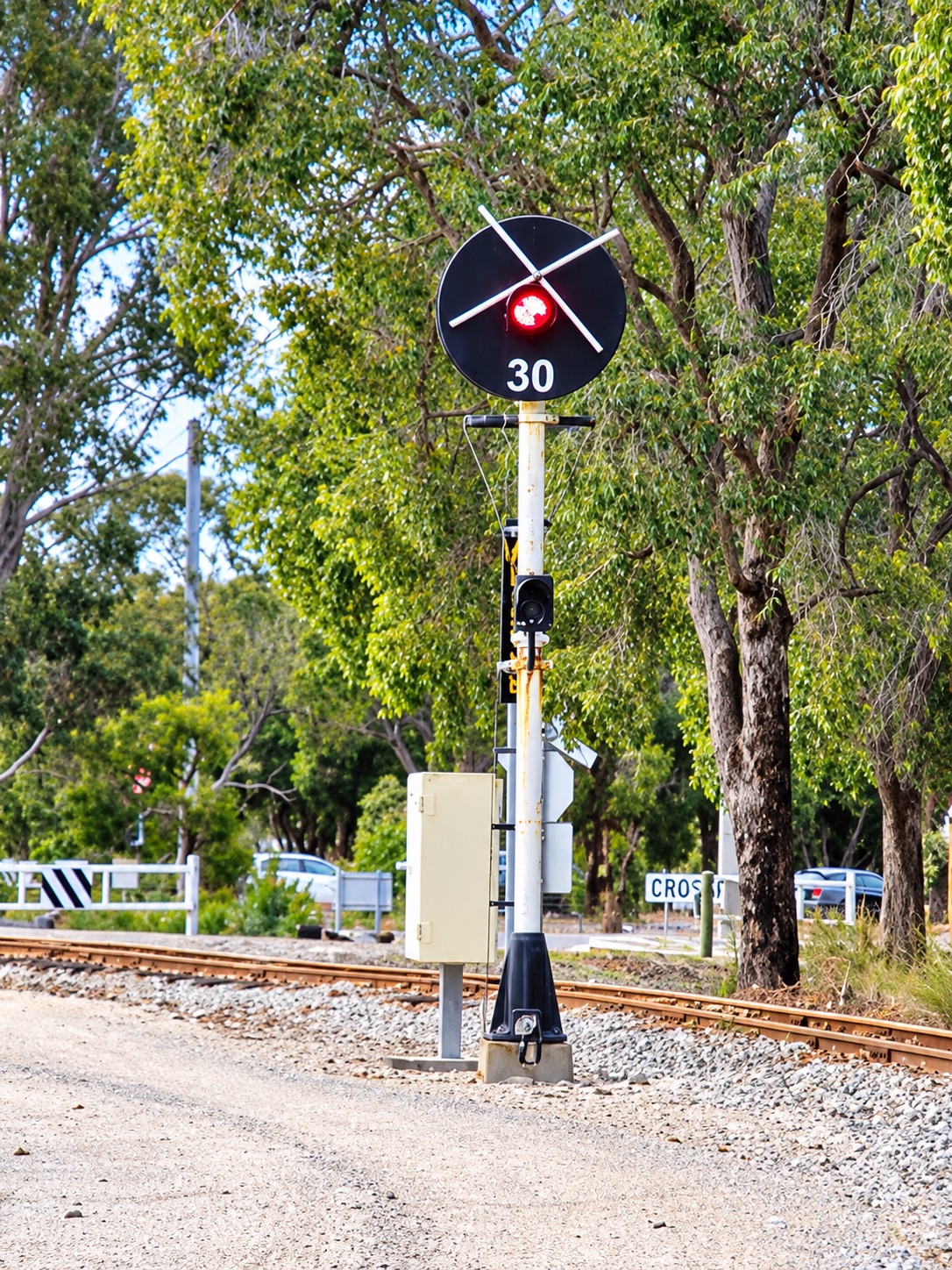
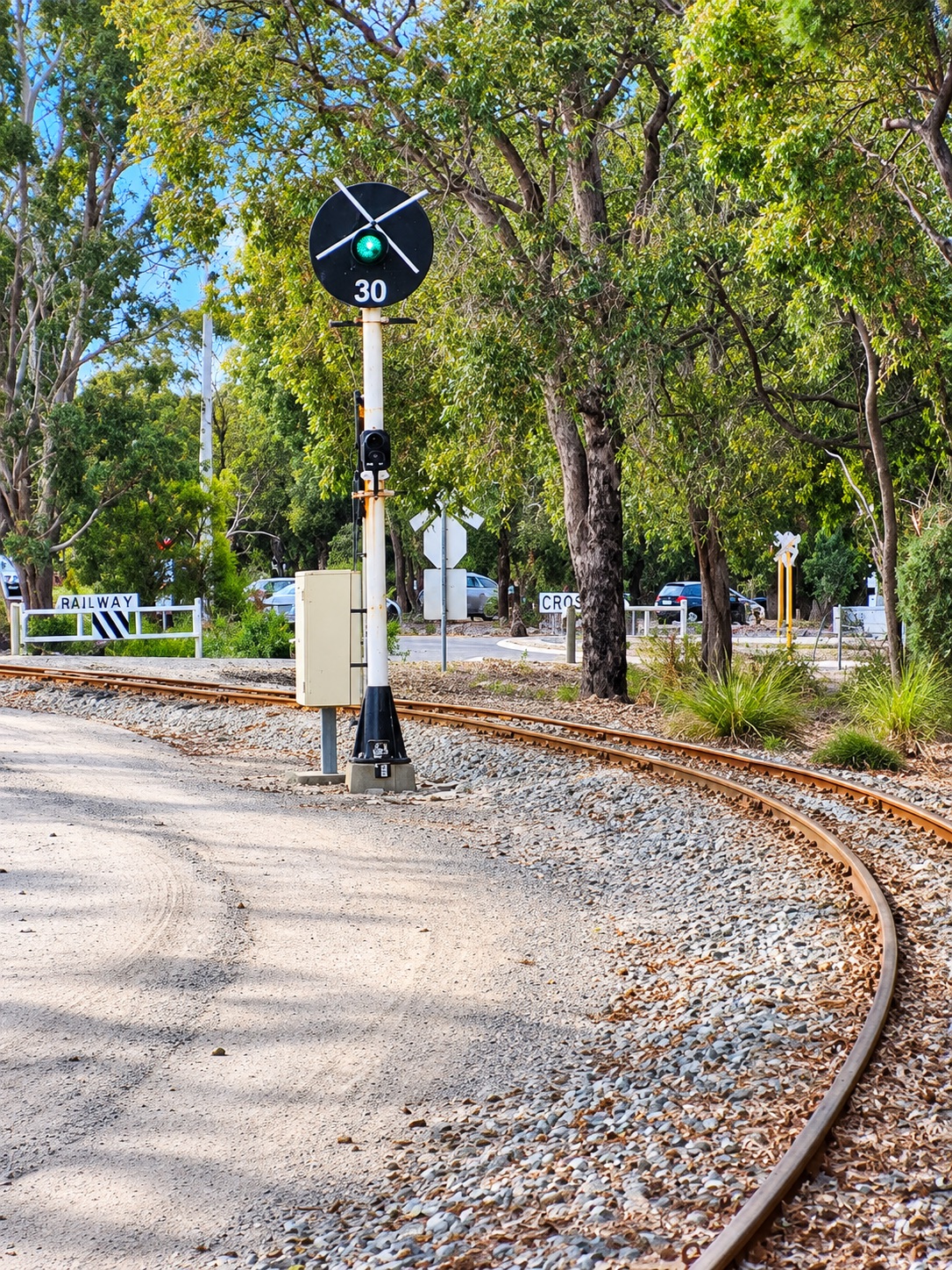
Colour Light signals were introduced into WAGR service in the late 1940s, with the introduction of Centralised Traffic Control (CTC). This ‘Searchlight’ type of signal has been used until recently on former WAGR mainlines and in the suburban area.
The southern half of the Bushland Loop and approach to Whiteman Village Junction from Mussel Pool is signalled with Colour Light signals, which light up as a train approaches. If the line ahead is clear, a Green aspect will be shown to the train driver. If it is not, a Red aspect will be displayed and the driver will need to stop the train.%hr.dark-line
Automatic signalling was used to improve traffic capacity on the old Eastern Railway region between Koojedda and Bellevue between 1926 and 1966. These were Upper quadrant, 3 position electric signals from the General Railway Signal Company in the USA. The patent for these signals is dated 1918.
Upper Quadrant signals are installed at Zamia station, halfway along the Bushland Loop. The signals will activate as a train approaches from either end of the station, and show a ‘Caution’ and then a ‘Clear’ aspect if the line ahead is unoccupied. Trains are permitted to pass these signals if they are at ‘Danger,’ after having come to a stop and waited for several minutes. This is the same practice historically used on the Bellevue-Koojedda section.
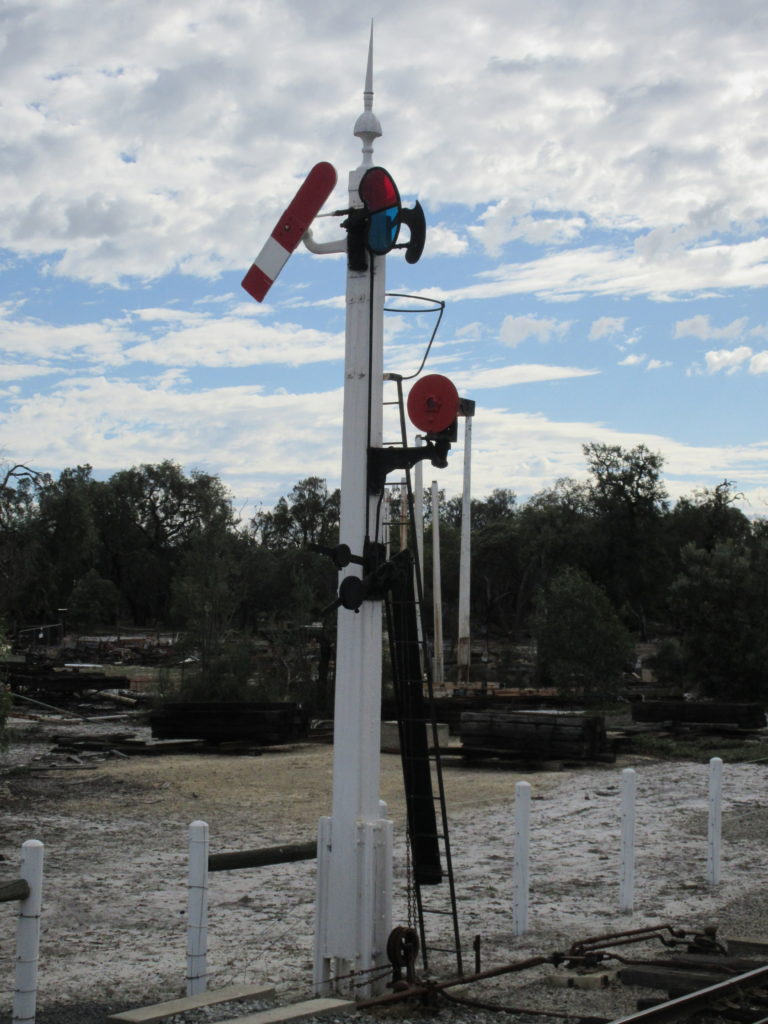
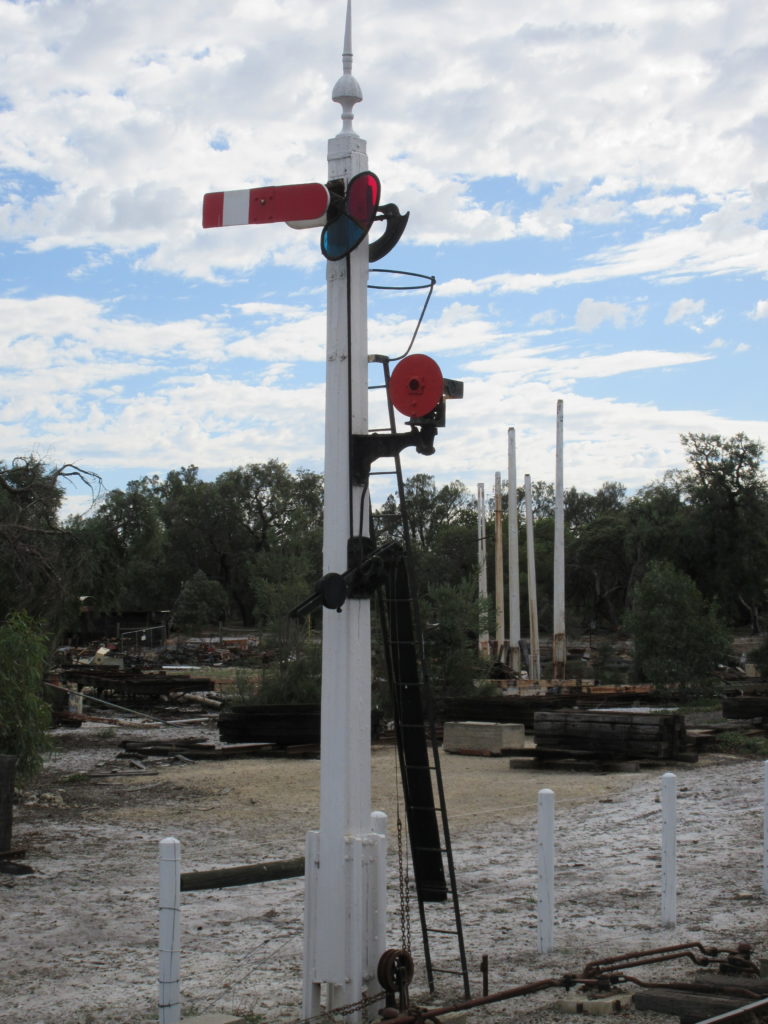
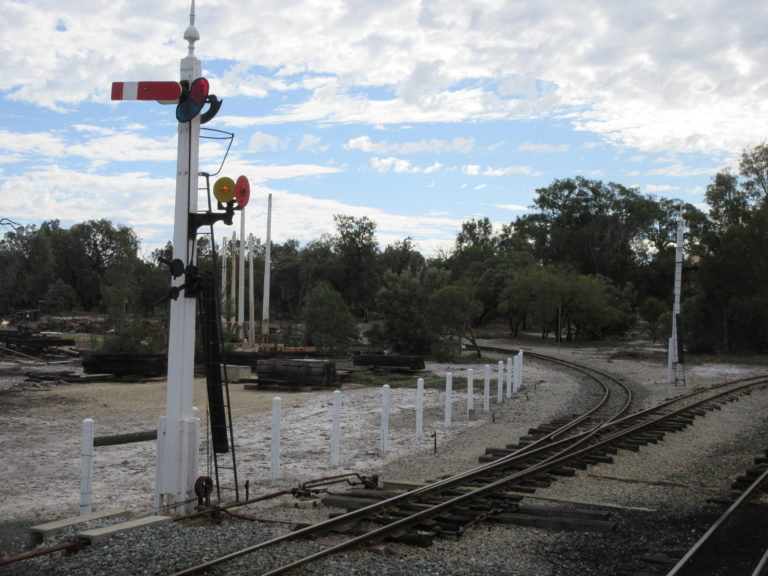
Home Signal- ‘Danger’ (Stop), ‘Clear’ (Proceed) & Shunt Signal at ‘Caution’ (Proceed slowly, ready to stop short of obstruction)
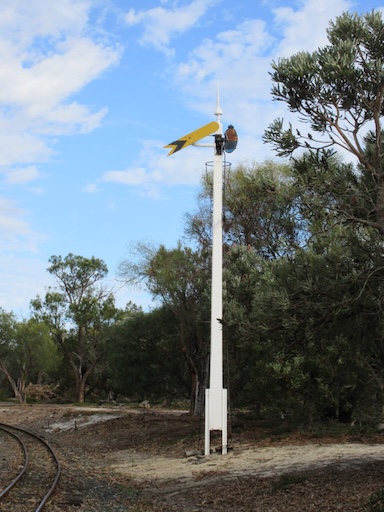
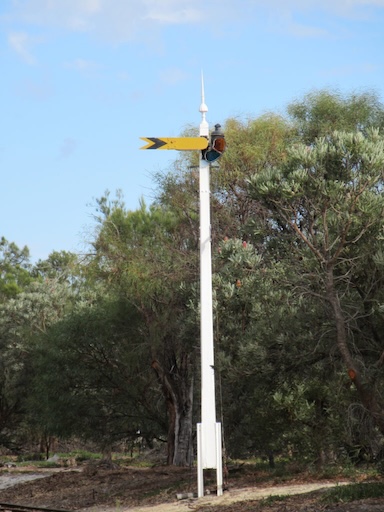
Distant Signal- ‘Caution’ (Prepare to Stop) & ‘Clear’
The Bennett Brook Railway is home to the only operating Lower Quadrant semaphore signals in West Australia. The WAGR adopted McKenzie & Holland ‘Somersault’ signals at its formation in the 1880s. These unique and rare semaphore signals were also used in Victoria.
As of May 2020, Mussel Pool station and the Northern end of Whiteman Village Junction station are fully signalled, with all trains operating under the guidance of the lower quadrant signals found there.
Other signal masts are to be found around the northern and southern approaches to Whiteman Village Junction, some of which are operable and others still to be commissioned.
Mussel Pool’s signals are operated mechanically from the signal cabins using Signal Wire and pulleys. The semaphore signals at Whiteman Village Junction are operated by electric signal motors. This allows signals to be operated centrally from the Signal Box, or Automatically by train crews when the signal box is unmanned.%br
Wig Wags
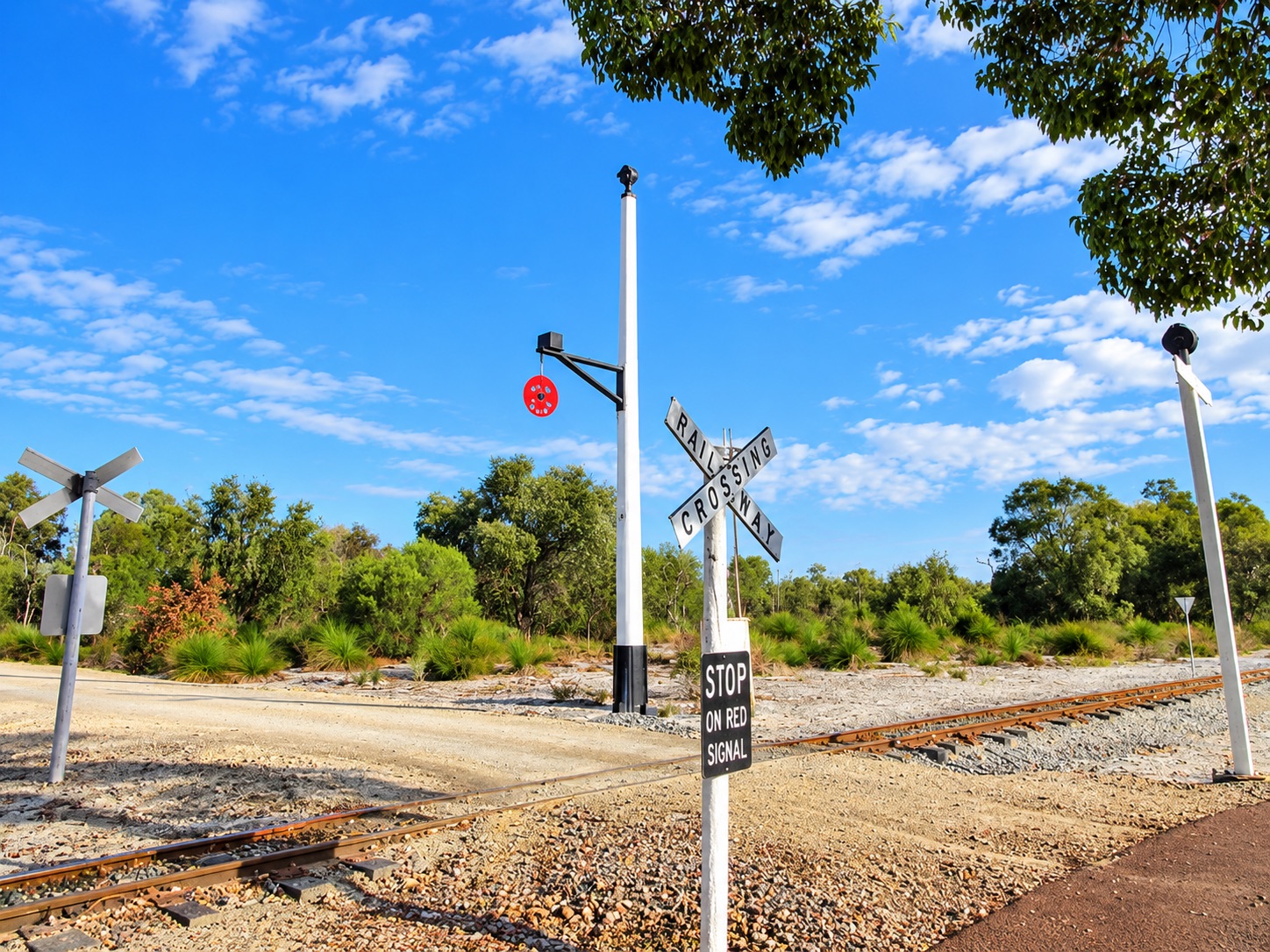
Wig Wags are an active level crossing protection system that originated in the USA. These systems were widely used across Queensland , South Australia and Victoria as their first active level crossing protection systems. When activated by an approaching train, a red light comes on in the wig wag ‘target,’ which is swung back and forth by an electric motor. A bell sounds in time with the swings.
Only one such system was employed in West Australia- At the Meadow Street level crossing in Guildford. This was installed in 1925, and was replaced by flashing lights and bells in 1948.
The Wig Wag installation on the Bushland Loop is a replica of this system. It was commissioned in 2006.
Flashing Lights & Bells
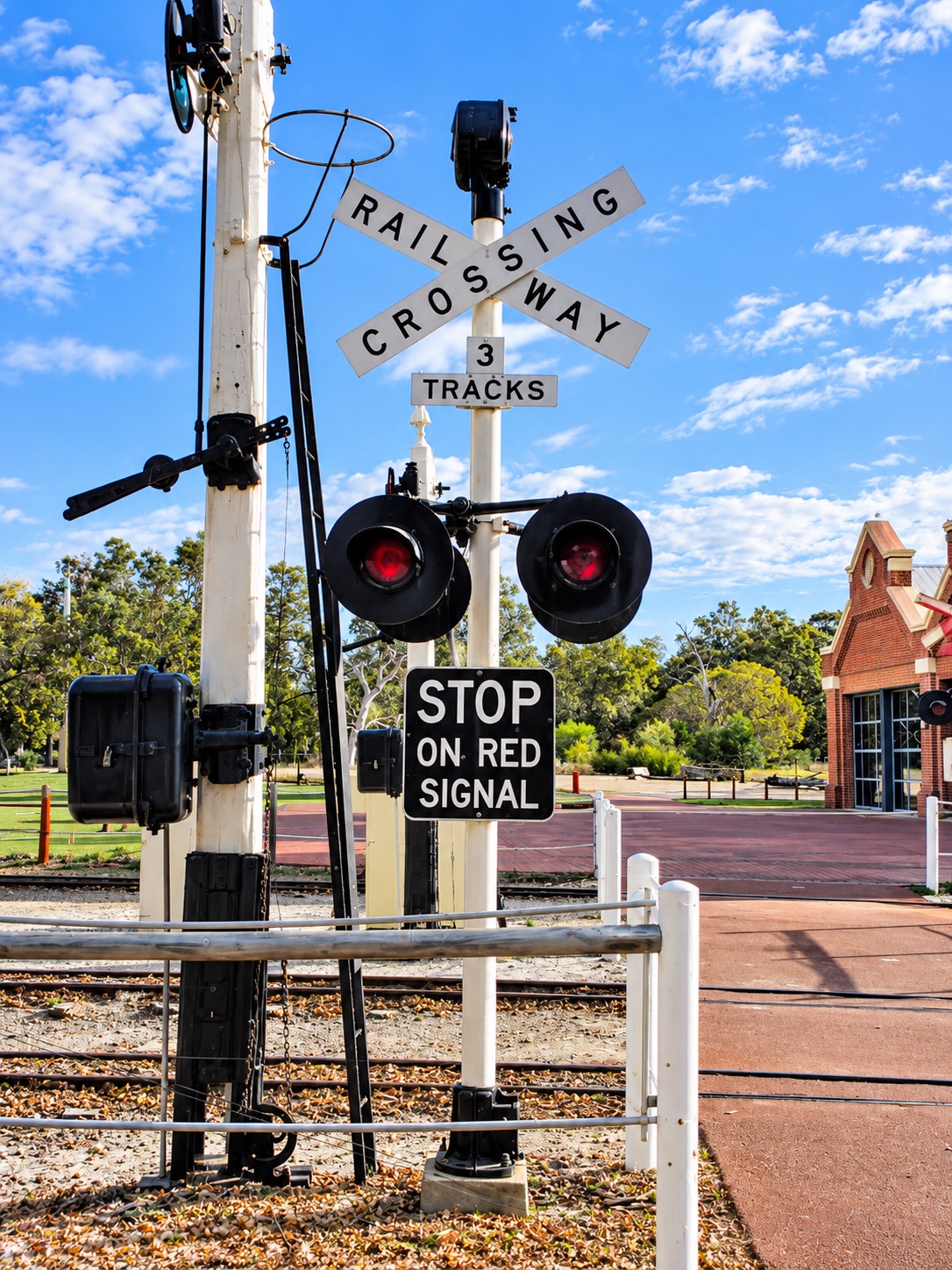
Flashing lights and bells have been employed in West Australia since the 1930s. Equipment used by the WAGR was purchased from Westinghouse Signal Company and McKenzie & Holland. Multiple examples of this type of crossing protection can be seen on the Bushland Loop.
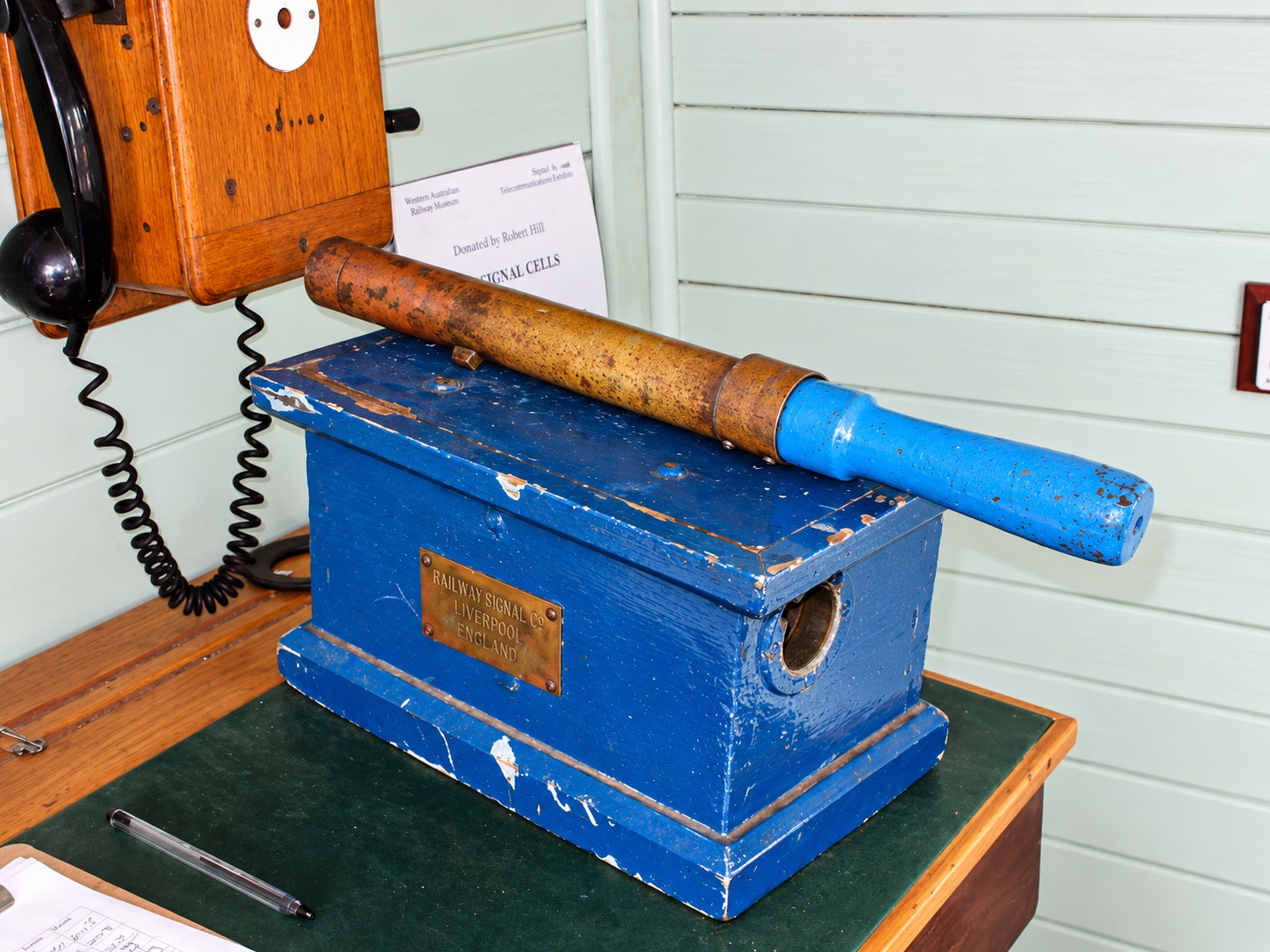
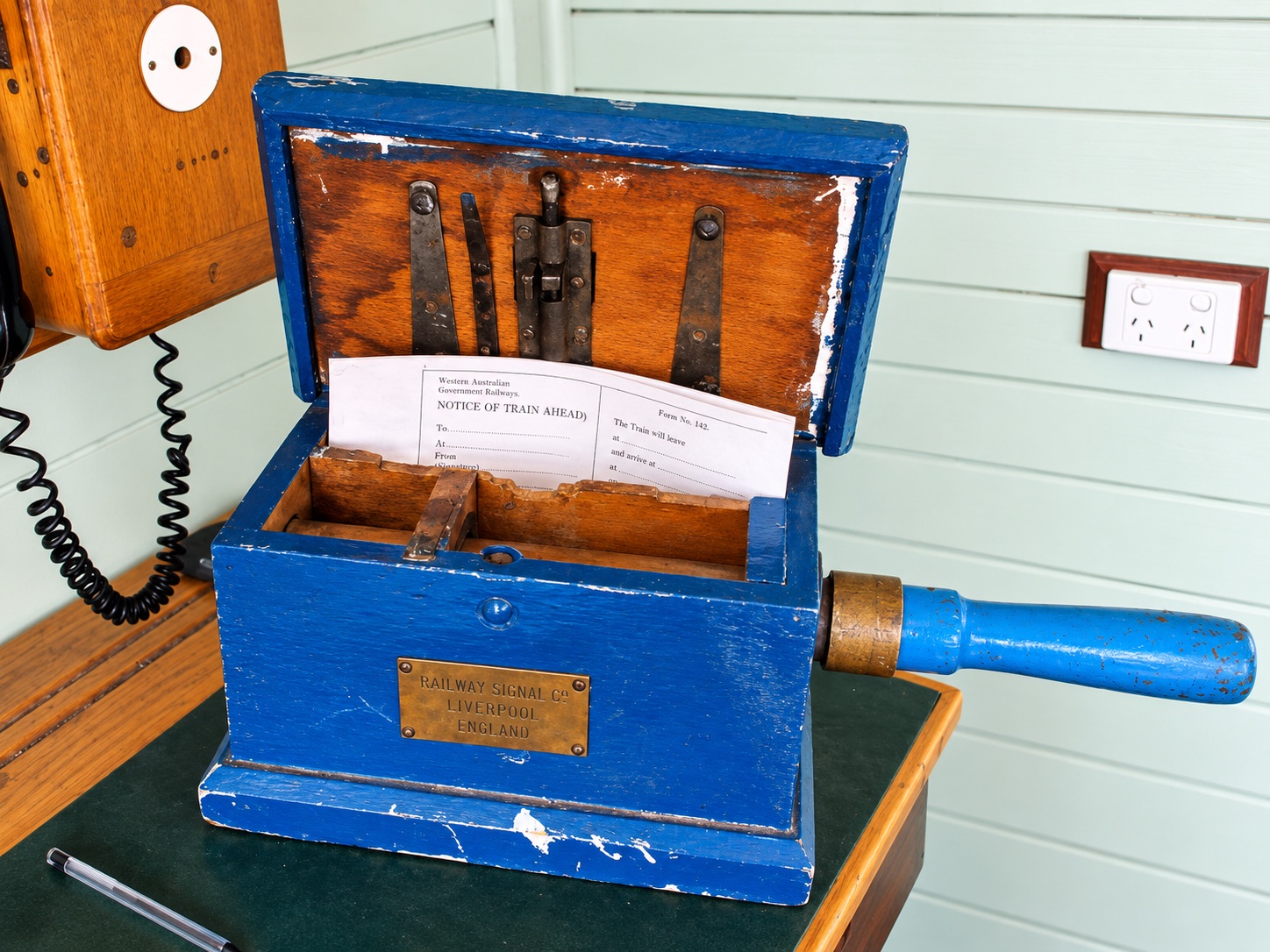
Train Staff and Ticket Box- Mussel Pool
Staff and ticket is the safe working method employed on the Bushland Loop.
The driver must be in possession of the staff for the section at any time his train is outside the Whiteman Village Junction station limits.
If two trains are to travel in the same direction on the Bushland Loop, a ticket is issued by the signalman indicating the date and time of issue and type of train. The ticket is given to the driver of the first train who accepts it providing he is shown the staff for the section. The driver of the second train receives the staff with a copy of the ticket attached.
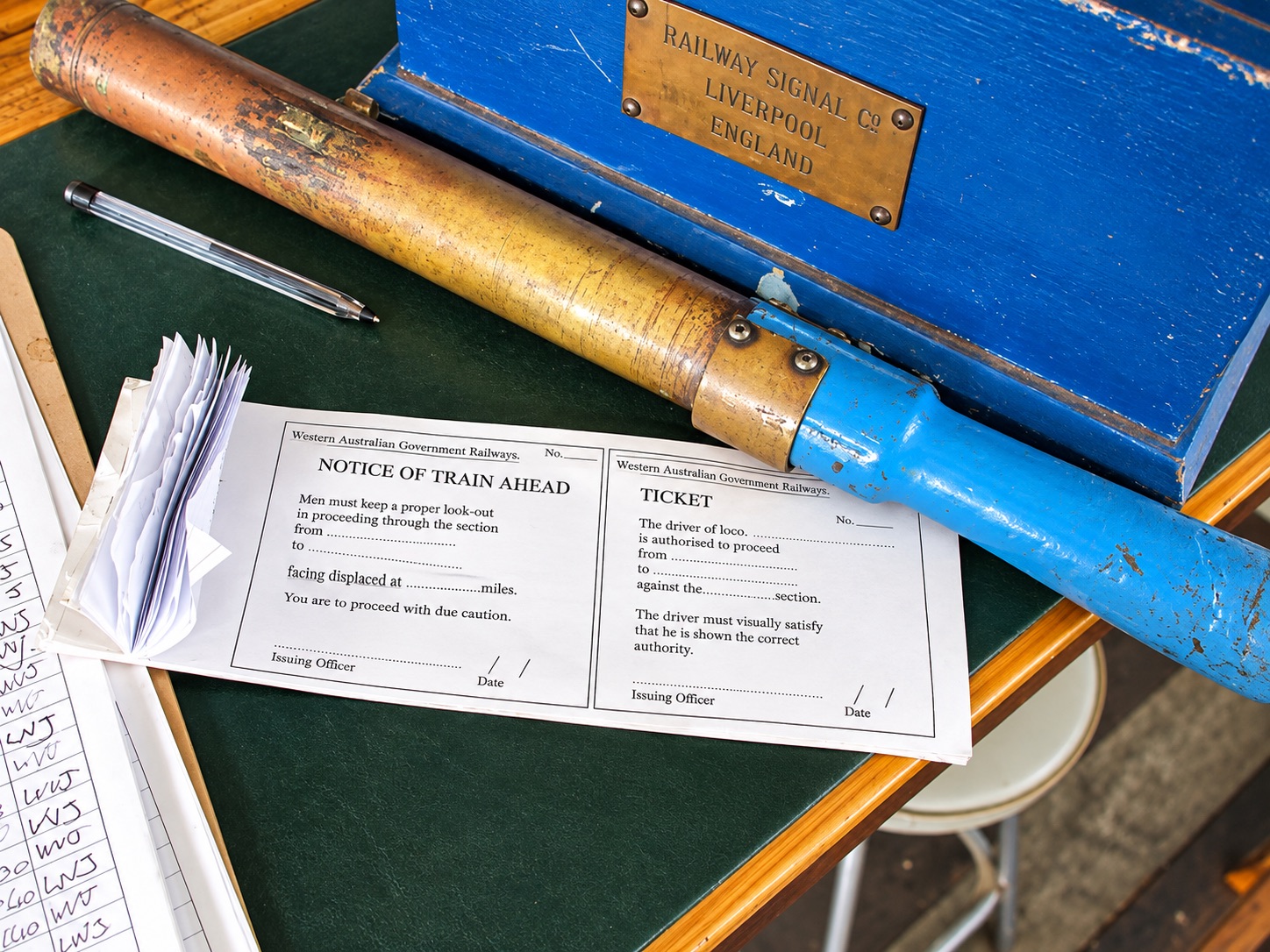
Ticket Pad containing Notice of Train Ahead (L) and Ticket (R)- Mussel Pool Station
Electric Train Staff is the safe working method employed on the Mussel Pool line. Electric Train Staff working was once used extensively throughout the WAGR system. It was fully supplanted in the 1990s by Train Order working via 2-way radio on remote branch lines, and CTC on all main lines. The BBR electric staff is the only working installation now remaining in WA, and possibly the only such working example on a tourist or heritage railway in Australia.
Large electric staff instruments are located in the Mussel Pool and Whiteman Village Junction signal cabins. The driver must be in possession of a staff for the section any time his train is outside the station limits of Mussel Pool or Whiteman Village Junction. There are a total of 16 staffs housed in the staff instruments. If the line is clear, a staff is withdrawn from the instrument and given to the driver. Once a staff is removed from either instrument, both instruments are locked and no other staff can be removed. When the train reaches the other end of the section, the staff is returned to the instrument at that end and both instruments are unlocked indicating the line is clear. Another staff can then be removed.
How it Works
The staff instruments at Mussel Pool and Whiteman Village Junction are electrically connected by one pair of wires of the open aerial pole route between the signal cabins. At each end there is a battery providing power to the instruments.
When the line is clear, the batteries at each end are connected in opposition. There is no current flow over the pole route and the galvanometer needle on each instrument is vertical indicating the line is clear.
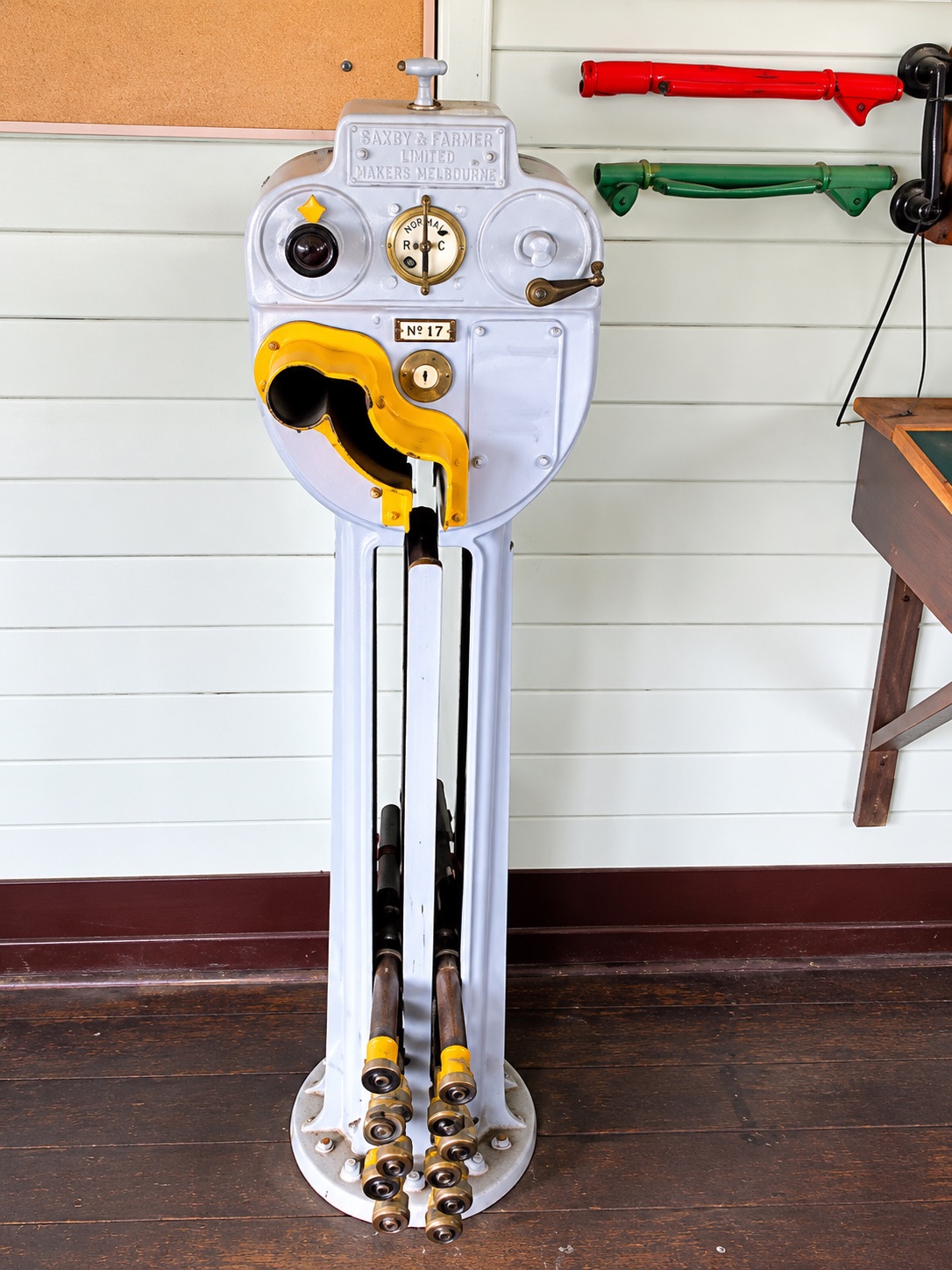
Staff IN: Line is clear
To remove a staff, two electromagnets in the instrument need to be energised in the same direction to lift the latch enabling a staff to be removed. As the staff is moved into the gate, the local battery energises one electromagnet (local coil) and the battery at the other end energises the second electromagnet (line coil). If the line is clear, both coils lift the latch to enable the staff to be removed. Removal of the staff reverses the electrical connection between the instruments and current flows over the pole route. The needle in the galvanometer on each instrument is moved to 45 degrees indicating the line is occupied.
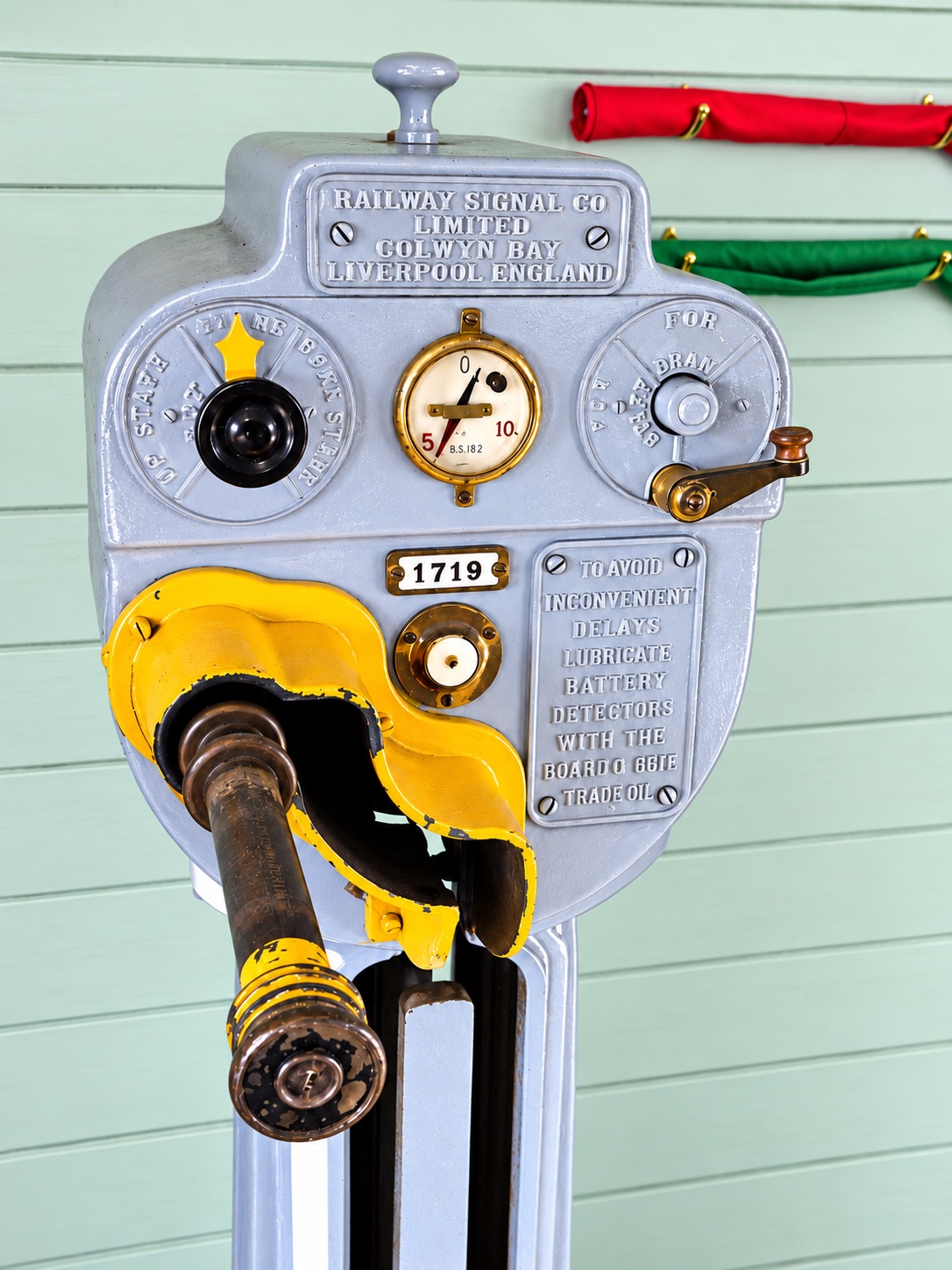
Staff OUT: Line is occupied
A second staff cannot be removed as the current through the line coil and local coil are in opposition preventing the latch from being lifted.
If the aerial pole route is broken, a staff cannot be removed as only the local coil is energised and this is insufficient to lift the latch.
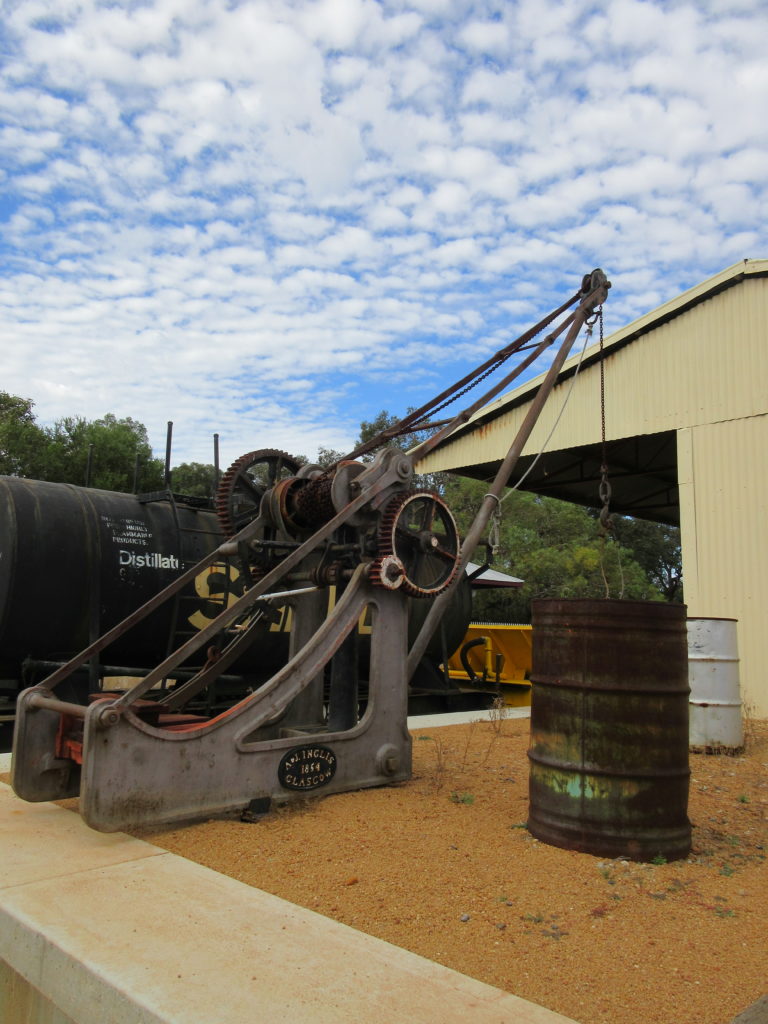
This crane was constructed by A & J Inglis of Glasgow. This company was formed in 1848 as an engineering works, and in 1863 turned to shipbuilding. The company went on to become one of the biggest shipbuilders on the Clyde before finally becoming defunct in 1963.
The crane has an approximate capacity of 1 ton. It was acquired by the WAPC ( Western Australian Planning Commission) sometime in the early 1980s. It was initially displayed in Whiteman Village, then passed on to BBR for restoration and inclusion with the Parkers Siding Goods Shed and Loading Dock at Mussel Pool.%hr.dark-line
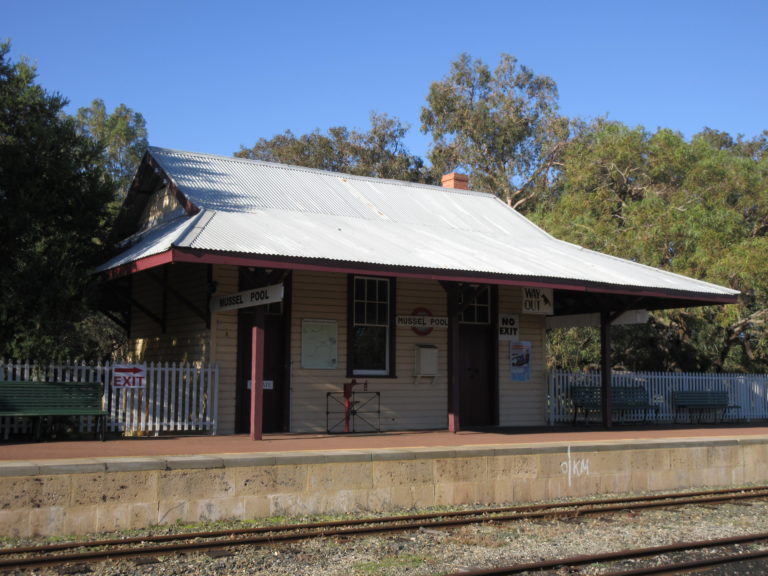
The initial trackwork and platform for Mussel Pool station was laid down in 1984. By 1988, the current track layout was complete and the station precinct was comprised of the former Pingelly bus shelter (now at Kangaroo Flats) and the Collie signal box (Donated to Collie Mens’ Shed in 2018, it is now restored). In 1987, WALRPA purchased the Nungarin station building from Westrail and with the assistance of the Australian Army Reserve’s 22nd Construction Squadron, moved it to Whiteman Park in late 1989. The station building was officially opened on the 3rd of March, 1991.
.jpg)
Nungarin is a location 280km East of Perth and 40km north of Merridin on the Eastern Railway. The line still serves the Central Wheatbelt to this day. The station building was known by WAGR as a ‘Traffic Office,’ and provided a simple and cheaply built workspace for a local Station Master. The design had no passenger amenities, and did not usually have a raised platform. The Nungarin building is unique as it is the only Traffic Office ever made of wood- All its contemporaries were brick structures.
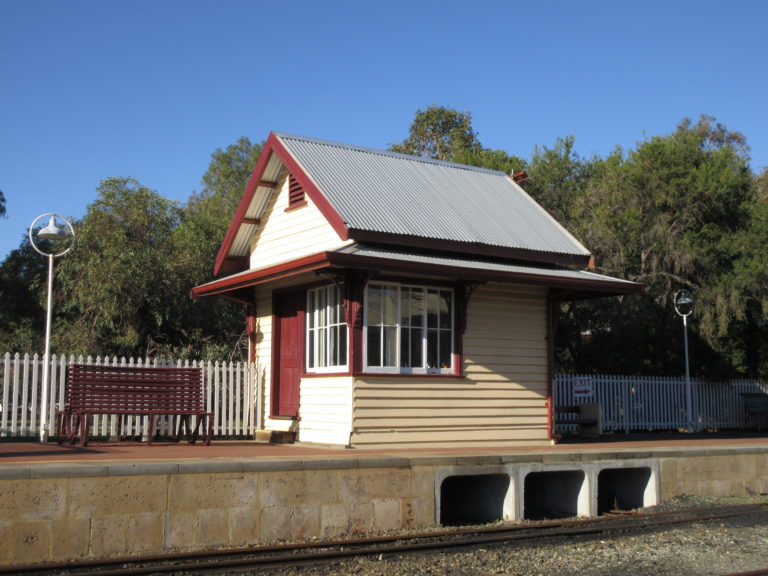
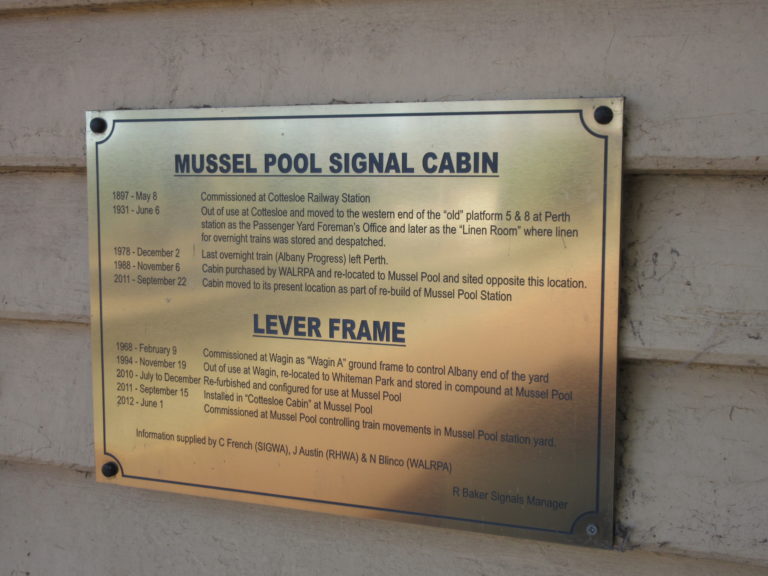
Ex-Cottesloe Signal Cabin and Plaque detailing the history of Mussel Pool Signal Cabin and Lever Frame
The Mussel Pool Signal Box was originally the second of three boxes that controlled suburban passenger and freight train movements in the suburb of Cottesloe. It was opened in 1903, and replaced by a larger signal box in 1931. The building was repurposed, first as the Passenger Yard Foreman’s Office and then the Linen Room at Perth Station. In this latter role, the building stored all sheets and tablecloths, etc. used on the WAGR’s long-distance passenger trains until their demise in 1978. Further information on the Signal Cabins at Cottesloe can be found HERE.
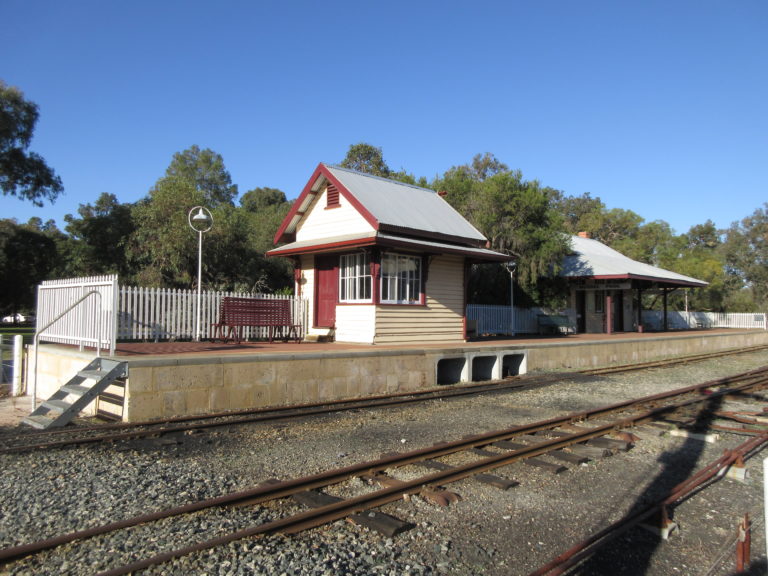
WALRPA acquired the building in 1987, and transported it intact to Whiteman Park in 1988. The building was originally placed at the current location of Parker’s Siding until 2011. It was then used to replace the Collie cabin and lever frame in 2012.
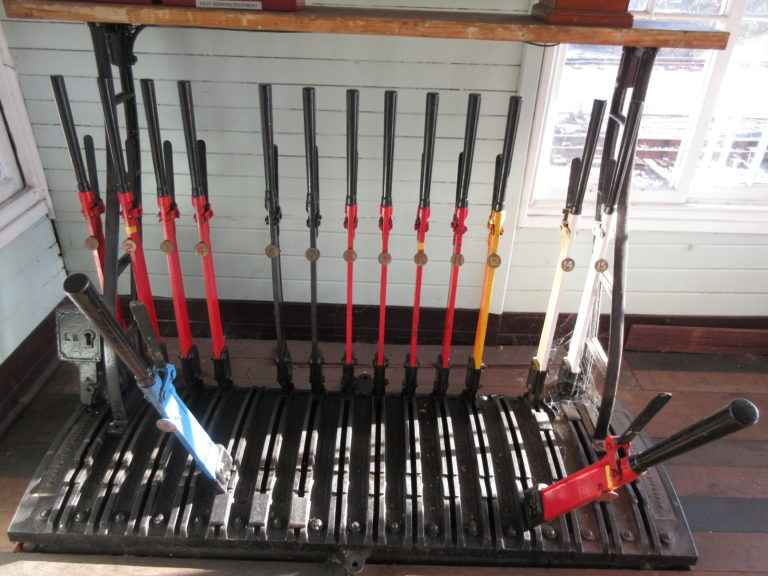
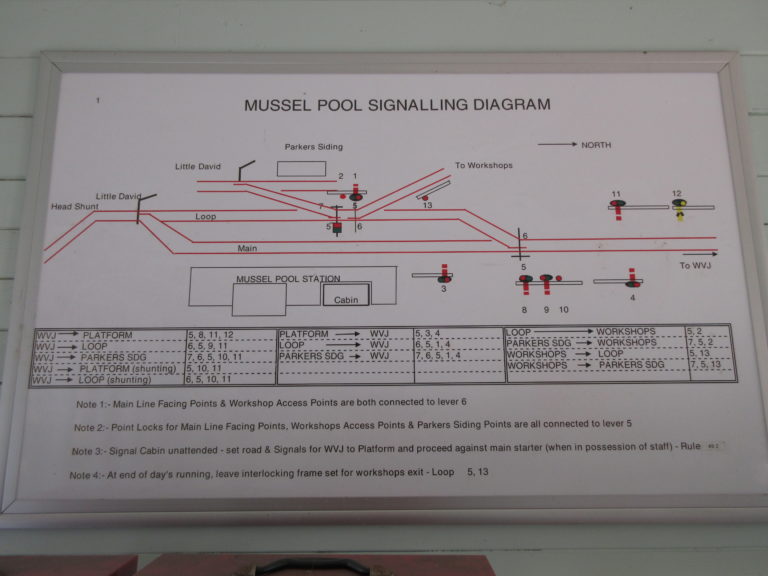
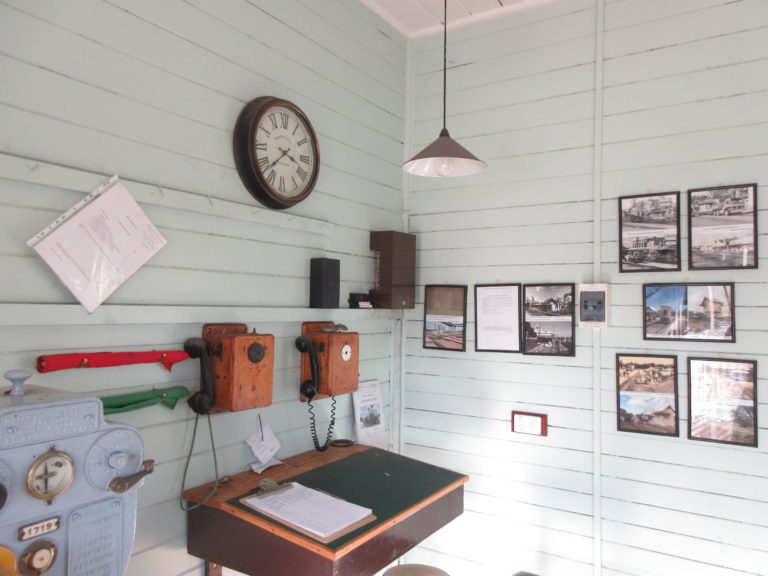
Wagin ‘A’ Lever Frame; Signalling Diagram for Mussel Pool; Interior View of Signal Cabin behind the Lever Frame
Wagin ‘A’ Lever Frame
The Wagin ‘A’ Station Frame (Signal and Point levers not placed in a Signal Cabin and operated by Station staff, thus obviating the need- and cost- of a separate Signalman) was commissioned in 1968 to control train movements in the southern (Albany) end of the yard. Two other frames (both preserved) controlled the station precinct and northern (Perth) end of the yard, respectively. These frames were decommissioned in 1994, and the ‘A’ frame purchased for eventual use at the Bennett Brook Railway. Further details on the Wagin signalling arrangements and plant can be found HERE.
The frame was restored and made operational in 2011, then combined with the ex-Cottesloe Signal Cabin in 2012. The Cabin and Frame were commissioned on May 19th 2013, and have controlled train movements into and out of the station since. This location has the only remaining working mechanical signalling and interlocking arrangements in West Australia.
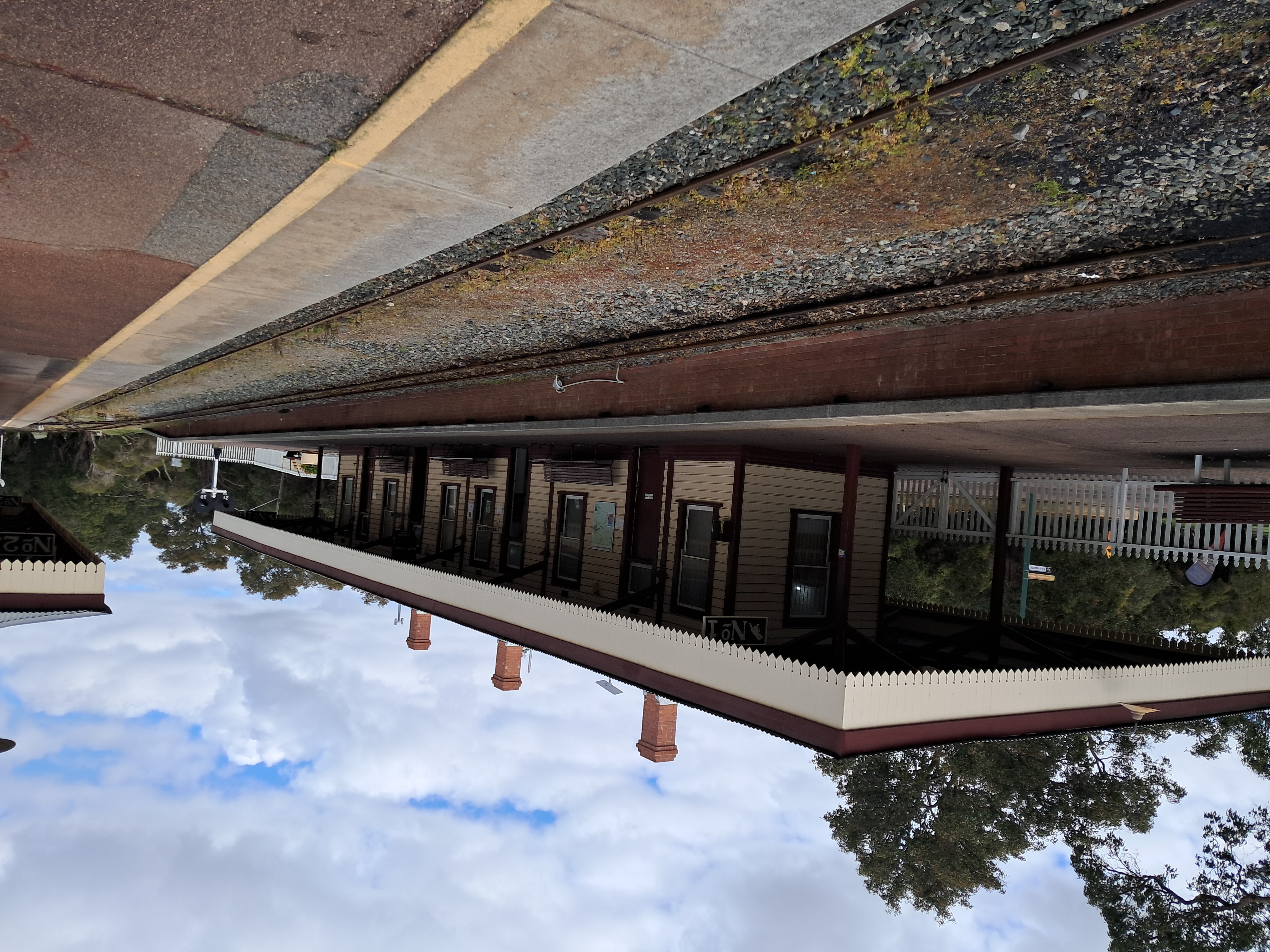
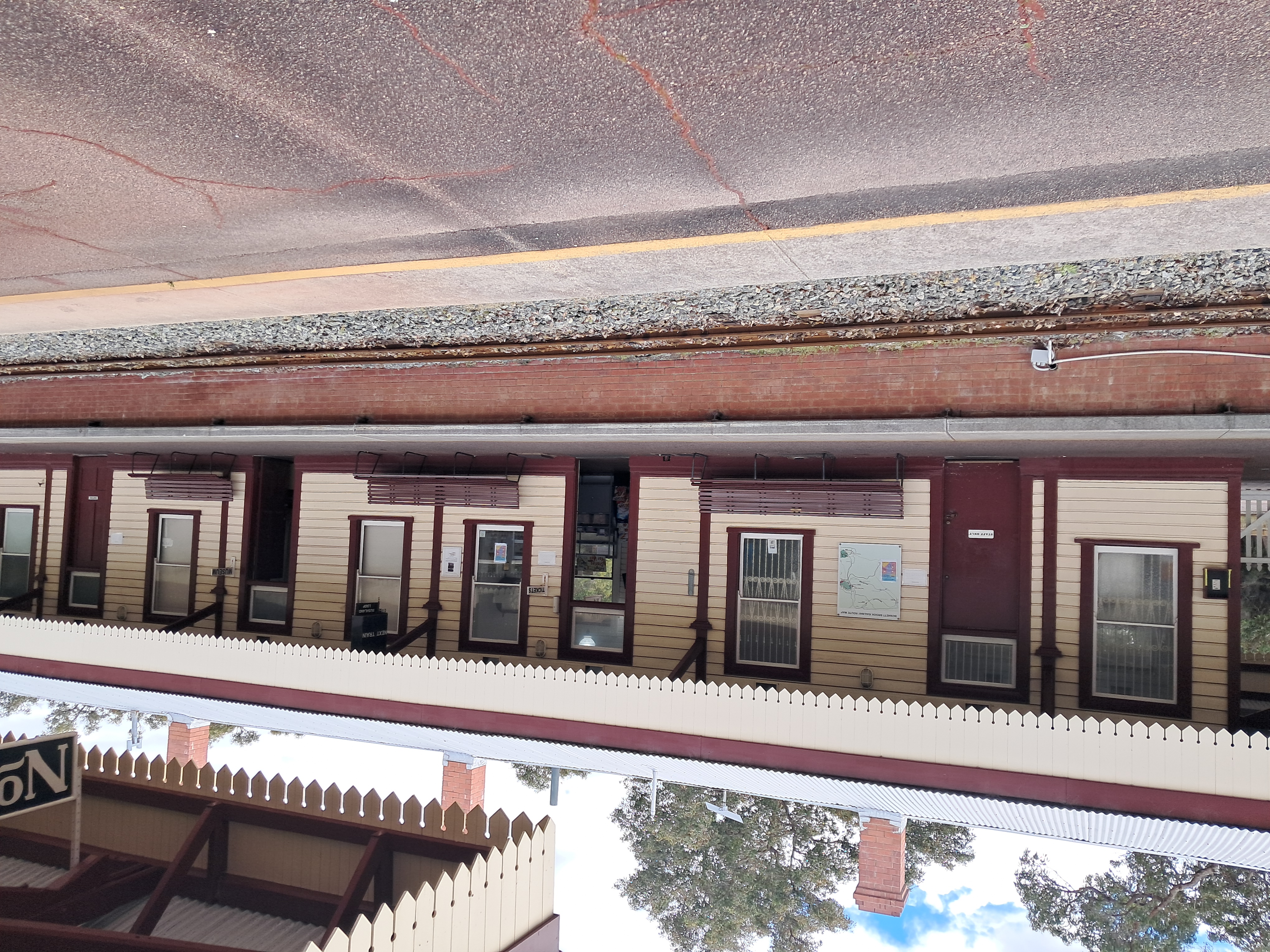
The Station building on WVJ Platform 1 was part of the original station at East Perth, renamed Claisebrook in 1969. This building was decommissioned in 1984, purchased for the Bennett Brook Railway by the then Metropolitan Regional Planning Authority (now WAPC), and moved to Whiteman Park.
The station was originally named Central, and became Whiteman Village Junction in 1992. The station is the base for all passenger train operations conducted on the BBR, as well as Party Coach bookings.
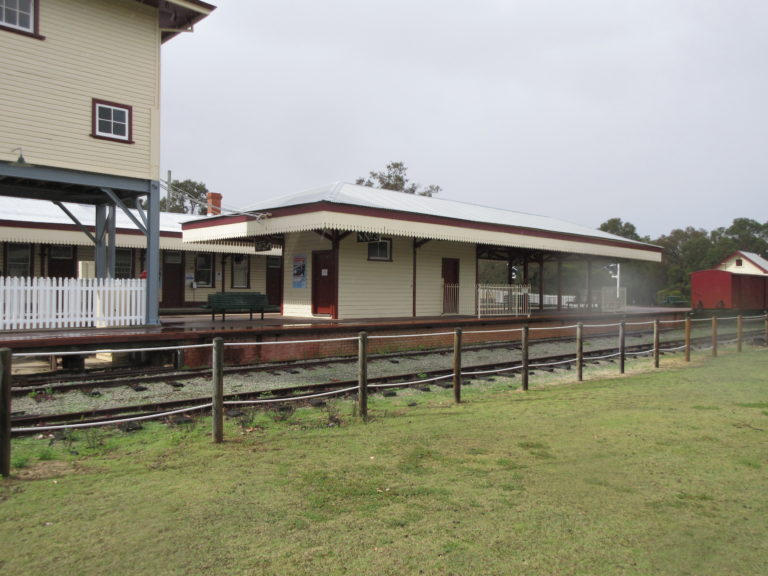
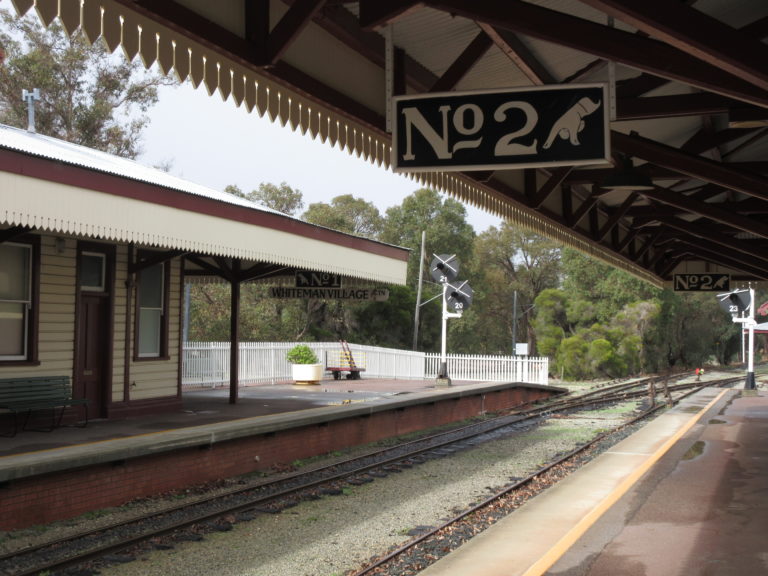
Subiaco Station Shelter; Facing towards Mussel Pool from WVJ Platform 2, under Subiaco roof; WA General Post Office mailbox, WVJ Platform 2/3
The buildings on WVJ Platforms 2 and 3 are the former Subiaco Station and Signal Cabin. The Station building was commissioned in the 1890s, replacing a smaller shelter originally erected in 1883. It served commuters moving between Perth and Fremantle.
The Subiaco Signal Cabin is the second of 2 Cabins that existed at this location. It was commissioned in 1923, was destroyed by fire in April 1956, completely rebuilt by May the same year, and was one of only 2 cabins to survive the electrification of the Perth suburban railway network in 1990.
BEFORE
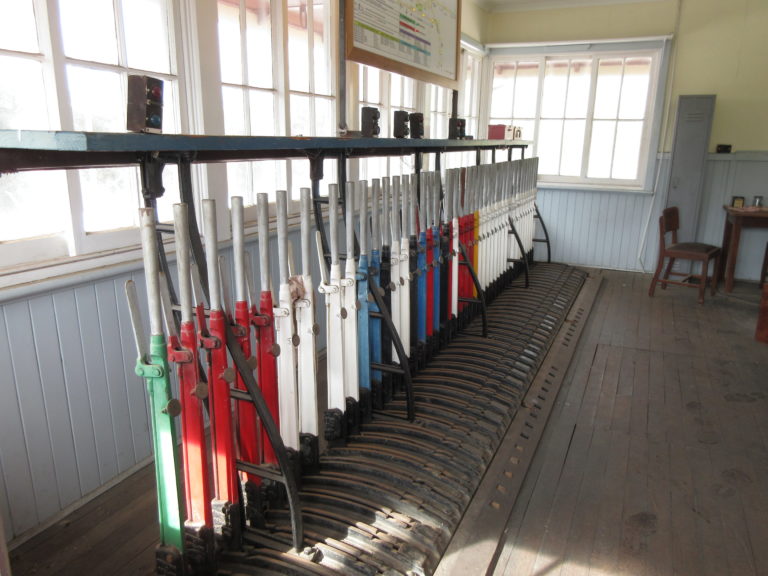
AFTER
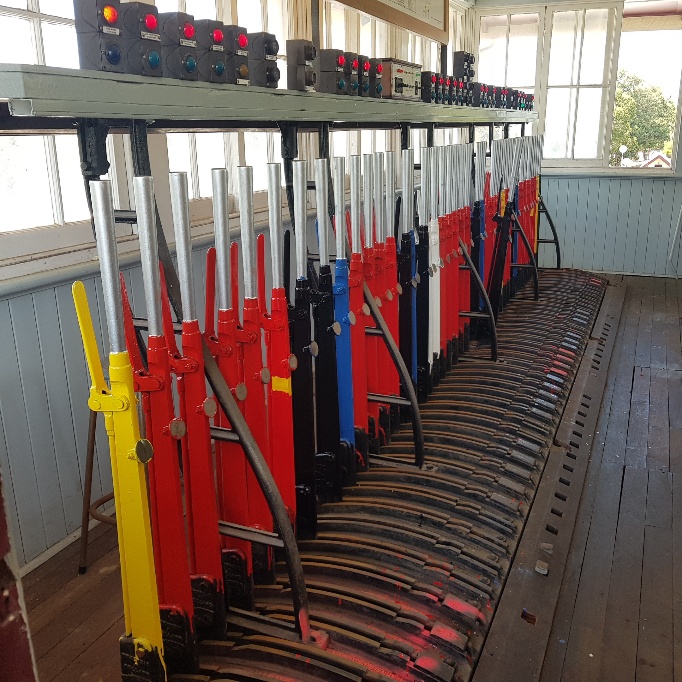
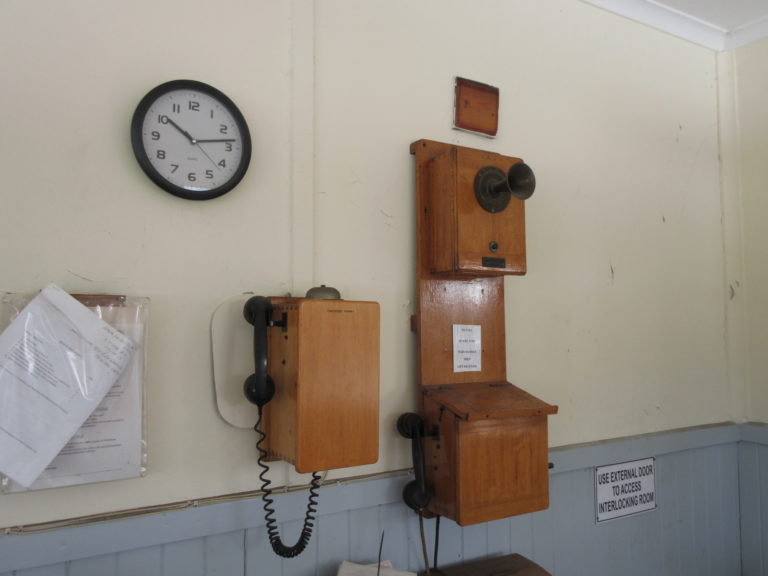
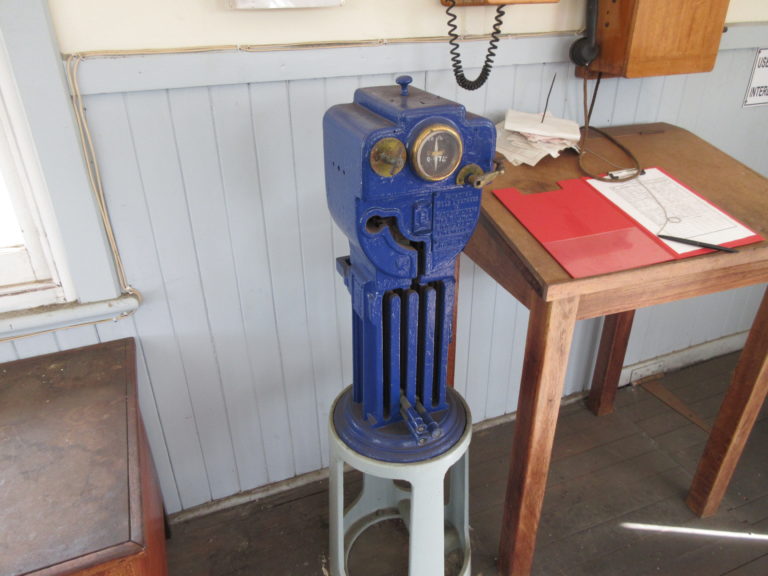
Subiaco Lever Frame; Party Line telephones; Train Register Desk and Miniature Electric Train Staff Instrument (Non-functional)
Subiaco Station and Signal Cabin were decommissioned in 1998, acquired by WALRPA and moved to Whiteman Park. The Subiaco building currently stores all materials used in the Party Coach area on Platform 3.
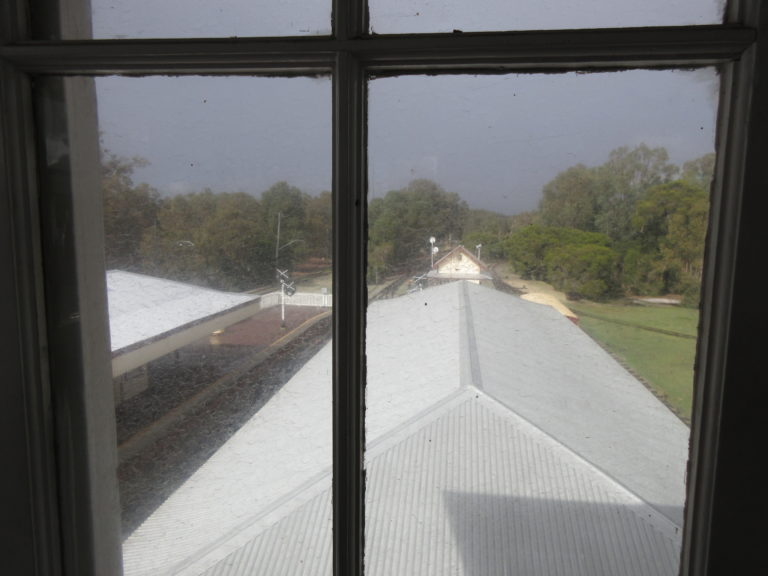
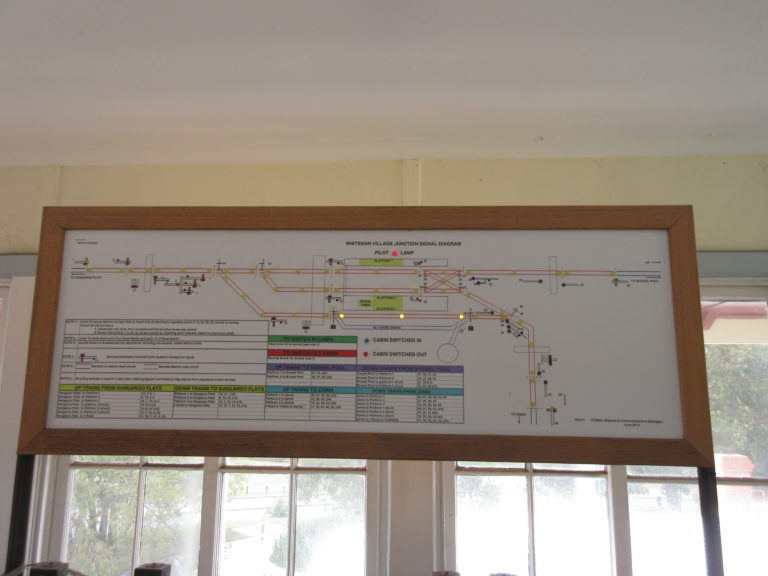
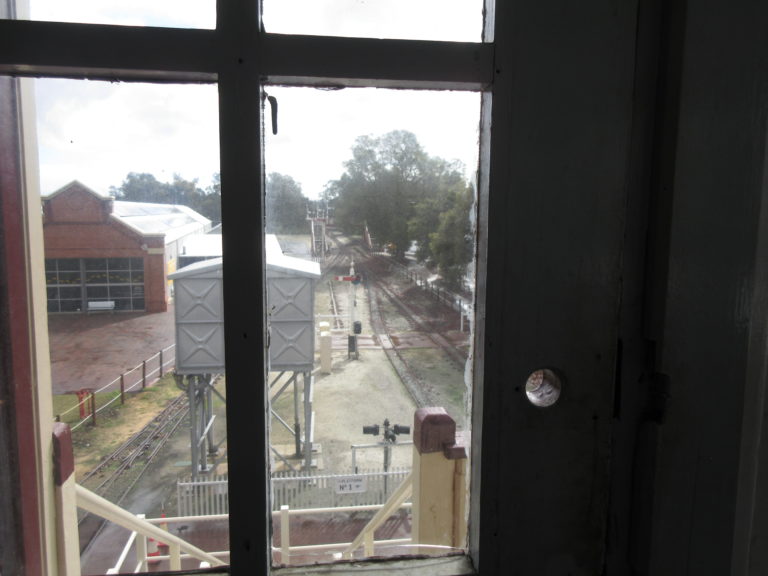
View from signal box, looking North; WVJ Signalling Diagram; View from signal box, looking South
With the completion of the WVJ signalling project, the Subiaco Cabin has been commissioned into service in 2026.
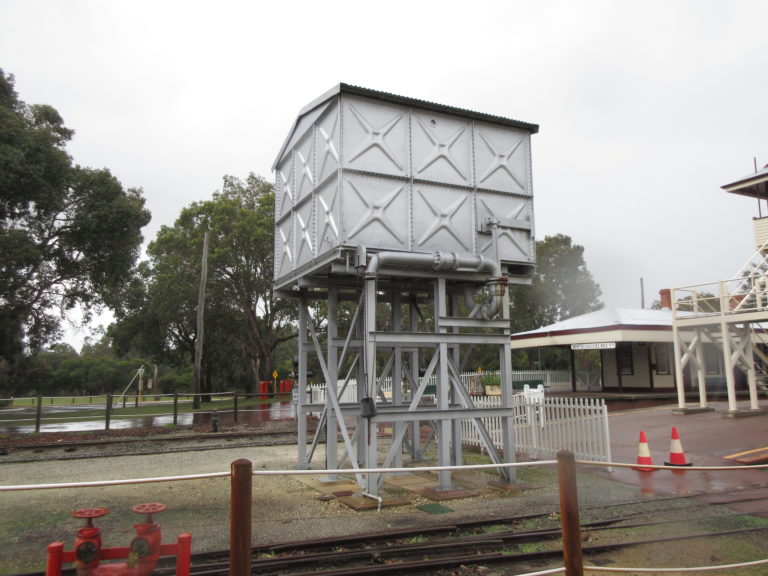
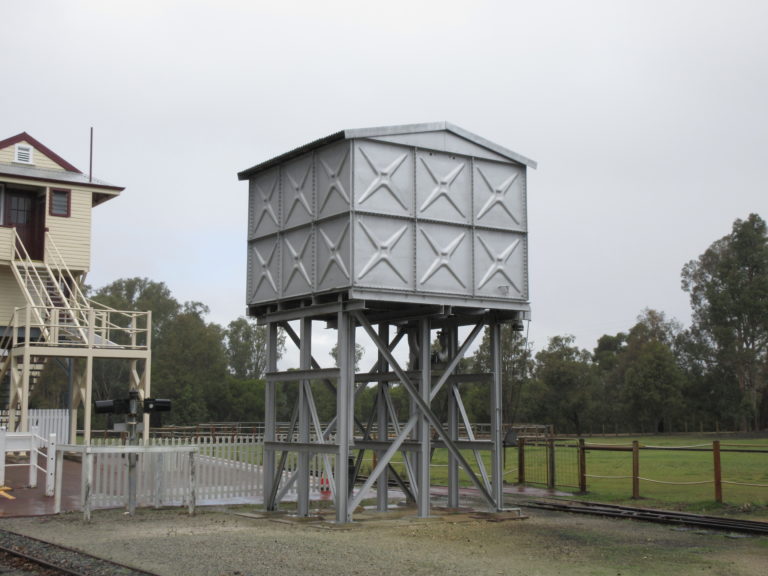
The water tank in use at WVJ is a composite structure made up of a tank thought to be from the Midland abattoir (purchased from a Hazelmere salvage yard), and a water crane arm recovered in 1992 from the former Formby siding, a WAGR watering place on the Gnowangerup line. This tank was chosen for BBR use, as any actual ex-WAGR water tanks would have been too large and impractical for the railway’s needs.
Restoration of these pieces started in mid-2008, and by late 2009 all parts were ready for assembly. Roofing and final erection was completed in November 2011.
The tank provides water storage for BBR steam locomotives, with water filling being completed by hydrant fitting near Platform 1, or by the crane on Platform 3.
A free-standing water column from Gnowangerup was also preserved in 1992, and it is hoped to one day have this available for locomotive watering purposes.
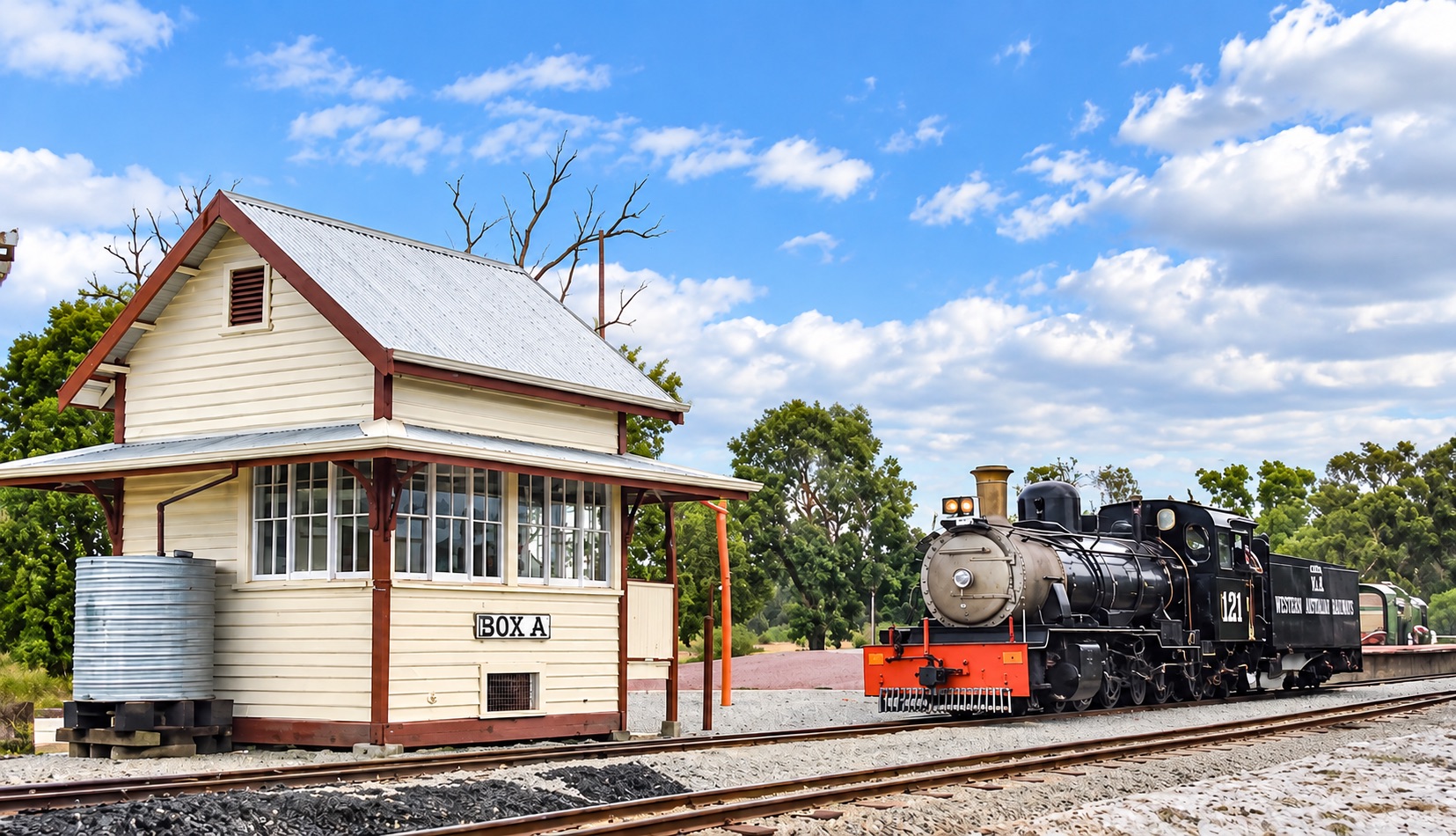
Opened in 1906 and located on the western side of Fremantle Island platform. Fremantle Box A housed a 22 lever McKenzie and Holland no. 9 pattern frame. Box A for many years assisted Box B in handling passenger trains at the once busy terminus.
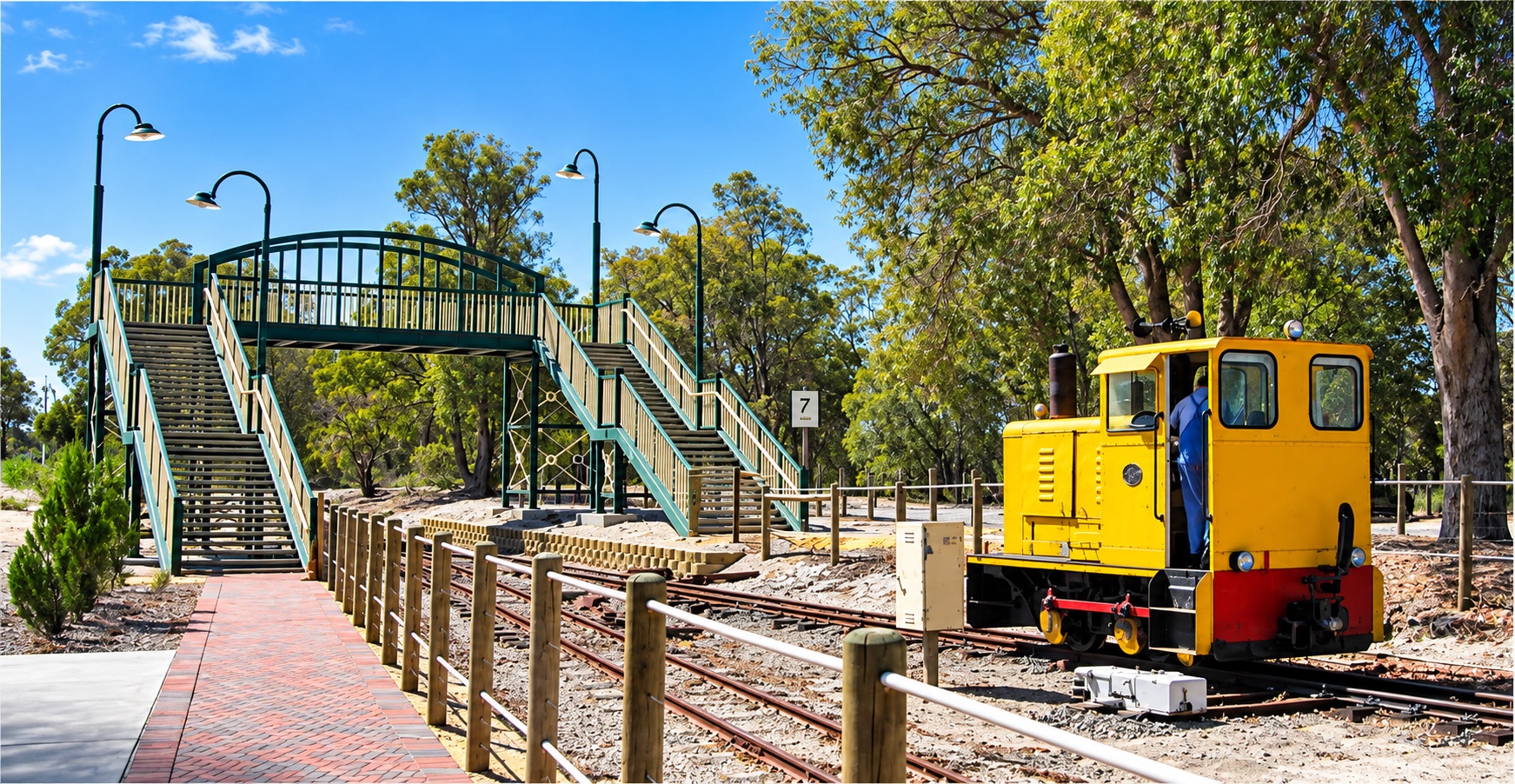
The footbridge located at the northern end of Whiteman Village Junction station was opened for use on the 8th of February 2007. The bridge was originally located at Subiaco Station.
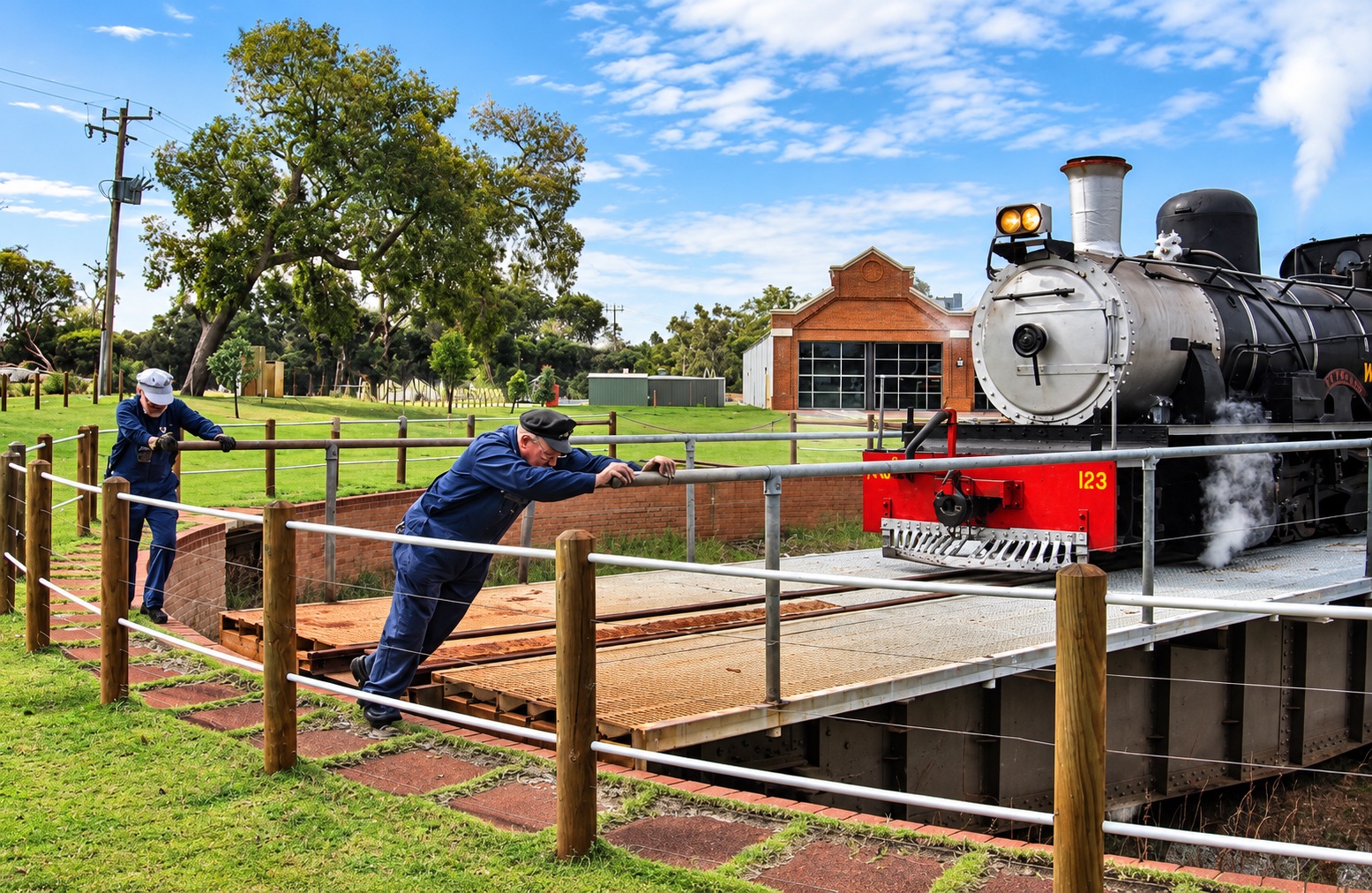
The turntable at Whiteman Village Junction came from the old W.A.G.R. steam loco depot at Midland Junction. It was originally built as a 70’ diameter turntable but was extended during World War 2 to 80’ to accommodate the Australian Standard Garrett locomotives. Work on the installation of the turntable commenced in 1993 and was completed in 1995. The majority of the work was done by volunteers and included some of the following:
- Forming and pouring of the concrete footing for the central pivot, comprising over 40 tons of reinforced concrete
- Construction of drainage sump and oil trap in the pit
- Restoration and painting of the girders
- Restoration of the centre support pillar and the bearings
- Transport of the girders to site and installation in the pit
- Construction of the brick pit wall and backfilling behind it
- Fabrication of transom girders to support the 610mm gauge track (the original 1067mm gauge track was supported directly above the main girders, however these are too far apart to directly support the narrower track)
- Installation of steel walkway decking salvaged from Claisebrook Railcar Depot (the turntable originally had a timber deck, but the steel deck was available at transport cost only, and would be much less maintenance, and accommodated the track support transoms easier.)
- Construction of approach track
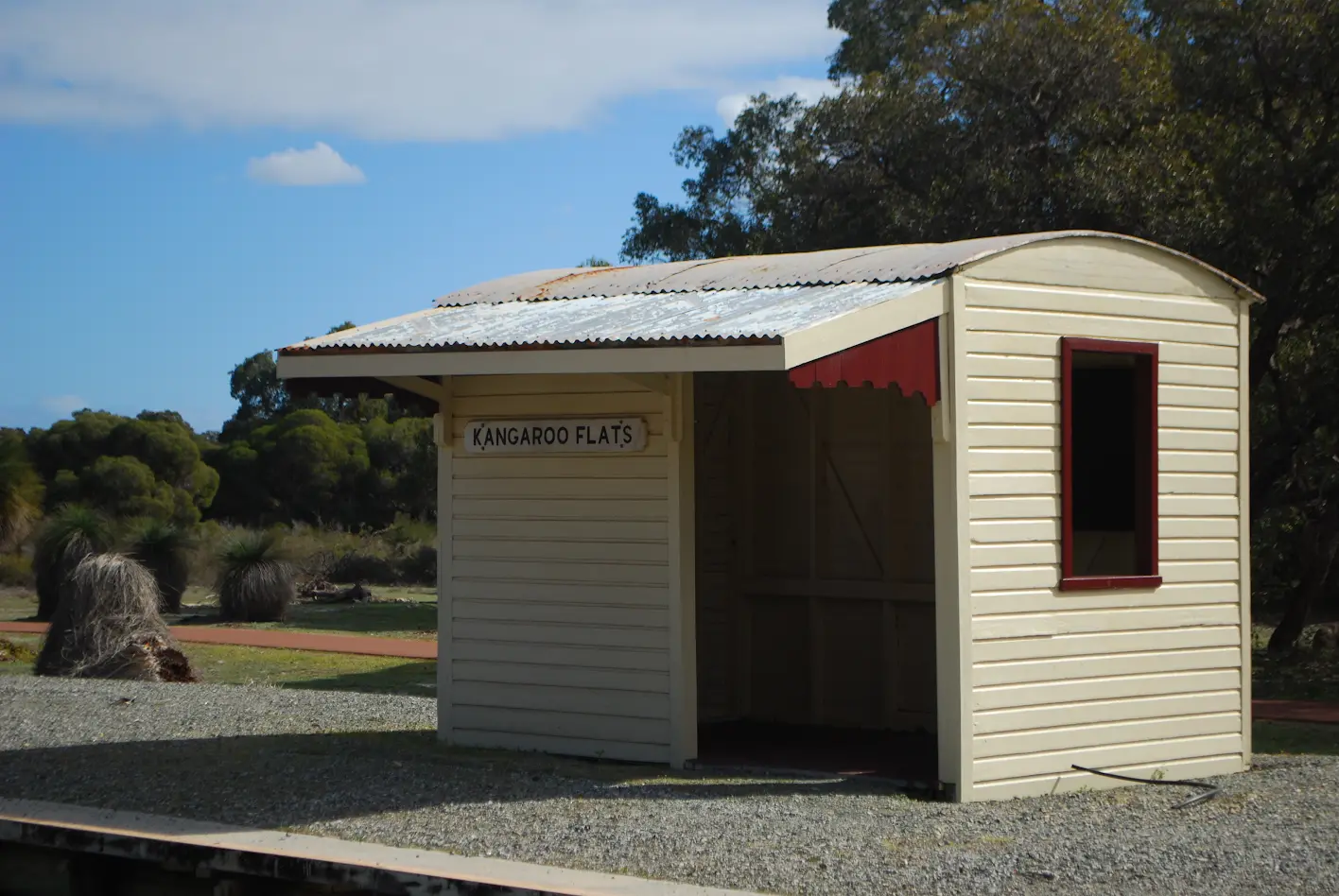
Pingelly Shelter was originally a bus drop off/pick-up point for passengers on the Northam to Narrogin line but also served the railway.
Zamia was initially called Maine, after the youth camp it was built to serve. It now also serves the Model Aircraft Centre and the Off-Road Model Buggy Club. There used to be a siding there at the northern end.
The name was suggested by one of our members due to the prolific number of Zamia Palms (Macrozamia riedlei) in the area. Zamia palms are a species cycad in the plant family Zamiaceae the plants date from the dinosaur era.
Kangaroo Flats was built originally as a stop for spectators to the Rally Australia circuit, which was built in WP to introduce the Rally to the Perth Metro area. There was a “ski jump” over the track for the cars where the Wig-Wag is now, and there was a water obstacle dug into Woolcott Rd just north of Kangaroo Flat. At one stage there was a fenced shelter enclosing emus, these would follow their caretaker around like pet dogs!
An Aboriginal Cultural Experience was also available at Kangaroo Flats the train would bring tourists where they could observe boomerang and spear throwing as well as listen to didgeridoo playing.
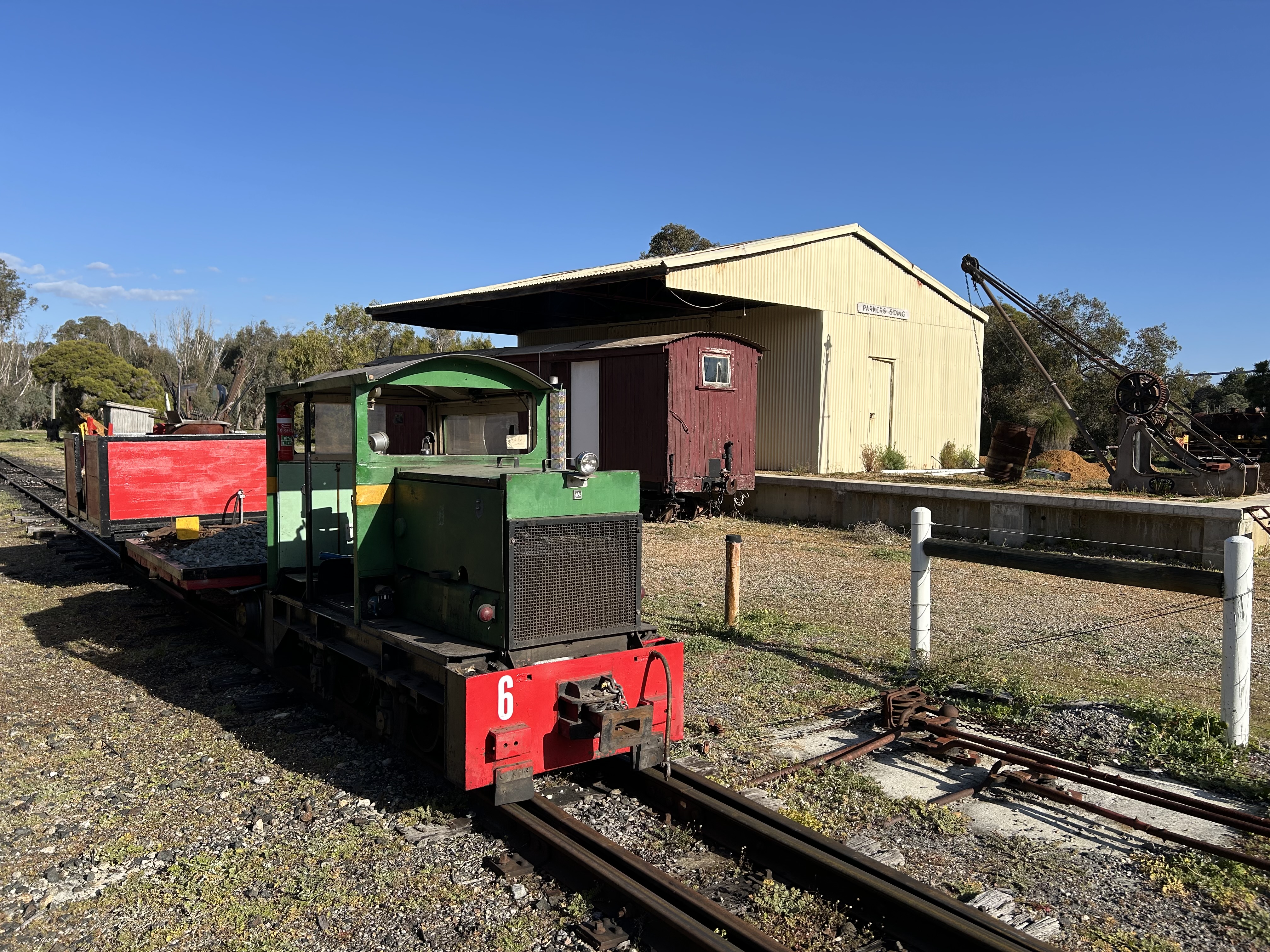
Parker’s siding is named after long standing member Ross Parker. Ross undertook the relocation and construction of the goods shed as well as the associated work at Mussel Pool to provide the Railway with this most useful facility.
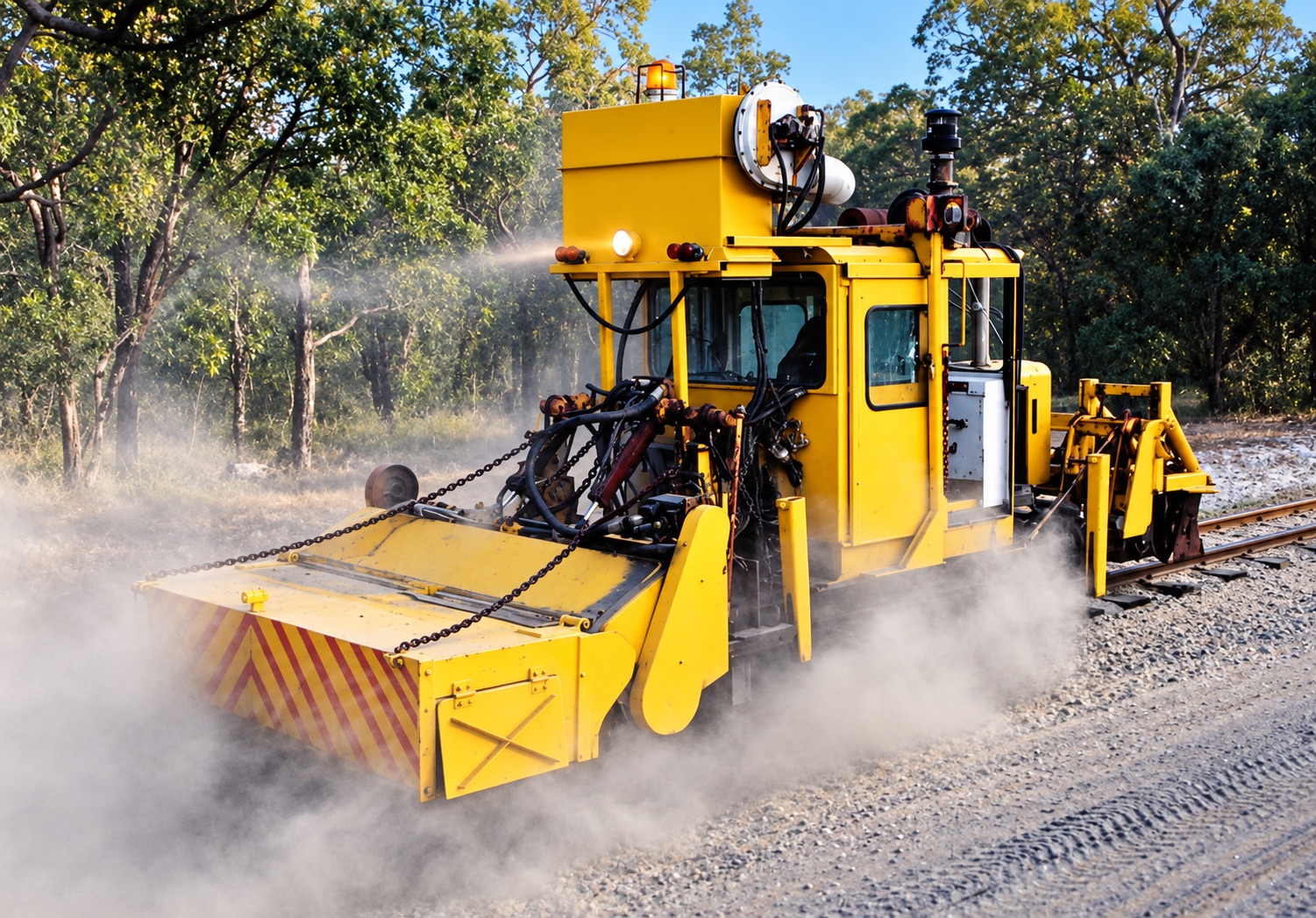
Ex W.A.G.R. – TM 715. Ballast regulators are sometimes known as a ballast spreader or sweeper, it is used to shape and distribute the gravel that supports the rail.
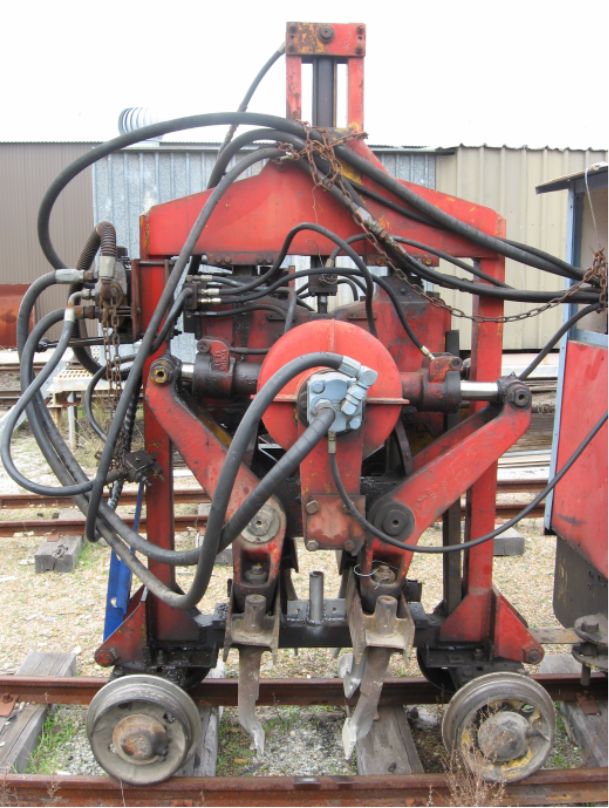
Tampers are a rail mounted machine that packs (or tamps) the ballast (gravel that supports the rail).
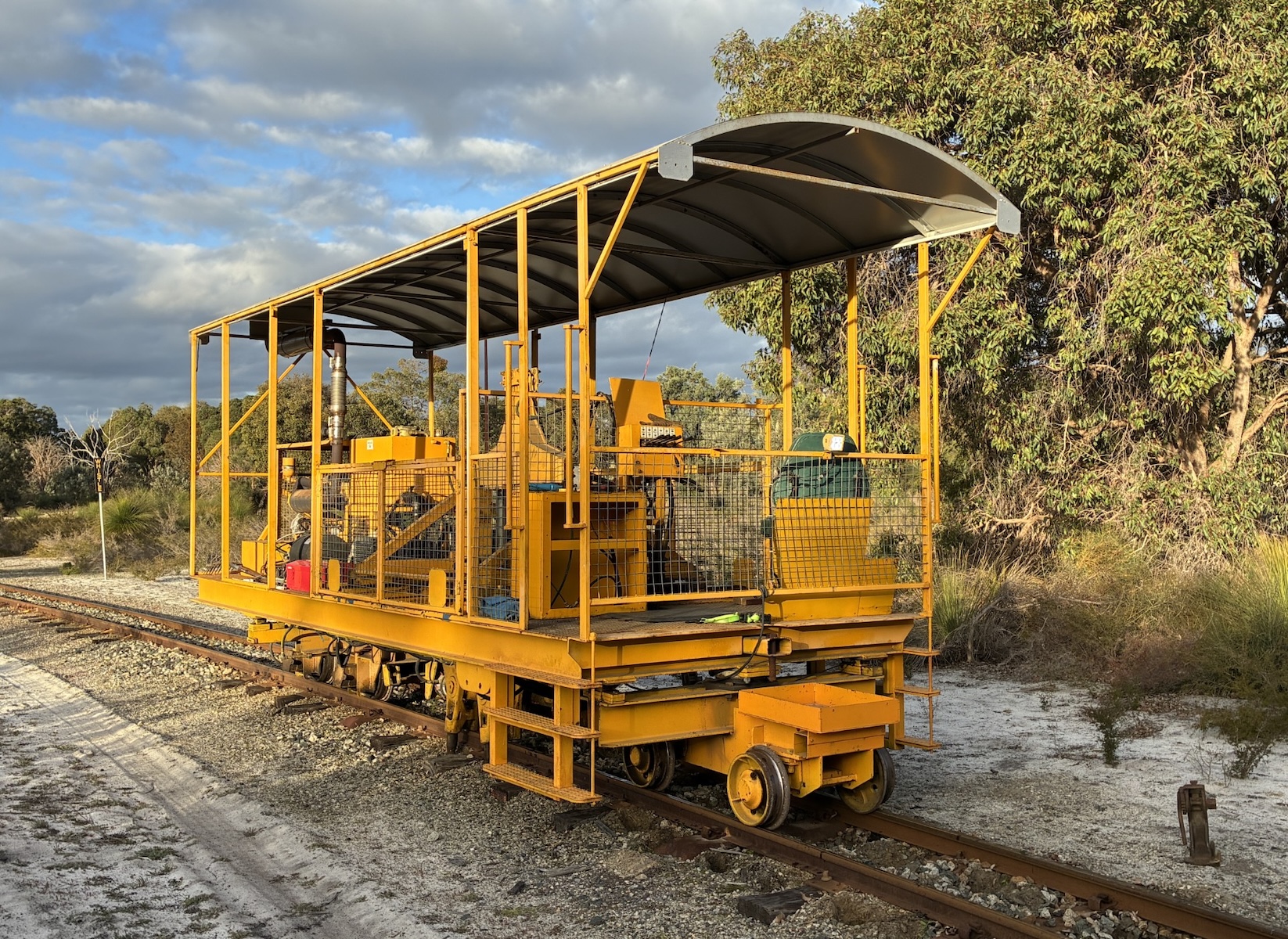
TM 799 Plasser powered by Ridley. In recent times many of our original tamper’s parts have been used to create a new vehicle which is nearing completion.
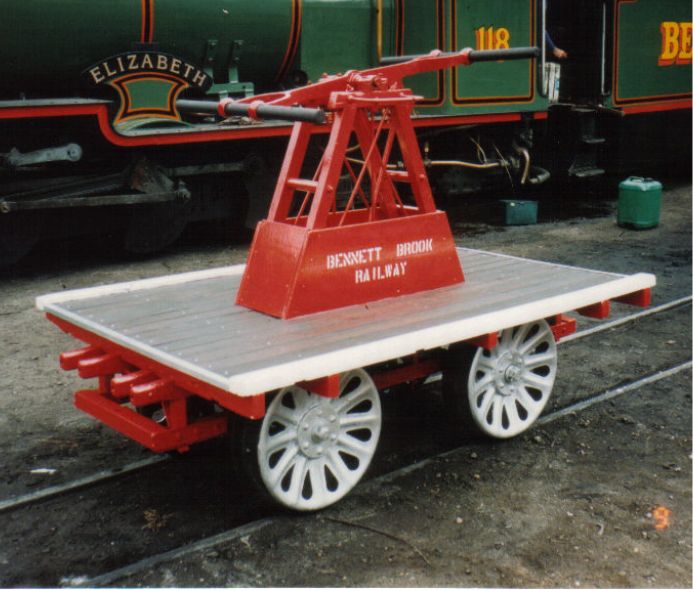
Inspection trolley hand operated. Ex W.A.G.R. TM 715
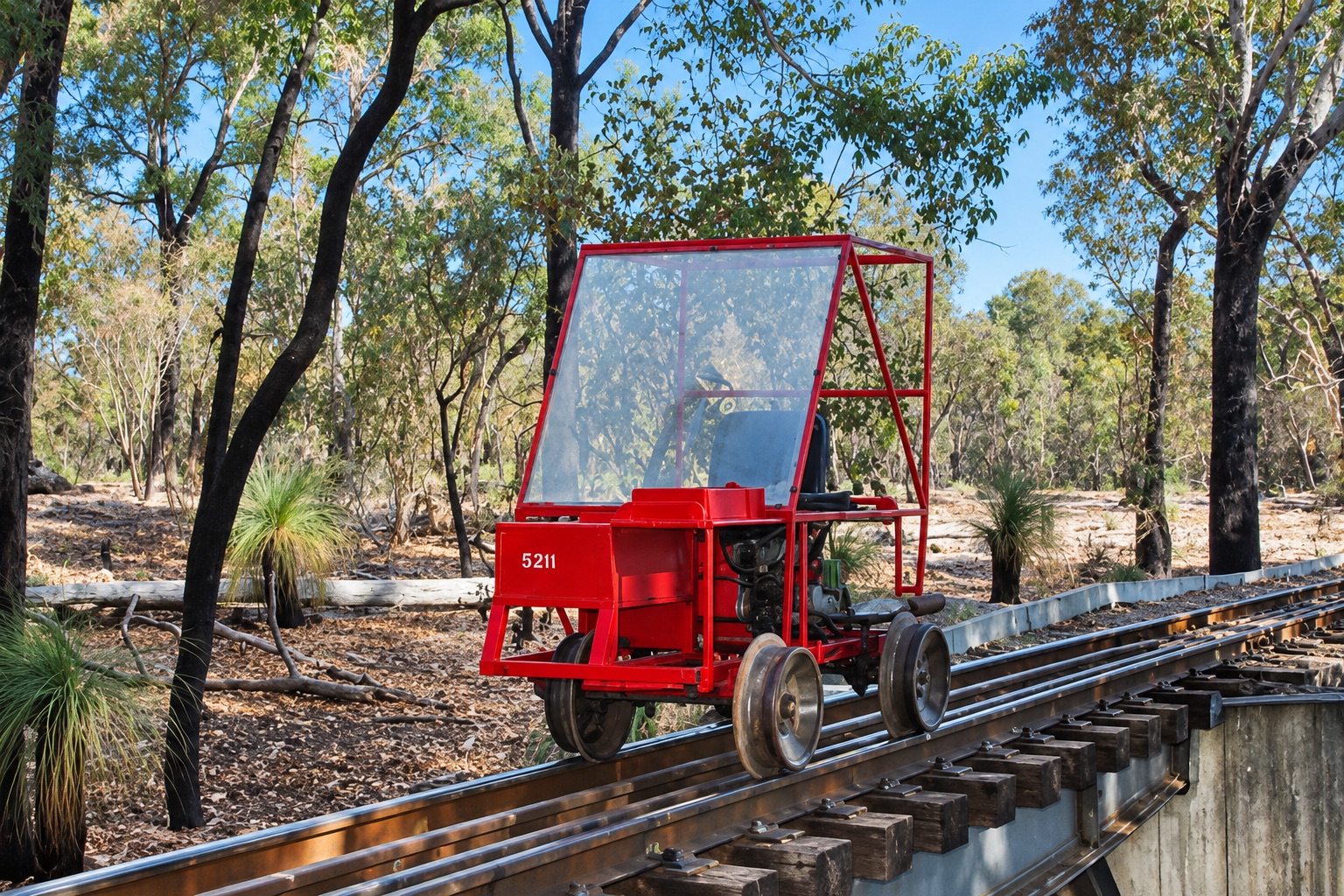
Ex W.A.G.R. TI 528
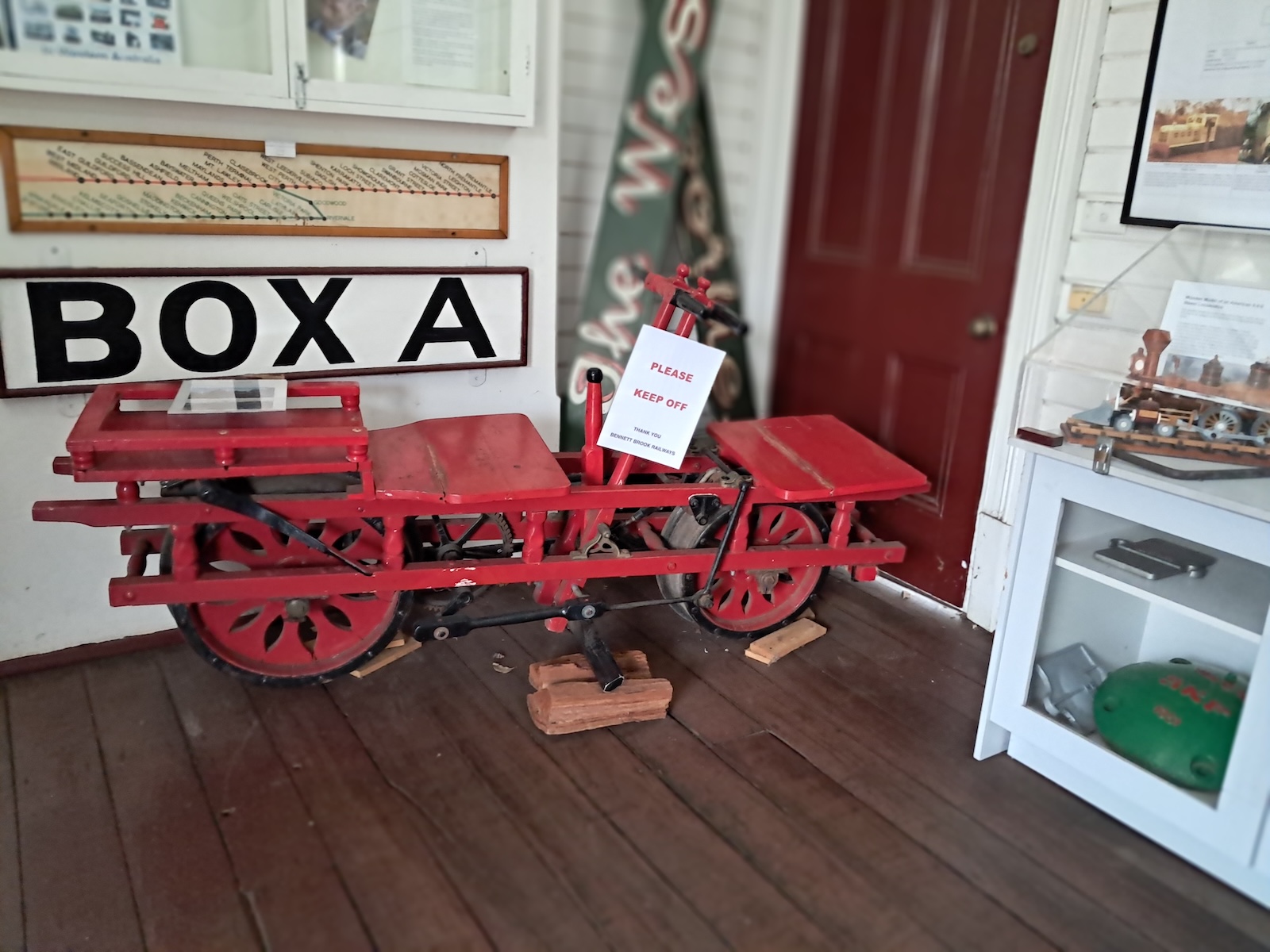
Gangers inspect and maintain the track. They would use manually powered three-wheel trollies such as this one to travel along the section of line looking for faults and carrying out minor repairs as they went. The tricycle was light enough for the Ganger to remove it from the track to allow a train to pass and to replace it to continue his inspection. The Ganger would use a rowing action on the handles which moved the gears below the seat, thus propelling him forward.
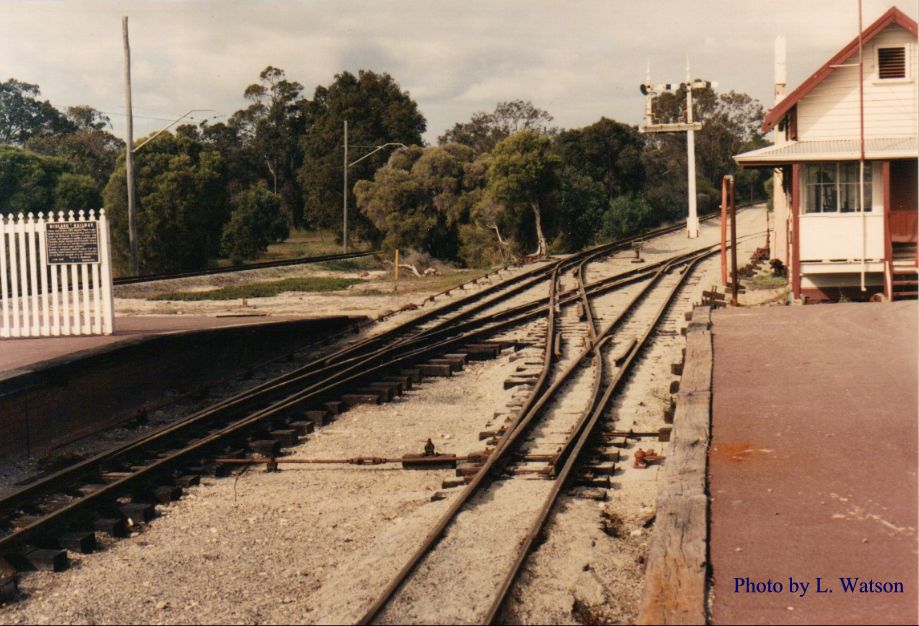
Formally located in front of the Wagin goods shed it was removed by Westrail in 1987 and purchased by us the same year. The rebuilding and regauging could be compared to a jigsaw puzzle. The entire exercise took 18 months and is possibly the only application of a scissor crossover on a tourist railway in Australia.
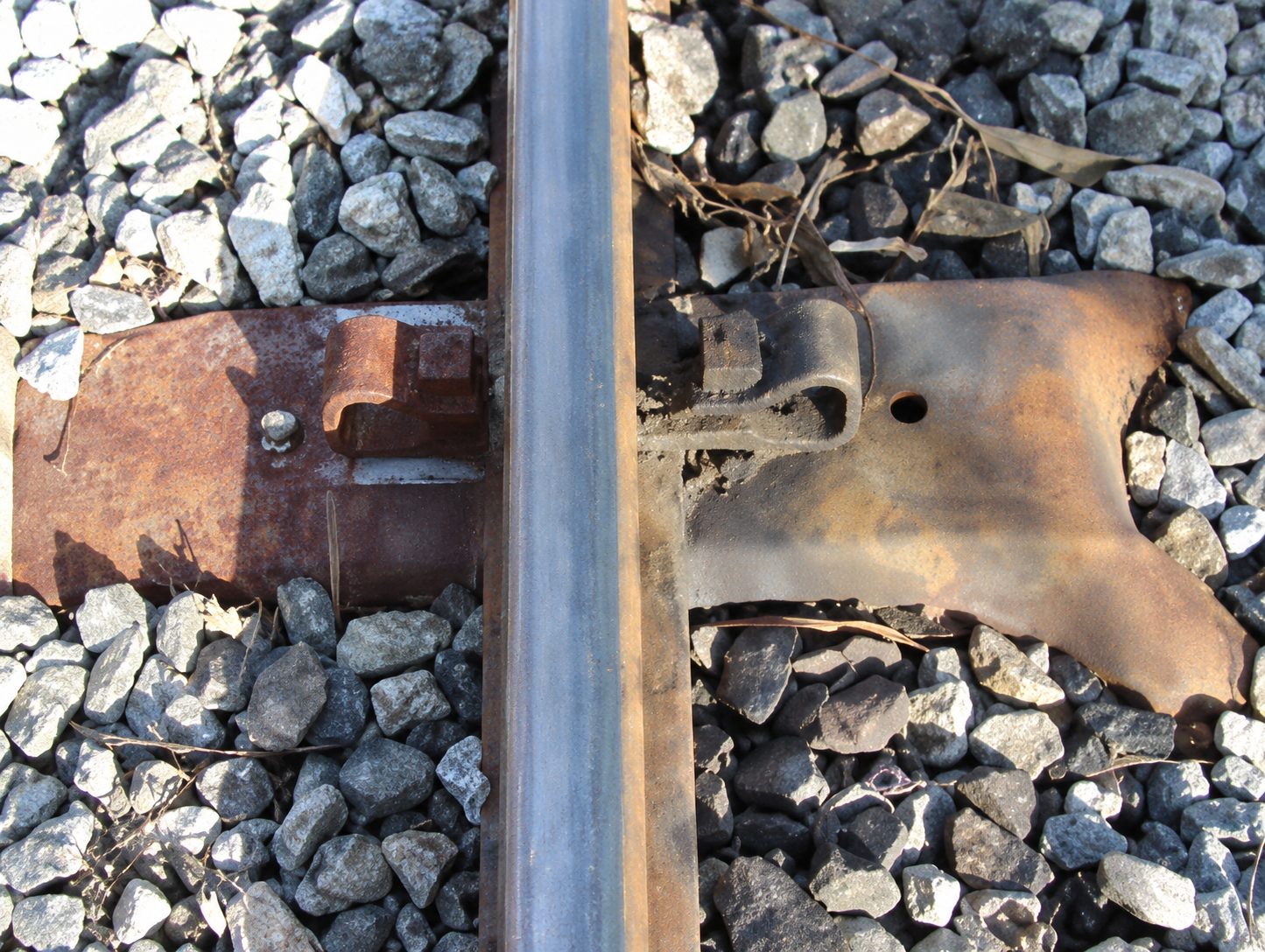
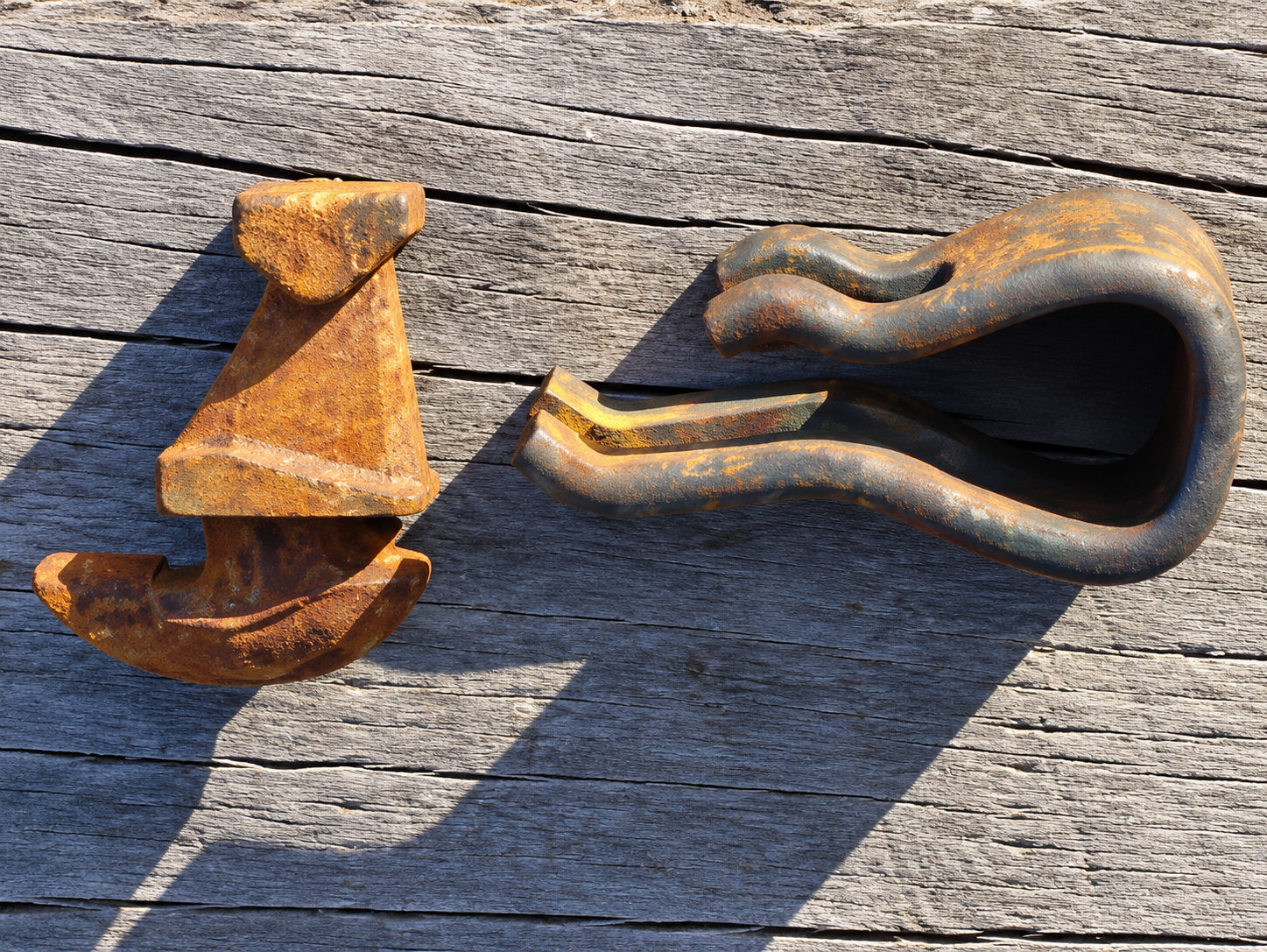
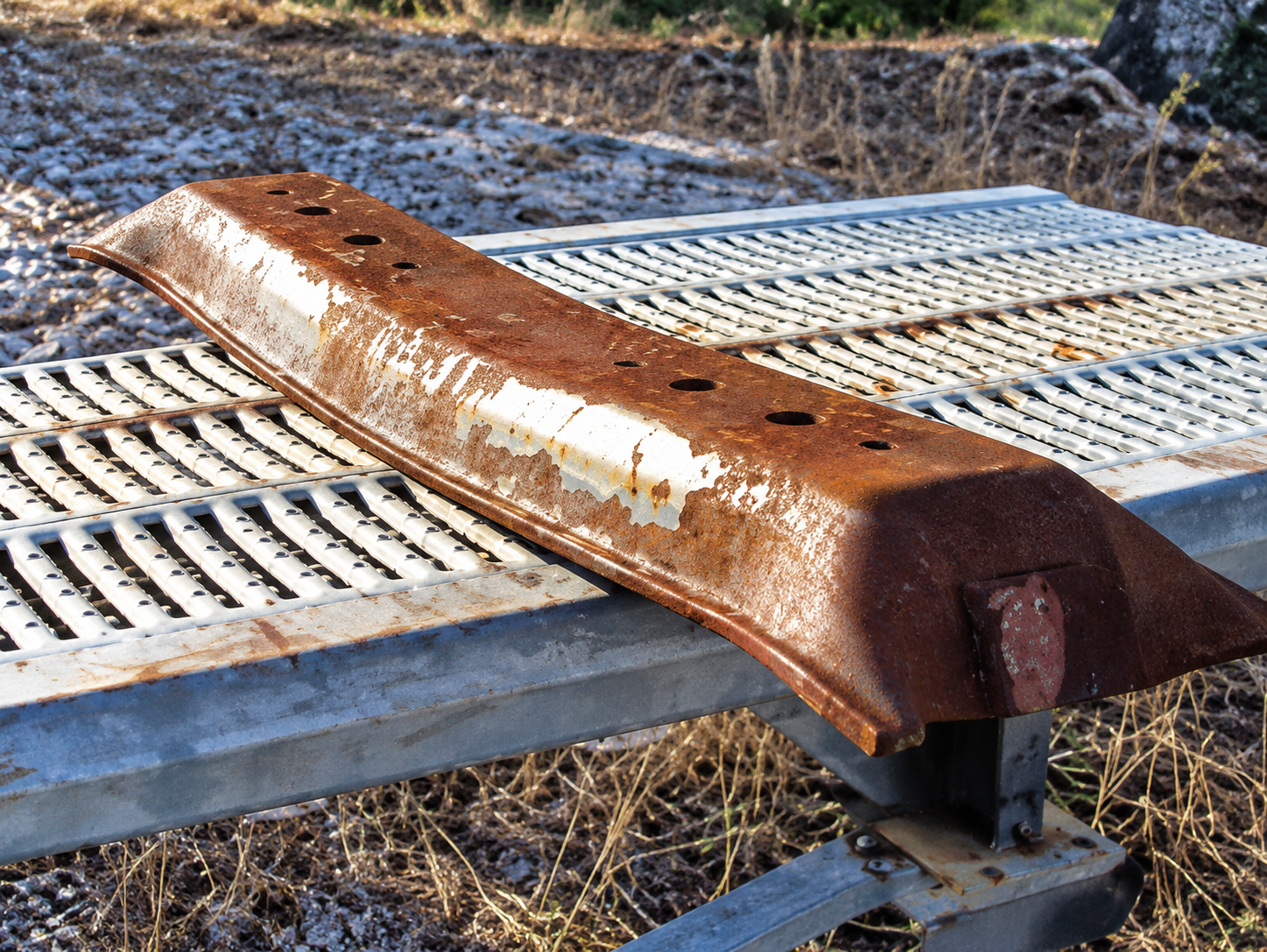
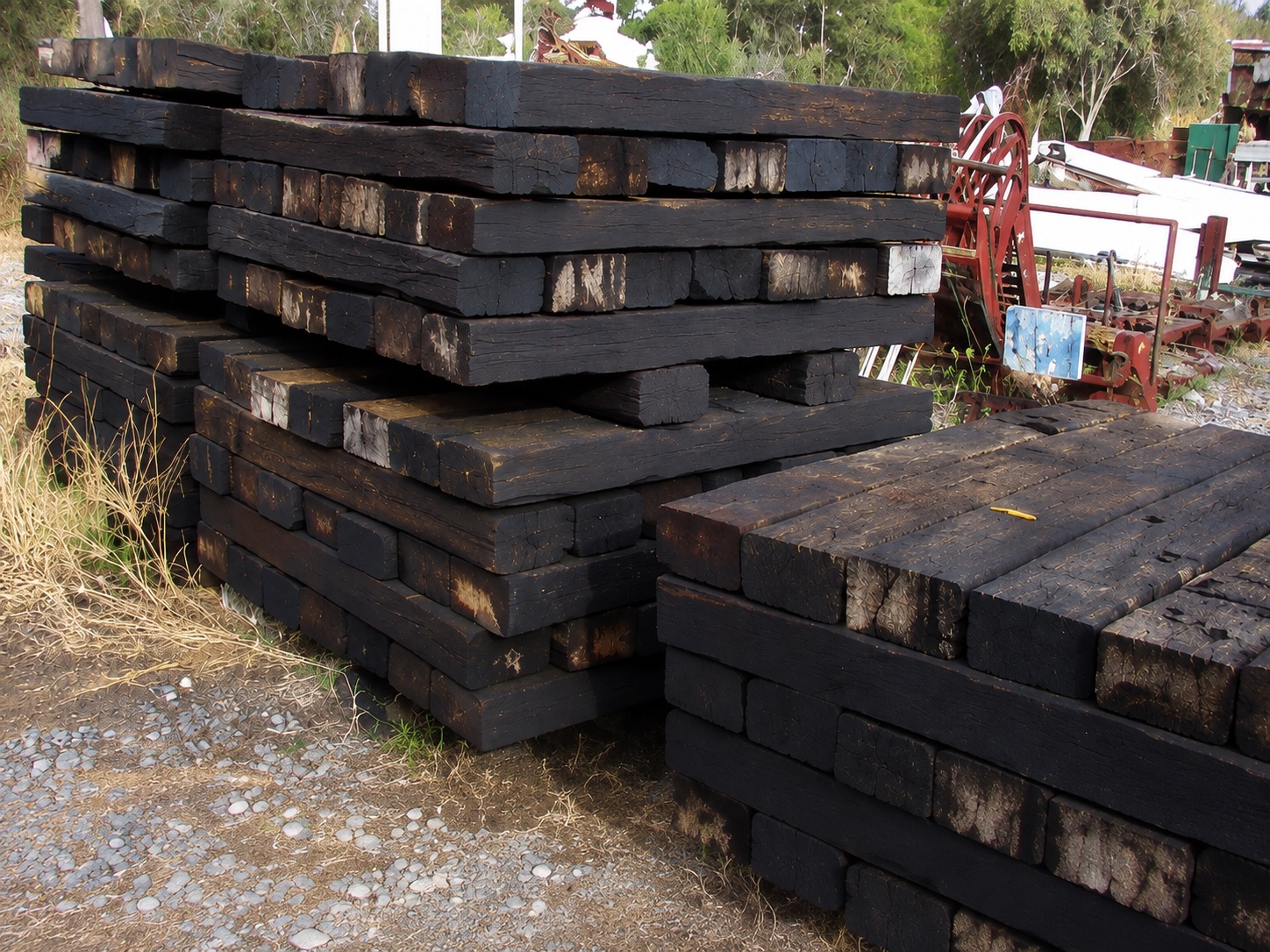
On Bennett Brook Railway the track was originally laid using wooden sleepers, 5ft lengths to suit narrow gauge. We have also used concrete and steel and in more recent time plastic sleepers.
Dog spikes were once the most common way of securing the rail to the sleeper, now screw spikes are used.